Culinary Advisor
A cooking platform built around craft, culture, and the stories behind what we eat.
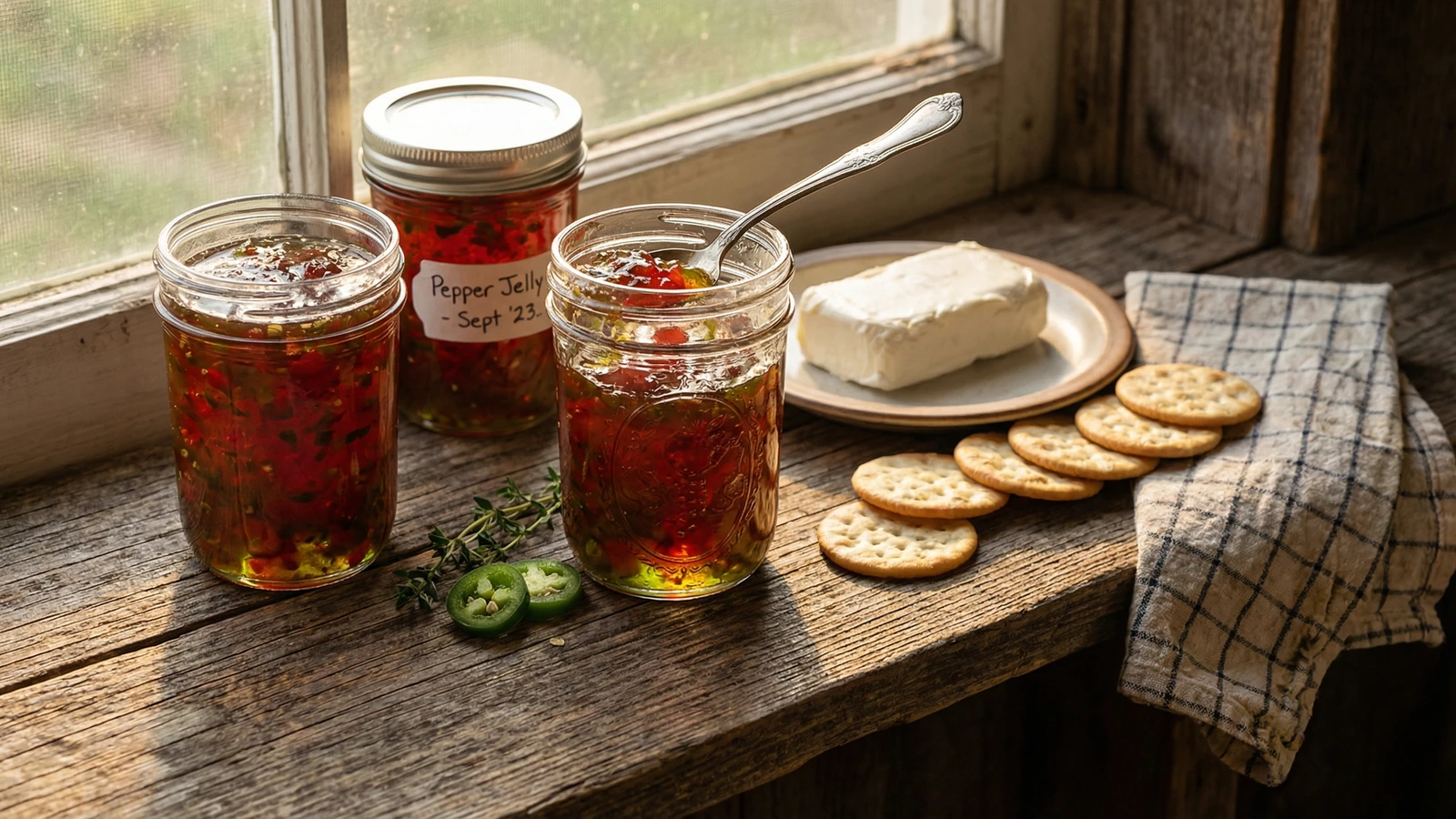
Pepper Jelly
Created by Chef Remy
A jewel-toned preserve that balances sugar sweetness with jalapeño fire, the kind of condiment that transforms a block of cream cheese into the most popular thing at any gathering
Good preserving starts with one principle: capture the season in a jar. Pepper jelly does exactly that. You take the peak of summer's pepper harvest and lock it away for the months when gardens sleep and grocery store peppers taste like nothing at all.
My grandmother Evangeline kept rows of these jars in her pantry, glowing like stained glass when the afternoon light came through the window. Red ones, green ones, some with a mix that looked like Christmas. She spooned them over everything: cream cheese, grilled pork, a biscuit fresh from the oven. At Lagniappe, we still serve pepper jelly with our fried boudin balls, and guests clean the ramekins with their fingers when they think nobody's watching.
The technique is simple but precise. You need the right ratio of sugar to acid to pectin, or your jelly won't set. Too little sugar and it weeps. Too much and it crystallizes. But don't let that scare you. I've taught hundreds of home cooks to make this, and once you understand what you're looking for, you'll fill your pantry every summer without a second thought.
Heat is personal. Start with the amount of jalapeño I give you, taste the mixture before you add the pectin, and adjust. You want warmth that builds slowly, not fire that makes your eyes water. The sweetness should hit first, then the pepper sneaks up behind it. That's the bayou way.
The technique, the tradition, and the story behind every dish.
Discover Culinary AdvisorIngredients
red bell pepper
Quantity
1 cup
seeded and roughly chopped
green bell pepper
Quantity
1 cup
seeded and roughly chopped
fresh jalapeño peppers
Quantity
1/2 cup (about 4 medium)
stems removed
apple cider vinegar
Quantity
1 1/2 cups
granulated sugar
Quantity
5 cups
liquid pectin
Quantity
1 pouch (3 oz)
kosher salt
Quantity
1/2 teaspoon
cayenne pepper (optional)
Quantity
1/4 teaspoon
| Ingredient | Quantity |
|---|---|
| red bell pepperseeded and roughly chopped | 1 cup |
| green bell pepperseeded and roughly chopped | 1 cup |
| fresh jalapeño peppersstems removed | 1/2 cup (about 4 medium) |
| apple cider vinegar | 1 1/2 cups |
| granulated sugar | 5 cups |
| liquid pectin | 1 pouch (3 oz) |
| kosher salt | 1/2 teaspoon |
| cayenne pepper (optional) | 1/4 teaspoon |
Equipment Needed
- •Water bath canner or large stockpot with rack
- •6 half-pint canning jars with lids and rings
- •Jar lifter
- •Canning funnel
- •Food processor
- •Large heavy-bottomed pot (at least 6-quart)
- •Candy thermometer (optional but helpful)
Instructions
- 1
Prepare your canning setup
Fill your water bath canner or a large stockpot with water and bring it to a simmer. Wash six half-pint jars and keep them hot, either in the simmering water or in a 200F oven. Place the lids in a small bowl and cover with hot water to soften the sealing compound. Hot jars prevent thermal shock when you add the boiling jelly.
Everything must be hot when it meets hot. Cold glass plus boiling jelly equals cracked jars and a ruined afternoon. - 2
Process the peppers
Combine the bell peppers and jalapeños in a food processor. Pulse until finely minced but not pureed. You want texture, not baby food. The pieces should be small enough to suspend in the jelly but large enough to see. This takes about ten pulses, checking between each one.
For a hotter jelly, leave the jalapeño seeds in. For milder heat, scrape them out before processing. Wear gloves if you're smart. The oils linger on your fingers for hours. - 3
Build the base
Transfer the processed peppers to a large, heavy-bottomed pot. Add the vinegar, sugar, and salt. Stir well to dissolve the sugar. The mixture will look rough and grainy at first, but as heat does its work, everything comes together into a smooth, glossy liquid with pepper confetti suspended throughout.
- 4
Bring to a hard boil
Set the pot over high heat and bring to a full rolling boil, stirring constantly to prevent scorching. A rolling boil is one that doesn't stop bubbling when you stir. The mixture will foam up dramatically, so use a pot larger than you think you need. Let it boil hard for exactly one minute while stirring.
- 5
Add the pectin
Remove the pot from heat and immediately stir in the liquid pectin. Return to heat and bring back to a hard boil for exactly one more minute, stirring constantly. The timing matters here: too little boiling and the jelly won't set, too much and you break down the pectin. If you want extra heat, stir in the cayenne now.
To test the set, dip a cold metal spoon into the jelly and let it drip. If the drops merge and sheet off the spoon instead of falling as individual drops, you've got it. - 6
Skim and rest
Remove from heat and let the jelly rest for five minutes, skimming any foam from the surface with a large spoon. This resting period allows the jelly to thicken slightly so the pepper pieces suspend evenly rather than floating to the top or sinking to the bottom. Stir gently once before filling jars.
- 7
Fill the jars
Working with one hot jar at a time, ladle the jelly in, leaving a quarter inch of headspace at the top. Wipe the rim clean with a damp paper towel. Any residue prevents a proper seal. Place a lid on top and screw on the ring until fingertip tight. Not gorilla tight. The air needs to escape during processing.
- 8
Process in water bath
Lower the filled jars into your boiling water bath using a jar lifter. The water should cover the jars by at least one inch. Process for ten minutes at a full boil. Remove jars and set them on a towel-lined counter. Do not touch or move them for twelve hours. You'll hear the lids pop and ping as they seal. That sound is pure satisfaction.
After 24 hours, press the center of each lid. If it stays down and doesn't flex, you have a proper seal. Any jar that didn't seal should go in the refrigerator and be used within three weeks.
Chef Tips
- •Use a mix of red and green bell peppers for the prettiest jars. All red makes a ruby jelly, all green makes an emerald. Either way is beautiful, but the combination catches the light like nothing else.
- •The sugar amount is not negotiable. Sugar is not just sweetness in preserving. It's what allows the pectin to gel and what keeps your jelly shelf-stable. Reduce it and you have pepper syrup, not jelly.
- •At Lagniappe, we make a batch with habaneros every fall for our kitchen crew. If you want serious heat, replace half the jalapeños with habaneros. But warn your guests, and maybe don't serve it at your mother-in-law's first visit.
- •This jelly improves with age. The flavors meld and the heat mellows after a month in the jar. If you can resist opening them immediately, you'll be rewarded with something even better at Christmas.
Advance Preparation
- •Processed and sealed jars keep for up to one year in a cool, dark pantry. The flavor is best between one month and six months.
- •Once opened, store in the refrigerator and use within three weeks.
- •Pepper jelly makes an ideal holiday gift. Make a double batch in October and you'll have your gift list covered by Thanksgiving.
Frequently Asked Questions
Nutrition Information
1 serving (about 18g)
Where cooking meets culture.
Culinary mentorship, cultural storytelling, and the editorial depth that makes cooking meaningful.
Explore Culinary Advisor