Culinary Advisor
A cooking platform built around craft, culture, and the stories behind what we eat.
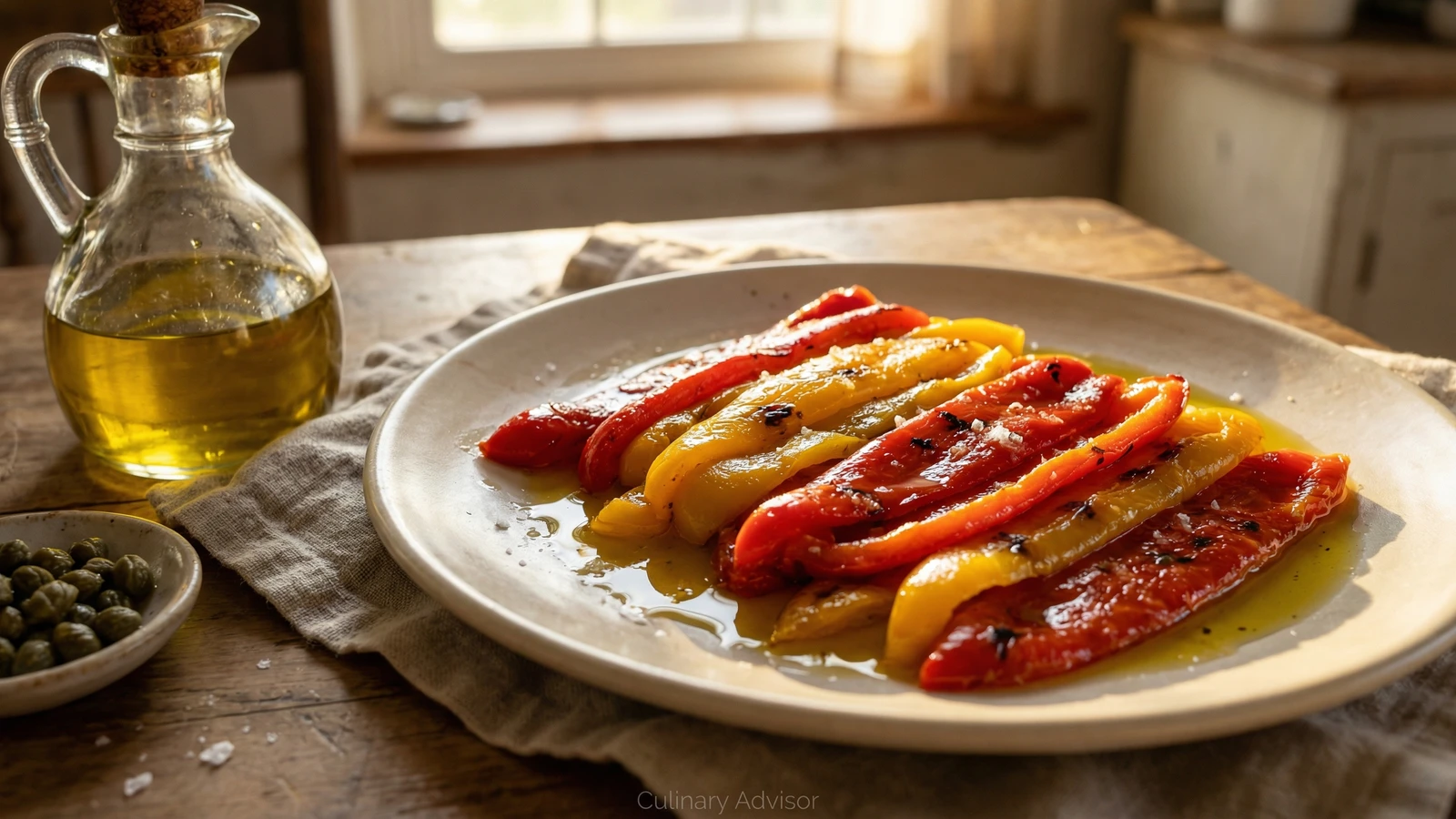
Peperoni Arrostiti
Created by Chef Graziella
Fire-charred peppers stripped of their skins and dressed simply with good olive oil. This is how raw crunch becomes silky sweetness, the foundation of Italian pepper cookery.
Green peppers have no place here. They remain bitter even when roasted. You want red peppers, yellow peppers, or the elongated sweet peppers that Italians prize. The color matters because color indicates ripeness, and ripeness determines sweetness.
The technique is primitive and essential: you blacken the skin over an open flame until it blisters and chars, then trap the peppers in their own steam until the skins slip away like paper. What emerges is transformed. The raw vegetal crunch becomes something yielding and sweet, smoky from the fire, concentrated in flavor.
Americans rinse their roasted peppers under running water to remove the skins more easily. This is a grave error. You wash away the smoky essence, the caramelized sugars, the very soul of the dish. A few specks of char remaining on the flesh harm nothing. The lost flavor harms everything.
Dressed simply with good olive oil and a whisper of garlic (infused into the oil, then removed), these peppers require nothing more. They are complete. The anchovies and capers are regional variations, appropriate in some traditions, but the foundation needs no embellishment.
Peppers arrived in Italy from the New World in the 16th century and found their spiritual home in the south, where the climate allows them to ripen fully on the vine. The technique of fire-roasting to remove skins predates modern cookery, passed through generations of home cooks who understood that flame creates flavor no oven can replicate. In Piedmont, peppers roasted this way become the foundation of bagna cauda; in Campania, they appear on antipasto platters alongside mozzarella and prosciutto.
The technique, the tradition, and the story behind every dish.
Discover Culinary AdvisorIngredients
bell peppers
Quantity
6 large
red and yellow, not green
extra virgin olive oil
Quantity
1/4 cup, plus more for drizzling
garlic
Quantity
1 clove
lightly crushed and peeled
kosher salt
Quantity
to taste
red wine vinegar (optional)
Quantity
1 tablespoon
anchovy fillets (optional)
Quantity
6
packed in oil
capers (optional)
Quantity
2 tablespoons
rinsed
| Ingredient | Quantity |
|---|---|
| bell peppersred and yellow, not green | 6 large |
| extra virgin olive oil | 1/4 cup, plus more for drizzling |
| garliclightly crushed and peeled | 1 clove |
| kosher salt | to taste |
| red wine vinegar (optional) | 1 tablespoon |
| anchovy fillets (optional)packed in oil | 6 |
| capers (optional)rinsed | 2 tablespoons |
Equipment Needed
- •Long-handled tongs for turning peppers
- •Large bowl with tight-fitting lid or plate
- •Fine-mesh strainer for pepper juices
Instructions
- 1
Char the peppers
Place the whole peppers directly over a gas flame, turning them with tongs as each side blackens. The skin should blister and char completely, turning papery and black. This takes 10 to 15 minutes per pepper. If you do not have a gas stove, place peppers on a sheet pan under the broiler, as close to the heat as possible, turning every 3 to 4 minutes until charred on all sides.
Do not fear the blackening. The char does not penetrate the flesh. It creates the smoky sweetness that distinguishes properly roasted peppers from the pallid, steamed versions sold in jars. - 2
Steam and rest
Transfer the charred peppers to a bowl and cover tightly with a plate or plastic wrap. Let them steam in their own heat for 15 minutes. The trapped steam loosens the skins. Do not skip this step or the peeling becomes tedious and the peppers tear.
- 3
Peel and seed
Working over the bowl to catch the juices, peel away the blackened skin with your fingers. It should slip off easily. Pull out the stem, open the pepper, and scrape away the seeds and white membranes. Do not rinse the peppers under water. This washes away the smoky flavor you just created. A few flecks of char remaining are perfectly acceptable.
The juices that collect in the bowl are liquid gold. Strain them through a fine sieve and add them to your dressing. They concentrate the essence of roasted pepper. - 4
Cut and arrange
Tear or slice the peppers into wide strips, roughly one inch across. Arrange them on a serving plate in a single layer, alternating colors if you have used both red and yellow peppers.
- 5
Dress the peppers
In a small bowl, combine the olive oil with the crushed garlic clove and a pinch of salt. Let it sit for 5 minutes to infuse, then remove and discard the garlic. Drizzle this oil over the peppers. Add the strained pepper juices. If using vinegar, add it now. Season with salt and toss gently. The peppers should glisten but not swim.
The garlic here is a whisper. You infuse the oil and remove it. What remains is perfume, not presence. This is the difference between cooking Italian food and cooking what Americans imagine Italian food to be. - 6
Add optional embellishments
If using anchovies, drape them across the peppers in an attractive pattern. If using capers, scatter them over the top. These additions are traditional in certain regions but not required. The peppers stand beautifully on their own.
- 7
Rest before serving
Let the dressed peppers sit at room temperature for at least 30 minutes before serving. The flavors marry and deepen. Cold dulls them, so remove from the refrigerator an hour before serving if made ahead. These are best at room temperature, where the silky texture and smoky sweetness express themselves fully.
Chef Tips
- •Choose peppers that feel heavy for their size, with taut, unwrinkled skin. The best roasted peppers start as the best raw peppers.
- •If your kitchen lacks a gas stove, the broiler method works. What does not work is roasting peppers in a covered pan or in a conventional oven at moderate heat. You need intense, direct heat to char the skins properly.
- •Roasted peppers keep beautifully for one week in the refrigerator, covered with olive oil. They improve after a day or two. Bring to room temperature before serving.
- •These peppers form the base of countless Italian preparations: layered with mozzarella and basil, pureed into a sauce for pasta, tucked into a frittata, served alongside grilled meats. Master this technique and you have mastered a foundation.
Advance Preparation
- •Roasted peppers can be prepared up to one week ahead. Store in a container, covered completely with olive oil, in the refrigerator.
- •Bring to room temperature one hour before serving. Cold mutes the flavors and firms the texture.
- •The peppers may be frozen for up to three months, though the texture softens. Thaw in the refrigerator overnight and drain excess liquid before dressing.
Frequently Asked Questions
Nutrition Information
1 serving (about 150g)
Where cooking meets culture.
Culinary mentorship, cultural storytelling, and the editorial depth that makes cooking meaningful.
Explore Culinary Advisor