Culinary Advisor
A cooking platform built around craft, culture, and the stories behind what we eat.
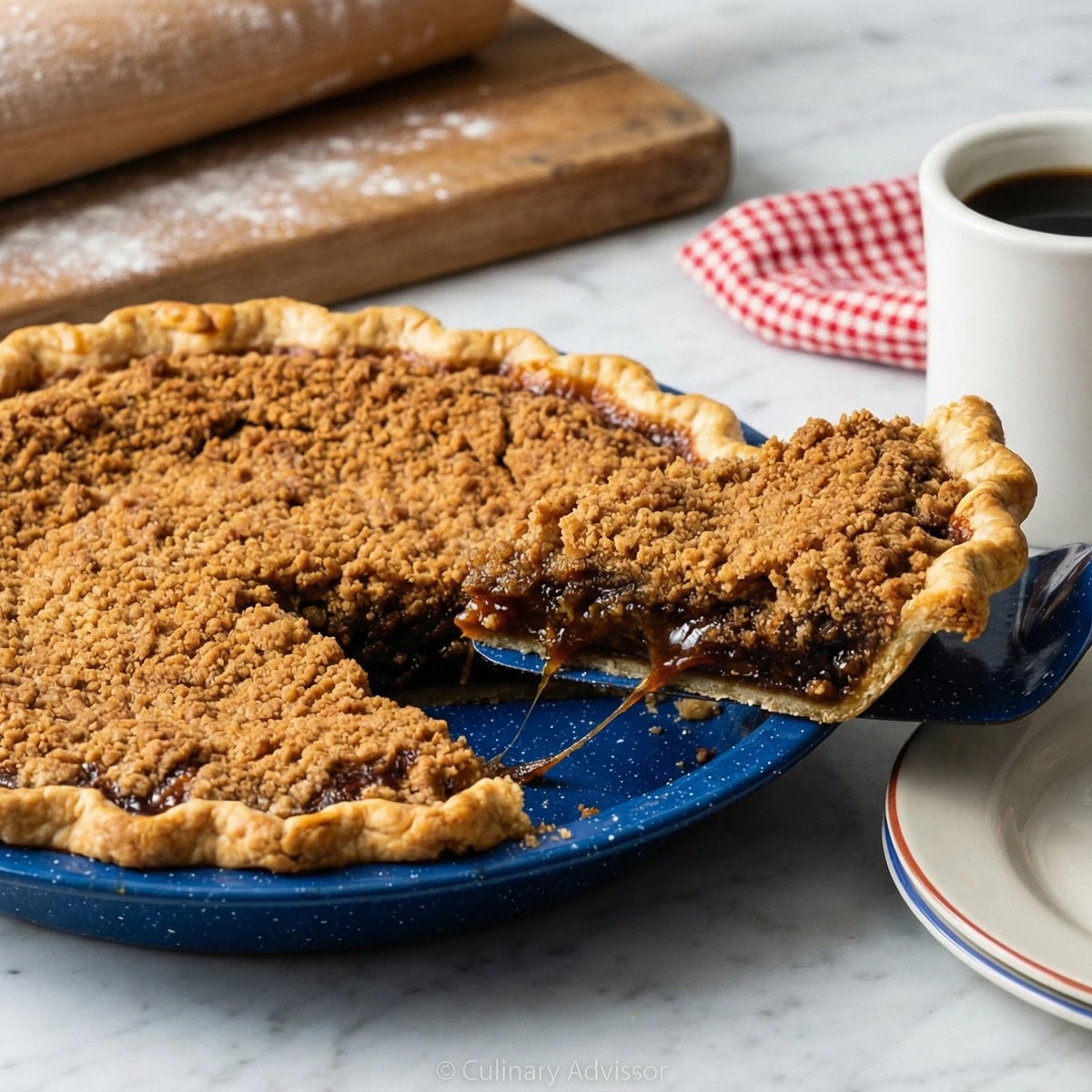
Pennsylvania Dutch Shoofly Pie
Dark and sticky molasses bubbles beneath a buttery crumb streusel in this humble masterpiece from the farmhouse kitchens of Lancaster County, where the sweetness draws flies and the aroma draws family.
This pie was born of necessity and became beloved by choice. Pennsylvania German settlers, the people we incorrectly call the Dutch, arrived in William Penn's colony with practical kitchens and pantries built for survival. When fresh fruit ran out by late winter and the root cellar held only potatoes and turnips, they turned to what kept: molasses, flour, brown sugar, and lard. From these staples emerged a pie sweet enough to serve as breakfast, sturdy enough to pack for field work, and so aromatic that flies had to be shooed away from cooling pies on windowsills. Hence the name.
There are two schools of shoofly. The wet-bottom version keeps a gooey, almost pudding-like layer of molasses beneath the crumbs. The dry-bottom bakes more thoroughly, approaching coffee cake in texture. I've given you the wet-bottom here because that's the version that makes pilgrims of people. They drive to Lancaster County seeking it. They stop at roadside stands and Amish bakeries hoping for exactly this: a pie that sticks to your fork and demands black coffee alongside.
The technique requires attention to one critical moment. When you pour the molasses mixture into the unbaked crust and sprinkle the crumbs on top, everything wants to sink. Work quickly and trust the oven. The chemical reaction between baking soda and acidic molasses creates lift, pushing the crumbs up while the filling sets below. It is kitchen alchemy at its most satisfying.
Ingredients
unbaked 9-inch pie crust
Quantity
1
all-purpose flour
Quantity
1 cup
dark brown sugar
Quantity
2/3 cup
packed
| Ingredient | Quantity |
|---|---|
| unbaked 9-inch pie crust | 1 |
| all-purpose flour | 1 cup |
| dark brown sugarpacked | 2/3 cup |