Culinary Advisor
A cooking platform built around craft, culture, and the stories behind what we eat.
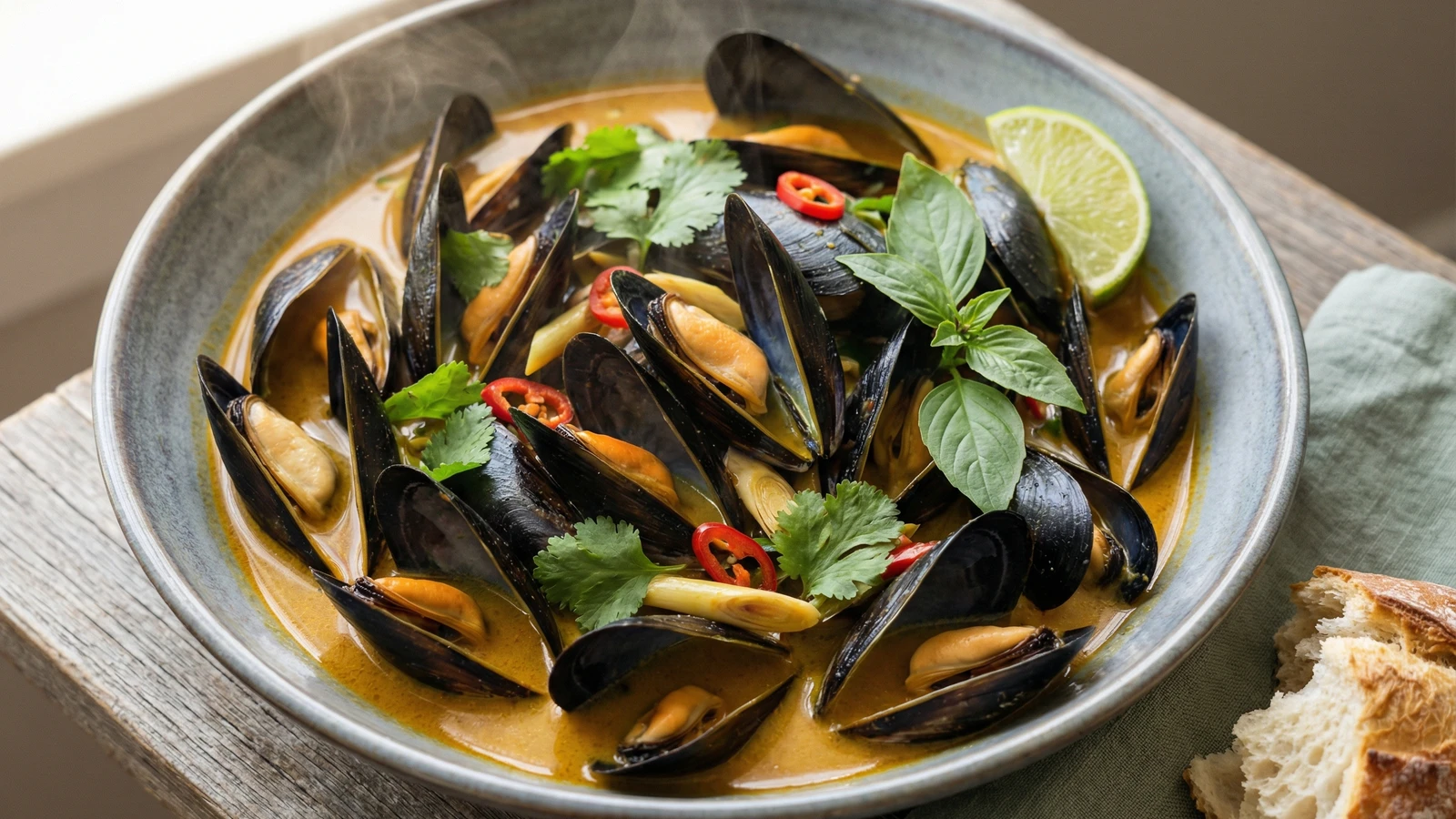
Penn Cove Mussels in Coconut Curry
Created by
Sweet, briny mussels from Whidbey Island's cold waters, steamed open in a fragrant coconut curry broth perfumed with lemongrass, ginger, and kaffir lime. Crusty bread for soaking is not optional.
Penn Cove sits on the eastern shore of Whidbey Island, where the waters run cold and clean and the mussels grow fat on plankton. The Mussel Farm there has been rope-cultivating these bivalves since 1975, long before sustainable aquaculture became fashionable. These are American mussels, raised in American waters, and they deserve the same respect we give any great ingredient.
Seattle's culinary identity was shaped by collision. Coast Salish peoples harvested shellfish from these waters for millennia. Scandinavian fishermen brought their smoking techniques and their reverence for the sea. And beginning in the 1970s, Vietnamese and Thai immigrants transformed the city's palate, introducing lemongrass and fish sauce and coconut milk to kitchens that had known only cream and butter. This dish lives at that intersection.
The technique is simple. Build a fragrant base of aromatics in a wide pan. Add coconut milk and let it simmer until the fat separates slightly at the edges. Then in go the mussels, lid on, heat high. Four minutes. Maybe five. They steam open in that perfumed broth, releasing their liquor into the curry, creating something greater than either component alone.
Serve this in wide bowls with plenty of broth. Put bread on the table. Not polite slices but torn chunks of something crusty. Your guests will fight over who gets to soak up the last of that broth. Let them.
The technique, the tradition, and the story behind every dish.
Discover Culinary AdvisorIngredients
Penn Cove mussels
Quantity
4 pounds
scrubbed and debearded
coconut oil
Quantity
2 tablespoons
shallot
Quantity
1 large
thinly sliced
garlic
Quantity
4 cloves
minced
fresh ginger
Quantity
2-inch piece
julienned
lemongrass
Quantity
2 stalks
bottom 4 inches, bruised and sliced
Thai red curry paste
Quantity
2 tablespoons
full-fat coconut milk
Quantity
1 can (13.5 oz)
seafood stock or clam juice
Quantity
1 cup
fish sauce
Quantity
2 tablespoons
palm sugar or light brown sugar
Quantity
1 tablespoon
kaffir lime leaves
Quantity
4
torn
Thai bird chilies (optional)
Quantity
2
sliced
limes
Quantity
2
juiced
fresh cilantro leaves
Quantity
1/2 cup
fresh Thai basil leaves
Quantity
1/4 cup
crusty bread
Quantity
for serving
| Ingredient | Quantity |
|---|---|
| Penn Cove musselsscrubbed and debearded | 4 pounds |
| coconut oil | 2 tablespoons |
| shallotthinly sliced | 1 large |
| garlicminced | 4 cloves |
| fresh gingerjulienned | 2-inch piece |
| lemongrassbottom 4 inches, bruised and sliced | 2 stalks |
| Thai red curry paste | 2 tablespoons |
| full-fat coconut milk | 1 can (13.5 oz) |
| seafood stock or clam juice | 1 cup |
| fish sauce | 2 tablespoons |
| palm sugar or light brown sugar | 1 tablespoon |
| kaffir lime leavestorn | 4 |
| Thai bird chilies (optional)sliced | 2 |
| limesjuiced | 2 |
| fresh cilantro leaves | 1/2 cup |
| fresh Thai basil leaves | 1/4 cup |
| crusty bread | for serving |
Equipment Needed
- •Large Dutch oven or wide braising pan with tight-fitting lid (5.5 quart minimum)
- •Stiff brush for cleaning mussels
- •Large slotted spoon for serving
Instructions
- 1
Inspect and clean mussels
Dump your mussels into the sink and run cold water over them. Discard any with cracked shells. Tap any open mussels firmly on the counter. If they don't close within thirty seconds, they're dead. Throw them out. Pull off any beards (the fibrous threads protruding from the shell) with a firm tug toward the hinge end. Scrub away any barnacles or debris with a stiff brush. Healthy mussels smell like clean ocean. Anything ammonia-sharp goes in the trash.
Penn Cove mussels are rope-cultivated, which means they're typically cleaner and less gritty than wild-harvested varieties. Still, inspect each one. - 2
Build the aromatic base
Set a large Dutch oven or wide braising pan over medium heat. Add the coconut oil and let it melt and shimmer. Add the shallot and cook, stirring occasionally, until softened and translucent, about 3 minutes. Add the garlic, ginger, and lemongrass. Stir constantly now. You want these aromatics fragrant and golden, not brown. Two minutes, maybe less. Your kitchen should smell like a reason to keep cooking.
Bruise the lemongrass by pressing firmly with the flat of your knife before slicing. This releases the essential oils trapped in the fibrous stalks. - 3
Bloom the curry paste
Push the aromatics to the edges of the pan and add the curry paste to the center. Let it sizzle in direct contact with the hot surface for 30 seconds, stirring constantly. The paste will darken slightly and become intensely fragrant. This blooming step transforms raw spice paste into something deeply complex. Stir everything together so the aromatics are coated in that brick-red paste.
- 4
Create the coconut broth
Pour in the coconut milk and seafood stock. Add the fish sauce, palm sugar, kaffir lime leaves, and chilies. Stir well and bring to a gentle simmer. Let this cook for 5 minutes, allowing the flavors to marry. The broth should taste balanced between salty, sweet, and aromatic. Adjust fish sauce for salt, sugar for sweetness. The lime juice comes later.
Full-fat coconut milk is non-negotiable here. Light versions lack the richness to stand up to the briny mussels. - 5
Steam the mussels
Turn the heat to high and let the broth come to an active simmer. Add all the mussels at once and immediately cover with a tight-fitting lid. Set a timer for 4 minutes. Resist the urge to peek. The steam trapped inside does the work. After 4 minutes, remove the lid. Most mussels should be wide open, their orange and cream flesh visible. If more than a few remain closed, cover and cook 1 minute longer. Discard any that refuse to open even after extended cooking.
Work in batches if your pot isn't large enough to hold all the mussels in roughly two layers. Crowding them too deeply means uneven cooking. - 6
Finish and serve
Remove the pot from heat. Squeeze the lime juice directly over the mussels and toss gently with a large spoon to distribute. Taste the broth one final time. The lime should brighten everything without making it sour. Scatter the cilantro and Thai basil over the top. Ladle into wide, warmed bowls, making sure each serving gets plenty of broth. Serve immediately with torn chunks of crusty bread alongside.
Chef Tips
- •Seek out Penn Cove mussels specifically if you can find them. They're available at quality fishmongers and some farmers markets in the Pacific Northwest from October through April. Prince Edward Island mussels make a worthy substitute on the East Coast.
- •Mussels are among the most sustainable seafood choices available. Rope cultivation actually improves water quality by filtering plankton. Eat them without guilt.
- •If kaffir lime leaves prove elusive, substitute the zest of one lime added with the aromatics. It's not the same but it's honest.
- •This dish pairs beautifully with an off-dry Riesling from the Columbia Valley or, if you prefer beer, a Belgian-style witbier. The slight sweetness complements the curry without competing.
- •Buy your mussels the day you cook them. They're alive until you aren't, and freshness matters more here than in almost any other protein.
Advance Preparation
- •Mussels can be cleaned, debearded, and refrigerated in a bowl covered with a damp towel up to 4 hours ahead. Do not store them in water or sealed containers.
- •The coconut curry base (through step 4) can be prepared several hours ahead and reheated. Bring it to an active simmer before adding the mussels.
- •This dish does not reheat well. The mussels turn rubbery. Cook only what you'll eat immediately.
Frequently Asked Questions
Nutrition Information
1 serving (about 410g)
Where cooking meets culture.
Culinary mentorship, cultural storytelling, and the editorial depth that makes cooking meaningful.
Explore Culinary Advisor