Culinary Advisor
A cooking platform built around craft, culture, and the stories behind what we eat.
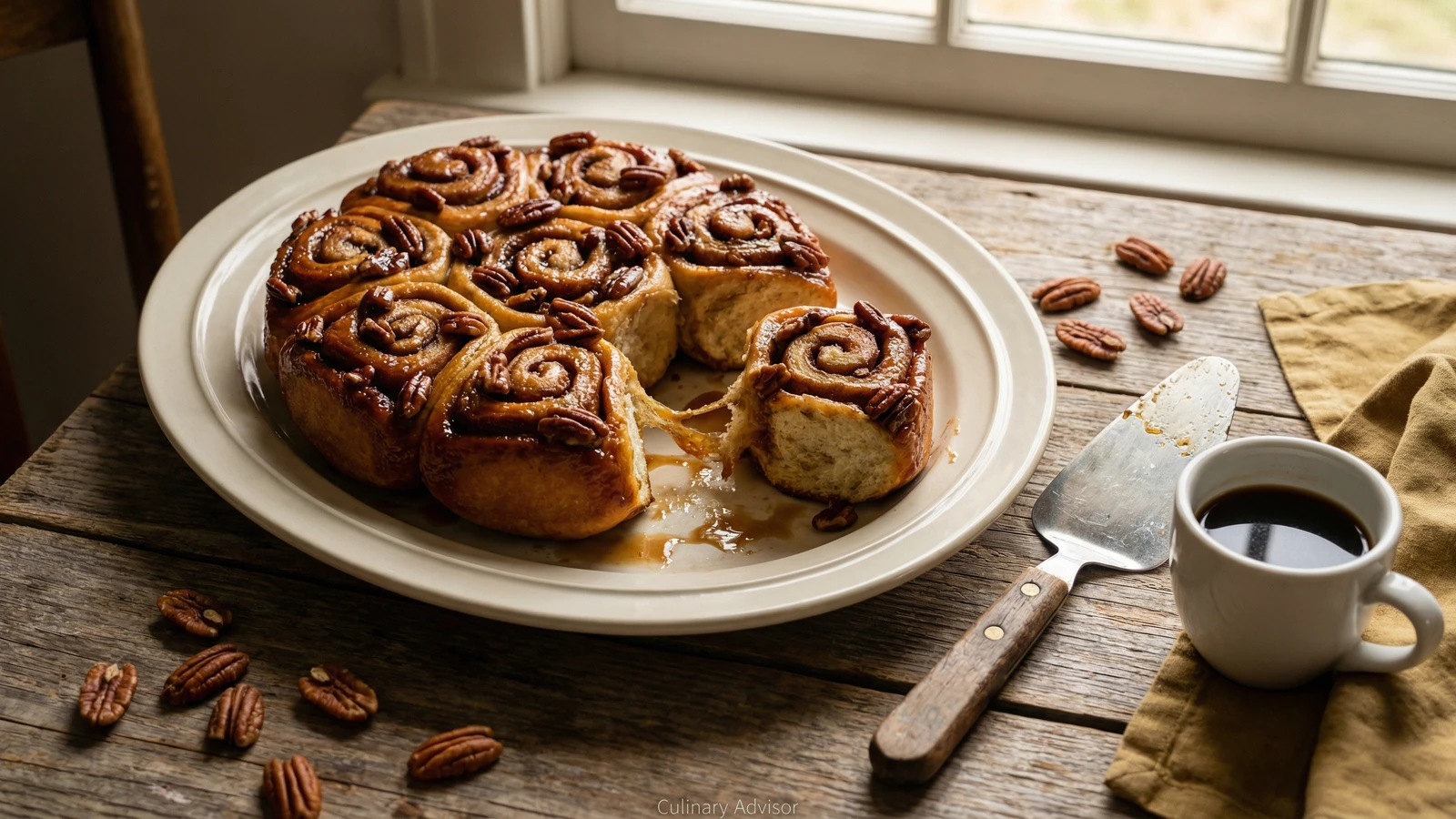
Pecan Sticky Buns with Cane Syrup
Created by Chef Remy
Pillowy yeasted rolls baked in a bubbling bath of butter, brown sugar, and Steen's cane syrup, then flipped to reveal a crown of caramelized Louisiana pecans that shatter and stick to your fingers in the best possible way.
Cane syrup is liquid gold in Louisiana. My grandmother Evangeline kept a can of Steen's in her pantry the way other folks keep honey, and she drizzled it on everything from biscuits to sweet potatoes. When she made sticky buns, the whole house smelled like Christmas morning, that deep molasses perfume mixing with cinnamon and toasted pecans.
The secret to these buns lives in that sticky bottom. You're building a caramel right in the pan before the dough ever touches it. Butter, brown sugar, and that dark ribbon of cane syrup all melt together into something magical. The pecans go in next, cut side up so they toast as the buns bake above them. When you flip that pan onto your platter, everything inverts into glory: gooey caramel cascading down the sides, pecans arranged like a jeweled crown on top.
Now, the dough requires patience. You're making an enriched bread, soft from eggs and butter, and it needs time to rise properly. Don't rush it. At Lagniappe, we let our sticky bun dough proof overnight in the cooler, and the flavor deepens considerably. But even a two-hour rise at room temperature will give you something beautiful. Trust the process, and you'll pull buns from your oven that rival any bakery in New Orleans.
The technique, the tradition, and the story behind every dish.
Discover Culinary AdvisorIngredients
whole milk
Quantity
1 cup
warmed to 110°F
active dry yeast
Quantity
2 1/4 teaspoons (1 packet)
granulated sugar
Quantity
1/2 cup, divided
all-purpose flour
Quantity
4 cups (500g)
plus more for dusting
fine sea salt (for dough)
Quantity
1 1/2 teaspoons
large eggs
Quantity
2
at room temperature
unsalted butter (for dough)
Quantity
6 tablespoons
softened
unsalted butter (for sticky bottom)
Quantity
1 cup (2 sticks)
dark brown sugar (for sticky bottom)
Quantity
1 cup
packed
Steen's cane syrup
Quantity
1/2 cup
fine sea salt (for sticky bottom)
Quantity
1/4 teaspoon
Louisiana pecan halves
Quantity
2 cups
unsalted butter (for filling)
Quantity
6 tablespoons
softened
dark brown sugar (for filling)
Quantity
3/4 cup
packed
ground cinnamon
Quantity
2 tablespoons
freshly grated nutmeg
Quantity
1/4 teaspoon
fine sea salt (for filling)
Quantity
pinch
| Ingredient | Quantity |
|---|---|
| whole milkwarmed to 110°F | 1 cup |
| active dry yeast | 2 1/4 teaspoons (1 packet) |
| granulated sugar | 1/2 cup, divided |
| all-purpose flourplus more for dusting | 4 cups (500g) |
| fine sea salt (for dough) | 1 1/2 teaspoons |
| large eggsat room temperature | 2 |
| unsalted butter (for dough)softened | 6 tablespoons |
| unsalted butter (for sticky bottom) | 1 cup (2 sticks) |
| dark brown sugar (for sticky bottom)packed | 1 cup |
| Steen's cane syrup | 1/2 cup |
| fine sea salt (for sticky bottom) | 1/4 teaspoon |
| Louisiana pecan halves | 2 cups |
| unsalted butter (for filling)softened | 6 tablespoons |
| dark brown sugar (for filling)packed | 3/4 cup |
| ground cinnamon | 2 tablespoons |
| freshly grated nutmeg | 1/4 teaspoon |
| fine sea salt (for filling) | pinch |
Equipment Needed
- •9x13-inch metal baking pan
- •Stand mixer with dough hook (or strong arms for hand kneading)
- •Rolling pin
- •Large serving platter or cutting board for flipping
- •Medium saucepan for caramel
Instructions
- 1
Bloom the yeast
Pour the warm milk into a large mixing bowl. It should feel like comfortable bathwater on your wrist, around 110°F. Sprinkle the yeast over the surface and add one tablespoon of the granulated sugar. Give it a gentle stir and let it sit for ten minutes. You're looking for the yeast to foam and bubble, proof that it's alive and hungry. If nothing happens, your yeast is dead and you need to start over with a fresh packet.
Water that's too hot kills yeast instantly. Too cold and it won't activate. When in doubt, use a thermometer. - 2
Build the dough
Add the remaining granulated sugar, the eggs, and three cups of the flour to the yeast mixture. Stir with a wooden spoon until you have a shaggy mass. Add the salt and the softened butter, then work in the remaining cup of flour. The dough will be sticky and soft. This is correct. Resist adding more flour than necessary.
- 3
Knead until smooth
Turn the dough onto a lightly floured surface and knead for eight to ten minutes. You're developing gluten, building the structure that will give your buns that tender pull-apart quality. The dough is ready when it springs back slowly when you poke it and feels smooth as a baby's cheek. It should still be slightly tacky but not stick aggressively to your hands.
If using a stand mixer, use the dough hook on medium-low for six to seven minutes. Watch for the dough to clear the sides of the bowl. - 4
First rise
Grease a large bowl with butter and place the dough inside, turning once to coat. Cover tightly with plastic wrap and let rise in a warm spot until doubled in size, about one and a half to two hours. A turned-off oven with just the light on makes a perfect proofing box. The dough is ready when you can press two fingers into it and the indentation remains.
- 5
Make the sticky bottom
While the dough rises, prepare your pan. Melt one cup of butter in a medium saucepan over medium heat. Add the cup of dark brown sugar, the cane syrup, and quarter teaspoon of salt. Stir constantly until the sugar dissolves and everything comes together into a smooth, bubbling caramel, about three minutes. Pour this mixture into a 9x13-inch baking pan, tilting to coat the bottom evenly. Arrange the pecan halves in neat rows, flat side up. They'll become the crown when you flip the buns.
The sticky mixture will seem thin when you pour it. Don't worry. It thickens as it cools and sets beautifully during baking. - 6
Prepare the filling
Mix the softened butter for the filling with the brown sugar, cinnamon, nutmeg, and pinch of salt until you have a spreadable paste. Set aside at room temperature so it stays soft enough to spread easily.
- 7
Roll and fill
Punch down the risen dough and turn it onto a lightly floured surface. Roll into a rectangle roughly 18 inches by 12 inches, with the long side facing you. Spread the cinnamon-sugar filling evenly over the surface, leaving a half-inch border along the far edge. That bare strip will seal your roll.
- 8
Roll and slice
Starting from the long edge closest to you, roll the dough into a tight log, keeping even tension throughout. Pinch the seam to seal. Using a sharp knife or unflavored dental floss, slice the log into twelve equal rounds, each about one and a half inches thick. Place the rounds cut-side down in the prepared pan, nestling them into the sticky caramel and pecans. Leave a little space between each bun; they'll fill in as they rise.
For clean cuts, slide dental floss under the log, cross the ends over the top, and pull in opposite directions. Works better than any knife. - 9
Second rise
Cover the pan loosely with plastic wrap and let the buns rise until puffy and nearly touching, about 45 minutes to one hour. They should look pillowy and have increased in size by about half. Meanwhile, preheat your oven to 350°F.
- 10
Bake until golden
Remove the plastic wrap and bake for 30 to 35 minutes, until the tops are deep golden brown and the caramel is bubbling vigorously around the edges. The internal temperature should reach 190°F. The buns will look almost too dark on top. This is correct. You need that color for structure and flavor.
- 11
The flip
Here's where you can't hesitate. Remove the pan from the oven and let it rest for exactly five minutes. No more, no less. The caramel needs this time to set slightly so it clings to the buns rather than running off. Place a large serving platter or cutting board over the pan, take a breath, and flip decisively. Lift the pan away and listen for the beautiful sound of caramel settling. Scrape any pecans or caramel that stayed in the pan onto the buns.
Wait longer than five minutes and the caramel solidifies in the pan. Flip too soon and you lose half your topping to the platter. Timing matters here. - 12
Serve with generosity
Let the buns cool for another ten minutes before pulling them apart. They should be warm, not hot, when you eat them. The caramel will still be soft and yielding, the pecans toasted and slightly chewy. Pull a bun from the edge, watch the strands stretch, and know you've made something special. At Lagniappe, we serve these with strong chicory coffee and zero regrets.
Chef Tips
- •Steen's cane syrup is the gold standard, and you can find it in most Southern grocery stores or order it online. In a pinch, you can substitute equal parts molasses and corn syrup, but the flavor won't be the same. Cane syrup has a cleaner sweetness with notes of sugarcane that molasses can't replicate.
- •Louisiana pecans are worth seeking out. They're smaller and sweeter than the Georgia varieties, with a richer flavor that stands up to the caramel. If your pecans seem stale, toast them in a dry skillet for a few minutes to revive them before arranging in the pan.
- •For the best texture, make the dough the night before and let it rise slowly in the refrigerator. Pull it out two hours before you plan to roll and fill. The cold fermentation develops complex flavors you can't get from a quick rise.
- •These buns are best eaten the day they're made, when the caramel is still tacky and the bread is tender. If you must store them, cover tightly and reheat in a 300°F oven for ten minutes. The microwave turns them gummy.
Advance Preparation
- •The dough can be made through the first rise, then refrigerated overnight. Let it come to room temperature for two hours before rolling.
- •Assembled buns can be covered and refrigerated overnight before the second rise. Remove from refrigerator, let rise for 1 1/2 to 2 hours until puffy, then bake as directed.
- •The sticky caramel bottom can be prepared and poured into the pan up to two days ahead. Store covered at room temperature.
Frequently Asked Questions
Nutrition Information
1 serving (about 160g)
Where cooking meets culture.
Culinary mentorship, cultural storytelling, and the editorial depth that makes cooking meaningful.
Explore Culinary Advisor