Culinary Advisor
A cooking platform built around craft, culture, and the stories behind what we eat.
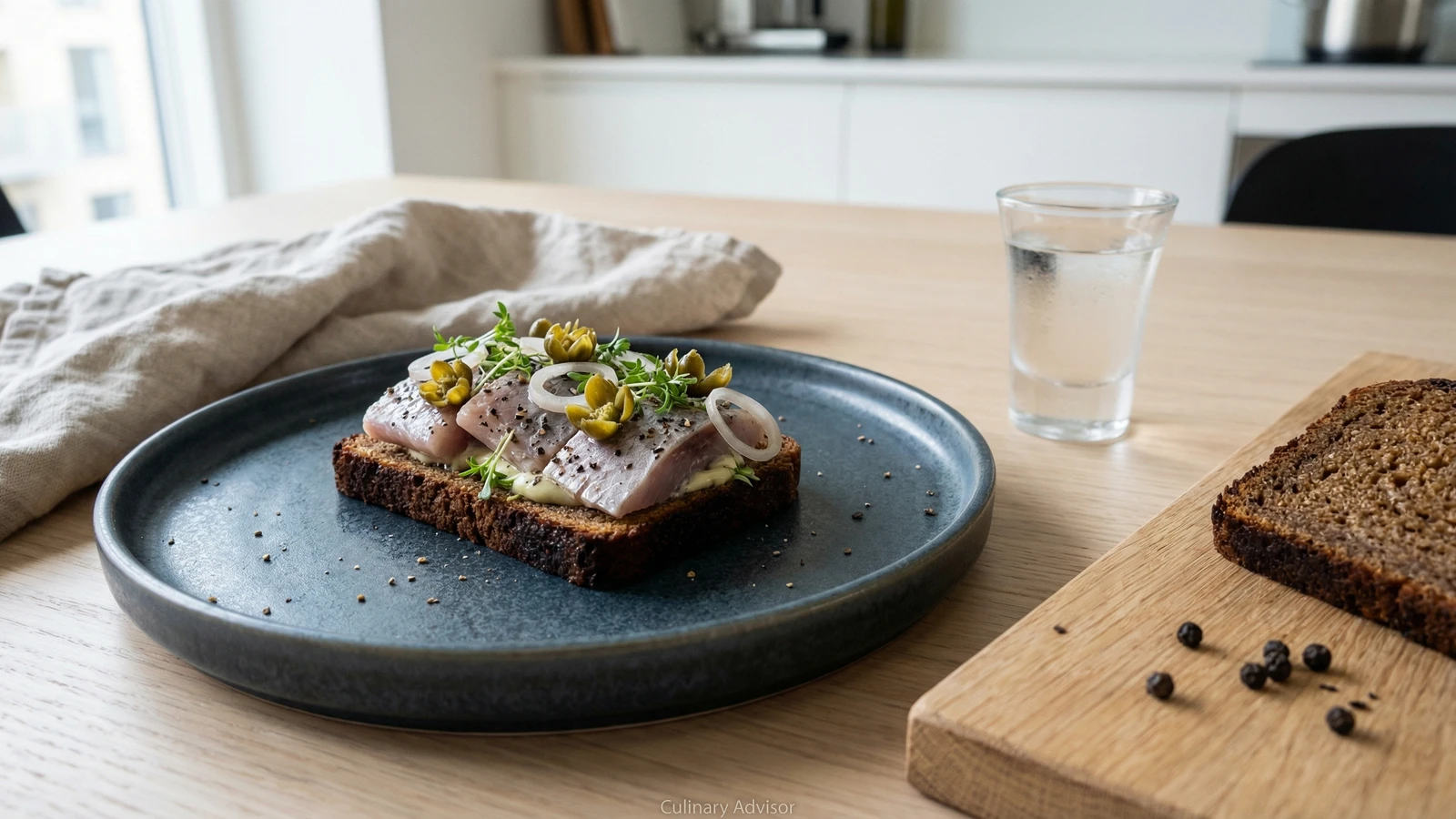
Pebersild
Created by Chef Freja
Pickled herring marinated in cracked black pepper, laid on toasted rugbrod spread with pepper mayonnaise, finished with crisp fried capers, paper-thin shallot rings, and fresh cress. The boldest piece at a Danish lunch.
December in Copenhagen is dark by three in the afternoon. The sky goes low, the streetlights come on, and somewhere in every neighborhood a long lunch is being set up. This is julefrokost season, the stretch of weeks between the first Sunday of Advent and the first working days of January when the Danes sit down together and eat slowly. Aquavit on the table. Dark beer in the glass. The afternoon stretches.
Herring always goes first at a julefrokost, and pebersild is the boldest piece in the lineup. Where the classic pickled herring is gentle and sweet-sour, pebersild is direct. Black pepper in the brine, black pepper in the mayonnaise, more black pepper at the finish. It's the piece that wakes the palate up and sets the tempo for everything that follows. You eat it, you take a sip of aquavit, and the rest of the lunch knows what kind of afternoon it's going to be.
The technique is not complicated, but the timing matters. The herring needs twenty-four hours in the pepper brine to take on the character all the way through. Twelve hours is not enough. The bread is toasted in butter, not dry in a toaster, because butter-toasted rugbrod is a different thing, nutty and deep, and it holds up to everything you put on it. The capers are fried until they bloom open like small green flowers. Every step has a reason, and I'll walk you through each one.
Pay attention to one thing above all. When the butter in the pan stops foaming and starts to smell of hazelnuts, that's when the rugbrod goes in. Earlier and you're just steaming bread. Later and the butter burns. You'll know when it's right, because the kitchen will tell you.
Pepper herring belongs to the family of named Danish herring preparations, sildemad, that came out of the long tradition of preserving Baltic and North Sea herring with strong aromatics. By the late nineteenth century, Copenhagen lunch restaurants were offering diners a lineup of six or seven different herring pieces at the start of every meal, and pebersild held a fixed place among them as the boldest of the lot. The grammar of the julefrokost, which still begins with herring before moving to other fish, then warm dishes, then cheese, was codified in this period by the smorrebrodsjomfruer, the formally trained women of the cold kitchen whose handwritten notebooks preserved variations that would otherwise have been lost.
The technique, the tradition, and the story behind every dish.
Discover Culinary AdvisorIngredients
pickled herring fillets (matjes style)
Quantity
8
drained
white wine vinegar
Quantity
200ml
water
Quantity
100ml
caster sugar
Quantity
75g
black peppercorns
Quantity
2 tablespoons
coarsely cracked
bay leaves
Quantity
2
allspice berries
Quantity
6
lightly crushed
yellow mustard seeds
Quantity
1 teaspoon
red onion
Quantity
1 small
thinly sliced
dark rugbrod
Quantity
4 thick slices
unsalted butter
Quantity
30g
for toasting
good mayonnaise
Quantity
4 heaped tablespoons
Dijon mustard
Quantity
1 teaspoon
finely cracked black pepper
Quantity
1 teaspoon, plus more to finish
lemon juice
Quantity
1 teaspoon
fine sea salt
Quantity
to taste
capers
Quantity
3 tablespoons
drained and patted very dry
neutral oil
Quantity
3 tablespoons
for frying
shallots
Quantity
2 large
sliced paper-thin into rings
fresh cress (karse)
Quantity
1 small punnet
| Ingredient | Quantity |
|---|---|
| pickled herring fillets (matjes style)drained | 8 |
| white wine vinegar | 200ml |
| water | 100ml |
| caster sugar | 75g |
| black peppercornscoarsely cracked | 2 tablespoons |
| bay leaves | 2 |
| allspice berrieslightly crushed | 6 |
| yellow mustard seeds | 1 teaspoon |
| red onionthinly sliced | 1 small |
| dark rugbrod | 4 thick slices |
| unsalted butterfor toasting | 30g |
| good mayonnaise | 4 heaped tablespoons |
| Dijon mustard | 1 teaspoon |
| finely cracked black pepper | 1 teaspoon, plus more to finish |
| lemon juice | 1 teaspoon |
| fine sea salt | to taste |
| capersdrained and patted very dry | 3 tablespoons |
| neutral oilfor frying | 3 tablespoons |
| shallotssliced paper-thin into rings | 2 large |
| fresh cress (karse) | 1 small punnet |
Equipment Needed
- •Small saucepan
- •Glass jar or lidded container, around 500ml, for marinating
- •Mandoline for the shallots
- •Small frying pan for the capers
- •Heavy frying pan for the rugbrod
- •Sharp serrated knife
Instructions
- 1
Make the pepper brine
Combine the vinegar, water, and sugar in a small saucepan. Warm gently until the sugar dissolves, then take it off the heat before it simmers. You're making a sweet-sour pickling liquid, not cooking anything. Add the cracked peppercorns, bay leaves, crushed allspice, and mustard seeds. Let the brine cool completely to room temperature. Warm brine softens the herring and turns the flesh cloudy, and that's not what you want.
Crack the peppercorns with the flat of a knife or the bottom of a heavy pan. You want broken pieces, not powder. The broken edges release their oils slowly into the brine over the next day. - 2
Marinate the herring
Cut the drained herring fillets on a slight diagonal into bite-sized pieces, about three per fillet. Layer them in a clean glass jar or lidded container with the sliced red onion. Pour the cool pepper brine over the top so everything is submerged. Seal and refrigerate for at least twenty-four hours. This is where the name of the dish is earned. The herring, already pickled when you bought it, now takes on the black pepper character all the way through. You'll see the liquid darken and smell the pepper when you open the lid the next day.
Forty-eight hours gives you a bolder pepper hit. Twelve hours is too little. The herring needs time to pull the spice into itself. - 3
Mix the pepper mayonnaise
Stir the mayonnaise, Dijon, cracked black pepper, and lemon juice together in a small bowl. Add a small pinch of salt. Taste it. The mayo should be clearly peppery but still creamy and bright, not muddied. If it tastes flat, add another turn of pepper and a few more drops of lemon. This is the cool, rounded counterpoint to the sharp marinated herring, and it needs to hold its own.
- 4
Fry the capers
Heat the neutral oil in a small frying pan over medium-high heat until it shimmers. Test with one caper: it should bubble and open immediately. Add the rest and fry for about thirty seconds, swirling the pan. They'll bloom open like tiny green flowers and turn crisp at the edges. Scoop them out with a slotted spoon onto kitchen paper. Drying the capers thoroughly before they go in the oil is what makes them bloom rather than splutter. Wet capers sulk in the pan and never crisp.
- 5
Toast the rugbrod
Melt the butter in a clean frying pan over medium heat. When it stops foaming and starts to smell nutty, lay the slices of rugbrod in the pan. Toast for about two minutes on each side, pressing down gently with a spatula. You want the surface crisp and the inside still holding some chew. Rugbrod toasted in butter is a different thing from rugbrod in a toaster. The butter soaks into the crumb and browns with it, and that's where the depth of this dish comes from.
Don't rush the heat. High heat blackens the surface before the butter has done its work. Medium is right, and patience is the instrument. - 6
Assemble the smorrebrod
Lay a warm slice of toasted rugbrod on each plate. Spread a generous layer of pepper mayonnaise across the surface, going right to the edges. Lift the marinated herring pieces out of the brine with a fork, letting the excess drip off, and arrange them on top so they cover most of the bread but not quite all of it. You want a sliver of the rugbrod showing at the edge, because the layered architecture of smorrebrod is part of the dish.
Lay the herring with the skin side up. The silver-mauve of the skin catches the light and is half the beauty of the piece. - 7
Finish and serve
Scatter the paper-thin shallot rings over the herring, then the crisp fried capers. Snip the fresh cress with scissors directly over the top so the green falls in soft tufts. Finish with one last turn of cracked black pepper. Serve immediately with a cold glass of aquavit and a dark beer if the moment calls for it. This is the piece that wakes the palate up at the start of a long Danish lunch. Tak for mad.
Chef Tips
- •The herring you start with matters. Look for good Nordic matjes-style pickled herring, the kind sold in glass jars with the fillets whole and silvery. Cheap pickled herring in plastic tubs often has too much sugar and not enough character, and no amount of pepper will rescue it.
- •Fresh cress, karse in Danish, is grown on almost every Copenhagen windowsill in winter. If you can't find it, use the tenderest pea shoots or a fine chive, but nothing with a strong flavor of its own. The cress is there for its clean green bite and its color against the herring, not to compete.
- •This is aquavit food. A cold, caraway-scented snaps and a dark beer alongside is the traditional pairing, and the reason is that the herbal sharpness of the aquavit cuts the oil of the herring the way lemon cuts cream. If you're serving this at a dinner party, set the snaps out cold before the plates hit the table.
Advance Preparation
- •The herring must marinate in the pepper brine for at least twenty-four hours. Start the day before you plan to serve it. Forty-eight hours gives an even bolder pepper character and the jar will keep in the fridge for up to a week.
- •The pepper mayonnaise can be made up to three days ahead and kept covered in the fridge. The flavor settles and deepens overnight.
- •The capers can be fried a few hours ahead and left at room temperature on kitchen paper. They stay crisp as long as they're kept dry.
- •Toast the rugbrod and assemble the pieces just before serving. Toasted rugbrod goes soft under mayonnaise within minutes, and soft toast on a pepper herring smorrebrod is not the dish you want.
Frequently Asked Questions
Nutrition Information
1 serving (about 155g)
Where cooking meets culture.
Culinary mentorship, cultural storytelling, and the editorial depth that makes cooking meaningful.
Explore Culinary Advisor