Culinary Advisor
A cooking platform built around craft, culture, and the stories behind what we eat.
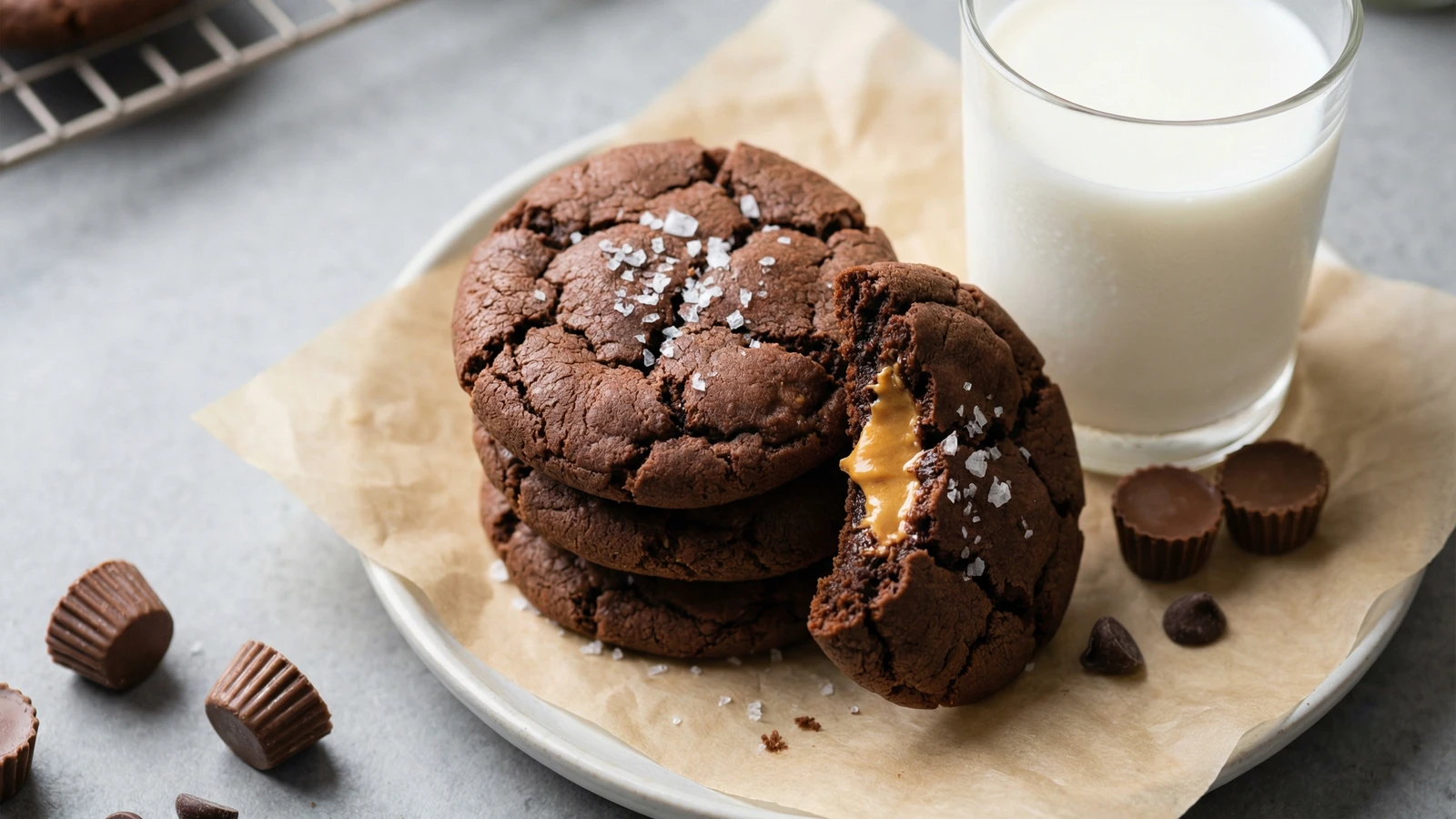
Peanut Butter Cup-Stuffed Cookies
Created by
Fudgy chocolate cookies concealing whole peanut butter cups that turn molten in the oven, creating a two-bite treasure of America's favorite flavor combination.
The marriage of chocolate and peanut butter is America's gift to the dessert world. Most countries find the combination strange. We find it essential. H.B. Reese understood this when he created his cups in a basement in Hershey, Pennsylvania in 1928. Nearly a century later, home bakers decided to wrap cookie dough around those cups and see what happened. What happened was magnificent.
This cookie belongs to the stuffed cookie movement that swept through bakeries and home kitchens in the 2010s. Take something already good. Put something else good inside it. Bake until the outside is set and the inside is molten. It sounds simple because it is. The execution requires attention to temperature: the peanut butter cups must be frozen solid before they go into the dough, and the assembled cookies must chill before they meet the oven.
I've watched students rush this recipe and produce puddles of chocolate-peanut butter lava on their sheet pans. Patience rewards you here. A frozen center and a hot oven create the contrast you're after: crackled chocolate exterior giving way to soft, yielding peanut butter that hasn't quite melted away. Each cookie becomes a controlled experiment in thermal dynamics disguised as dessert.
These are make-ahead cookies. The dough freezes beautifully. The assembled, unbaked cookies freeze even better. Your future self will thank you when company arrives unexpectedly and you can produce warm, stuffed cookies in fifteen minutes.
The technique, the tradition, and the story behind every dish.
Discover Culinary AdvisorIngredients
miniature peanut butter cups
Quantity
18
unwrapped and frozen
unsalted butter
Quantity
1 cup (2 sticks)
softened
dark brown sugar
Quantity
3/4 cup
packed
granulated sugar
Quantity
1/2 cup
large eggs
Quantity
2
room temperature
pure vanilla extract
Quantity
2 teaspoons
all-purpose flour
Quantity
2 cups
Dutch-process cocoa powder
Quantity
3/4 cup
baking soda
Quantity
1 teaspoon
fine sea salt
Quantity
1/2 teaspoon
semi-sweet chocolate chips
Quantity
1 cup
flaky sea salt (optional)
Quantity
for finishing
| Ingredient | Quantity |
|---|---|
| miniature peanut butter cupsunwrapped and frozen | 18 |
| unsalted buttersoftened | 1 cup (2 sticks) |
| dark brown sugarpacked | 3/4 cup |
| granulated sugar | 1/2 cup |
| large eggsroom temperature | 2 |
| pure vanilla extract | 2 teaspoons |
| all-purpose flour | 2 cups |
| Dutch-process cocoa powder | 3/4 cup |
| baking soda | 1 teaspoon |
| fine sea salt | 1/2 teaspoon |
| semi-sweet chocolate chips | 1 cup |
| flaky sea salt (optional) | for finishing |
Equipment Needed
- •Stand mixer or hand mixer
- •Large cookie scoop (2 tablespoon capacity)
- •Two rimmed baking sheets
- •Parchment paper or silicone baking mats
- •Wire cooling rack
Instructions
- 1
Freeze the peanut butter cups
Unwrap all 18 miniature peanut butter cups and arrange them on a small plate or tray. Place in the freezer for at least one hour, though overnight is even better. Frozen solid is your goal. A soft peanut butter cup will melt completely in the oven, leaving you with a hollow, disappointing cookie.
Unwrap them all at once and get them in the freezer before you start the dough. By the time your dough is ready, they'll be cold enough. - 2
Cream butter and sugars
In a large bowl or stand mixer fitted with the paddle attachment, beat the softened butter with both sugars on medium speed until light and fluffy, about 3 minutes. Scrape down the sides of the bowl. The mixture should look pale and almost fluffy. This aeration creates the tender crumb you want.
- 3
Add eggs and vanilla
Add the eggs one at a time, beating well after each addition. The mixture may look slightly curdled after the first egg. Keep beating. It will come together. Add the vanilla extract and beat until combined. The batter should be smooth and glossy.
- 4
Mix dry ingredients
In a separate bowl, whisk together the flour, cocoa powder, baking soda, and fine sea salt. Sift if your cocoa is lumpy. Those lumps will show up as bitter pockets in your finished cookies, and no amount of stirring will break them down once the dough comes together.
- 5
Combine wet and dry
With the mixer on low speed, gradually add the dry ingredients to the butter mixture. Mix just until no flour streaks remain. Overworking develops gluten, which makes cookies tough. Fold in the chocolate chips with a spatula. The dough will be thick and fudgy, almost like brownie batter that decided to become cookie dough.
- 6
Portion and stuff the cookies
Using a large cookie scoop or your hands, portion the dough into 18 equal balls, roughly 2 tablespoons each. Flatten a ball in your palm, place a frozen peanut butter cup in the center, and wrap the dough around it completely. Roll gently between your palms to seal. The peanut butter cup should be entirely encased with no thin spots. Repeat with remaining dough and cups.
Work quickly. Your hands will warm the peanut butter cups. If they start feeling soft, return them to the freezer for ten minutes before continuing. - 7
Chill the assembled cookies
Arrange the stuffed dough balls on a parchment-lined baking sheet and refrigerate for at least one hour, or freeze for 30 minutes. Cold dough spreads less in the oven, which keeps your peanut butter cup centered rather than sliding to one edge. This step is non-negotiable.
- 8
Preheat and prepare
Position racks in the upper and lower thirds of your oven and preheat to 350°F. Line two baking sheets with parchment paper or silicone mats. Let the chilled cookies sit at room temperature while the oven heats, about 10 minutes. This slight tempering prevents the exterior from overbaking before the interior warms through.
- 9
Bake until crackled
Arrange cookies 3 inches apart on prepared sheets, 6 per sheet. Bake for 11 to 13 minutes, rotating the pans halfway through. The cookies are done when the tops are crackled and the edges look set but the centers still appear slightly underdone. They will firm as they cool. Pull them at 11 minutes for a fudgier center, 13 for a more cake-like texture.
- 10
Finish and cool
Remove from the oven and immediately sprinkle each cookie with a few flakes of sea salt. The salt will adhere to the warm surface and cut through the sweetness with each bite. Let cookies cool on the baking sheet for 5 minutes before transferring to a wire rack. If you break one open too soon, the peanut butter center will be molten. This is not a mistake.
Chef Tips
- •Use miniature peanut butter cups, not the full-size ones. Full-size cups require too much dough to encase them properly, and the ratio of cookie to filling becomes unbalanced. You want a bite that delivers both textures simultaneously.
- •Dutch-process cocoa produces a darker, more mellow chocolate flavor than natural cocoa. If using natural cocoa, reduce the baking soda to 3/4 teaspoon and add 1/4 teaspoon baking powder to account for the acidity difference.
- •Store baked cookies in an airtight container at room temperature for up to 4 days. They soften slightly as they sit, which some prefer. To refresh the exterior, warm them in a 300°F oven for 3 minutes.
- •For gift-giving, these ship well. The peanut butter center acts as a moisture reservoir, keeping the cookies soft during transit. Pack them snugly with wax paper between layers.
Advance Preparation
- •Dough can be made and refrigerated up to 3 days ahead. Let it soften slightly at room temperature before portioning.
- •Assembled, unbaked cookie balls freeze beautifully for up to 2 months. Freeze on a sheet pan until solid, then transfer to a freezer bag. Bake directly from frozen, adding 2 to 3 minutes to the bake time.
- •The peanut butter cups can be frozen weeks ahead. Keep them in a sealed container so they don't absorb freezer odors.
Frequently Asked Questions
Nutrition Information
1 serving (about 45g)
Where cooking meets culture.
Culinary mentorship, cultural storytelling, and the editorial depth that makes cooking meaningful.
Explore Culinary Advisor