Culinary Advisor
A cooking platform built around craft, culture, and the stories behind what we eat.
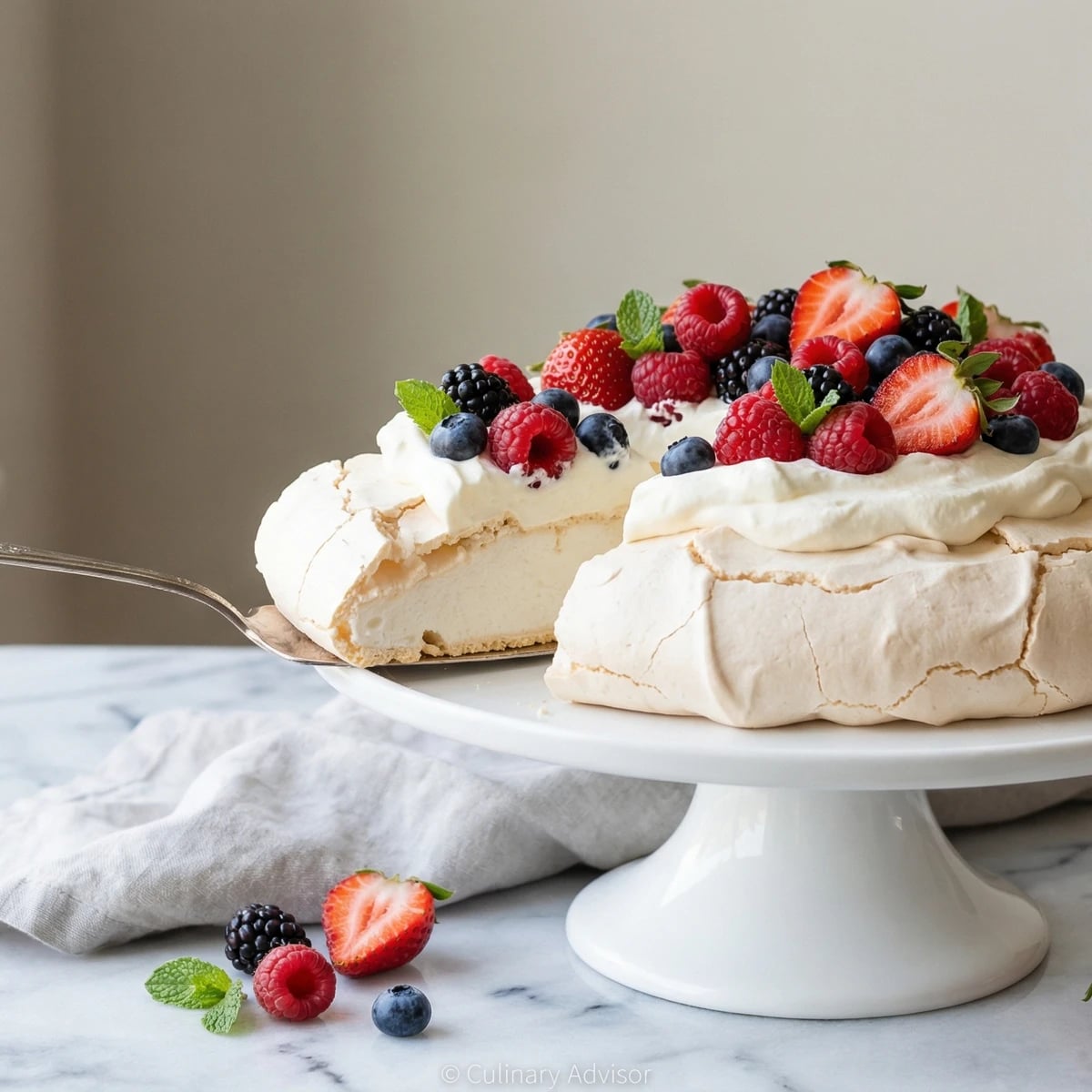
Pavlova with Fresh Berries
Created by Chef Dean
A cloud of crisp meringue cradling a marshmallow heart, crowned with billowing cream and jewel-bright berries. The dessert that launched a century of celebration across the Southern Hemisphere, now yours to master at home.
Pavlova belongs to that rare category of desserts that seem to defy the laws of baking. The exterior shatters at first touch. The interior yields like marshmallow. Whipped cream and fresh berries complete a creation so light it practically levitates from the plate.
Both Australia and New Zealand claim this masterpiece as their own, each insisting it was invented to honor the Russian ballerina Anna Pavlova during her tours of the 1920s. The controversy continues. What matters is that someone, somewhere, discovered that egg whites, sugar, and a touch of cornstarch could produce something transcendent.
The technique is simpler than you might fear. You're essentially making a meringue with two additions: cornstarch and vinegar. The cornstarch absorbs moisture inside the meringue as it bakes, creating that soft center. The vinegar stabilizes the egg white proteins and helps develop the characteristic crisp shell. Together, they produce the texture that distinguishes pavlova from every other meringue dessert.
Don't chase perfection. A pavlova should look handmade, with craggy peaks and honest cracks revealing the marshmallow interior. The contrast between crisp and soft, sweet meringue and tangy berries, airy cream and substantial fruit, is the entire point.
Ingredients
large egg whites
Quantity
4
at room temperature
superfine sugar
Quantity
1 cup (200g)
distilled white vinegar
Quantity
1 teaspoon
| Ingredient | Quantity |
|---|---|
| large egg whitesat room temperature | 4 |
| superfine sugar | 1 cup (200g) |
| distilled white vinegar | 1 teaspoon |