Culinary Advisor
A cooking platform built around craft, culture, and the stories behind what we eat.
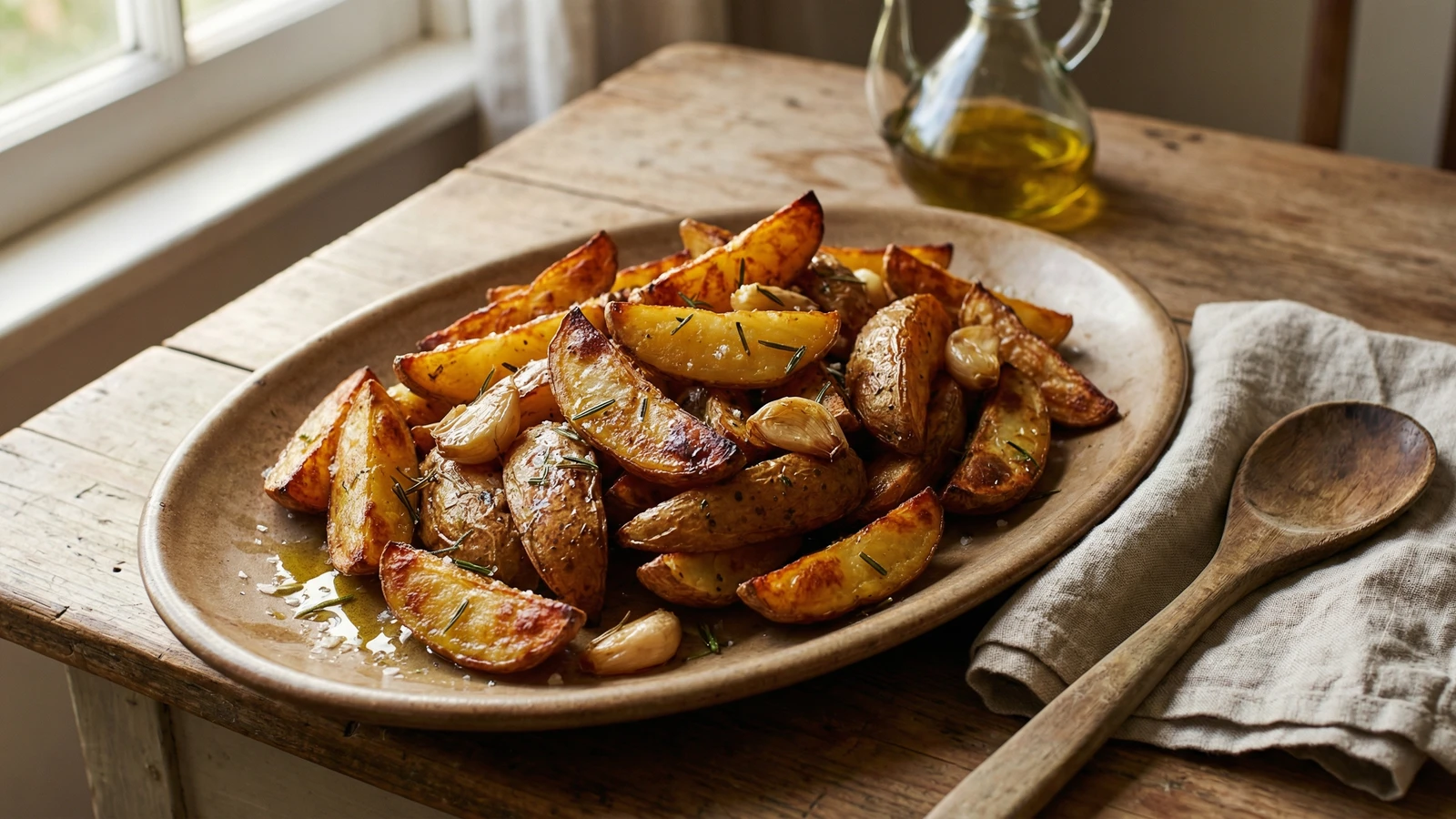
Patate al Forno con Rosmarino
Created by Chef Graziella
The roasted potatoes of the Italian home kitchen, requiring nothing but good olive oil, fresh rosemary, whole garlic cloves, and the patience to leave them alone while the oven does its work.
Every Italian household has roasted potatoes in its repertoire. They appear alongside roasted meats, grilled fish, braised vegetables. They are the contorno that completes the meal, the starch that fills the plate, the thing that children reach for first and adults pretend not to notice disappearing.
The technique is not complicated, but it is unforgiving. Crowd the pan and you will have steamed potatoes. Use too little oil and they will stick and tear. Flip them too early and the crust will not form. These are not difficult rules, but they must be followed.
What you keep out matters as much as what you put in. There is no cheese, no cream, no bacon. The potatoes taste like potatoes, the rosemary like rosemary, the garlic like garlic. Each ingredient earns its place. Nothing hides behind anything else.
Potatoes arrived in Italy from Peru in the 16th century but took two hundred years to move from botanical curiosity to kitchen staple. Northern Italian cooks adopted them first, finding that the tubers thrived in mountain soil. By the 19th century, patate al forno had become essential to the Sunday pranzo throughout the peninsula, the inevitable companion to arrosto di maiale or pollo.
The technique, the tradition, and the story behind every dish.
Discover Culinary AdvisorIngredients
Yukon Gold potatoes
Quantity
2 1/2 pounds
extra virgin olive oil
Quantity
1/3 cup
garlic cloves
Quantity
6
unpeeled and lightly crushed
fresh rosemary
Quantity
4 sprigs
kosher salt
Quantity
1 teaspoon
black pepper
Quantity
to taste
freshly ground
flaky sea salt
Quantity
for finishing
| Ingredient | Quantity |
|---|---|
| Yukon Gold potatoes | 2 1/2 pounds |
| extra virgin olive oil | 1/3 cup |
| garlic clovesunpeeled and lightly crushed | 6 |
| fresh rosemary | 4 sprigs |
| kosher salt | 1 teaspoon |
| black pepperfreshly ground | to taste |
| flaky sea salt | for finishing |
Equipment Needed
- •Large heavy rimmed baking sheet
- •Thin metal spatula for flipping
Instructions
- 1
Prepare the oven and pan
Position a rack in the lower third of your oven and preheat to 425°F. Place a large heavy rimmed baking sheet in the oven while it heats. The pan must be hot when the potatoes hit it. This is not optional. A cold pan produces pale, soggy potatoes that no amount of time will rescue.
- 2
Cut the potatoes
Scrub the potatoes but do not peel them. The skin crisps beautifully and holds the flesh together. Cut each potato into wedges of roughly equal size, about one and a half inches at the widest point. Uniformity matters. Uneven pieces cook unevenly. Some will burn while others remain raw in the center.
If using larger russet potatoes, cut them into cubes. Wedges work for medium Yukon Golds because they lie flat and develop maximum contact with the hot pan. - 3
Season and oil the potatoes
Place the potato wedges in a large bowl. Add the olive oil, kosher salt, and several grinds of black pepper. Toss thoroughly with your hands until every piece glistens. Strip the leaves from two rosemary sprigs, chop them roughly, and add to the bowl. The remaining sprigs go into the pan whole. Toss once more.
- 4
Arrange on the hot pan
Carefully remove the hot baking sheet from the oven. Working quickly, arrange the potatoes in a single layer with one cut side down. Do not crowd them. If the potatoes touch, they will steam rather than roast, and you will have produced something limp and disappointing. Use two pans if necessary. Scatter the crushed garlic cloves and remaining rosemary sprigs among the potatoes.
The garlic stays in its skin to prevent burning. The papery wrapper protects the clove while allowing its perfume to infuse the oil and potatoes. Your guests can squeeze out the soft garlic themselves, or eat it whole. Both are correct. - 5
Roast until golden
Return the pan to the lower third of the oven. Roast undisturbed for 25 minutes. Do not open the oven to check. Do not shake the pan. The potatoes are developing their crust, and interference prevents this. After 25 minutes, use a thin metal spatula to flip each wedge to expose the other cut side. If they resist, they are not ready. Give them five more minutes and try again.
- 6
Finish roasting
Continue roasting until the potatoes are deeply golden on both cut sides and tender when pierced with a knife, another 20 to 25 minutes. The edges should be crisp, almost crackling, while the interior remains fluffy. Remove the rosemary sprigs if they have blackened. Some charring is acceptable; complete carbonization is not.
- 7
Season and serve
Transfer the potatoes to a warm serving dish. Scatter with flaky sea salt while still hot. Serve immediately. These do not wait well. The crust softens as they sit. Bring them to the table the moment they leave the oven, and let your guests help themselves while the edges still crackle.
Chef Tips
- •Yukon Golds balance waxy and starchy qualities, giving you both crisp edges and creamy interiors. Russets work for fluffier results but fall apart more easily. New potatoes are too waxy and will not crisp properly.
- •The oil must be extra virgin and must be good. You will taste it. Cheap, rancid oil produces cheap, rancid potatoes. This is one of those places where the quality of your ingredients determines everything.
- •Leave the garlic in its skin. Peeled garlic burns at this temperature and turns acrid. The skin protects the clove, allowing it to roast gently to sweet, spreadable softness.
- •If you must hold the potatoes, keep them uncovered in a warm oven. Covering them traps steam and destroys the crust you worked to create.
Advance Preparation
- •The potatoes can be cut and held in cold water for up to four hours. Drain and dry them completely before tossing with oil. Any surface moisture will prevent browning.
- •These are best served immediately. Reheating in a hot oven for five minutes will restore some crispness, but they will never be as good as the moment they first leave the oven.
Frequently Asked Questions
Nutrition Information
1 serving (about 165g)
Where cooking meets culture.
Culinary mentorship, cultural storytelling, and the editorial depth that makes cooking meaningful.
Explore Culinary Advisor