Culinary Advisor
A cooking platform built around craft, culture, and the stories behind what we eat.
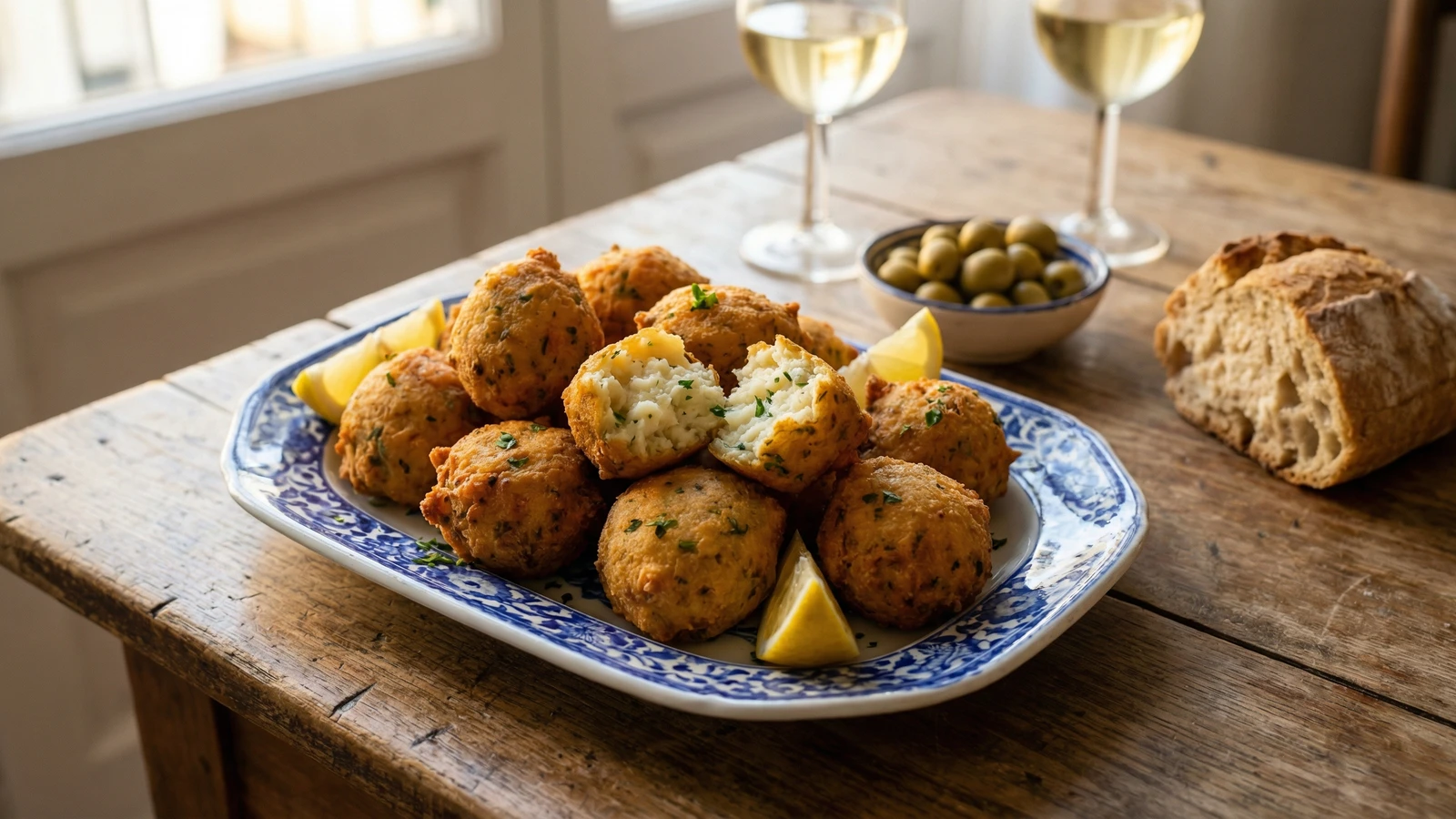
Pastéis de Bacalhau
Created by
The salt cod fritters that define Portuguese snacking, found in every pastelaria window, every grandmother's repertoire, every family gathering where fingers reach across the table
If you want to understand Portugal, eat a pastel de bacalhau. Not from a freezer bag heated in some tourist restaurant. A real one, made that morning, still warm from the fryer, the outside shattering when you bite through to the creamy, salty, impossibly light center.
Every pastelaria in Portugal has them stacked in the window. Every grandmother has her own recipe, her own opinions about the proper ratio of potato to cod, whether onion should be raw or cooked, how long to beat the mixture. Avó Leonor beat hers until her wooden spoon practically bent. "Mais força," she'd say when I helped as a child. More strength. The beating is what makes them light.
These are peasant food transformed into national treasure. Salt cod preserved for months at sea, potatoes from the garden, eggs from the hens. Nothing fancy. Nothing expensive. Just technique passed through generations and the understanding that simple ingredients treated with respect become something greater than their parts.
At Mesa da Avó, I serve these as people arrive, still hot, no plates needed. They disappear before anyone sits down. That's how it should be. Pastéis de bacalhau are for standing around the kitchen, reaching, talking, burning your fingers slightly because you couldn't wait. This is who we are.
Pastéis de bacalhau likely emerged in Lisbon's working-class neighborhoods in the 19th century as a way to stretch precious salt cod further. The addition of potato, introduced from the Americas centuries earlier, created the perfect binder. By the early 20th century, they had become ubiquitous in Portuguese cafés and tascas, a symbol of the nation's centuries-long love affair with bacalhau.
The technique, the tradition, and the story behind every dish.
Discover Culinary AdvisorIngredients
dried salt cod (bacalhau)
Quantity
500g
soaked 2 days, water changed 3 times
starchy potatoes
Quantity
500g
peeled
onion
Quantity
1 medium
very finely minced
garlic
Quantity
2 cloves
minced
fresh flat-leaf parsley
Quantity
1/4 cup
finely chopped
eggs
Quantity
3 large
black pepper
Quantity
1/4 teaspoon
freshly ground
nutmeg (optional)
Quantity
pinch
vegetable oil
Quantity
for deep frying
| Ingredient | Quantity |
|---|---|
| dried salt cod (bacalhau)soaked 2 days, water changed 3 times | 500g |
| starchy potatoespeeled | 500g |
| onionvery finely minced | 1 medium |
| garlicminced | 2 cloves |
| fresh flat-leaf parsleyfinely chopped | 1/4 cup |
| eggs | 3 large |
| black pepperfreshly ground | 1/4 teaspoon |
| nutmeg (optional) | pinch |
| vegetable oil | for deep frying |
Equipment Needed
- •Large heavy pot or deep fryer
- •Potato ricer or masher
- •Wooden spoon for beating
- •Two tablespoons for shaping
- •Thermometer for oil temperature
Instructions
- 1
Prepare the bacalhau
Drain your properly soaked bacalhau and place it in a pot. Cover with fresh cold water and bring to just below a simmer over medium heat. The moment you see small bubbles forming, remove from heat. Let it sit in the hot water for 15 minutes. Drain and let cool slightly. Shred the cod very finely with your fingers, removing every bone and piece of skin. The pieces should be almost fluffy, not chunky. This takes patience. Do it properly.
Never let the water boil. Boiling makes the cod tough and stringy. You want it tender, almost silky when shredded. - 2
Cook and mash the potatoes
While the cod rests, boil the potatoes in salted water until completely tender, about 20 to 25 minutes. Drain well and return to the hot pot. Let them sit for a minute to steam off excess moisture. Mash immediately while still hot, working them until completely smooth with no lumps. A few lumps ruin everything. Use a ricer if you have one.
The potatoes must be starchy, not waxy. Waxy potatoes don't bind the same way. And they must be dry. Wet potatoes make soggy pastéis. - 3
Build the mixture
Add the shredded cod to the warm mashed potatoes and mix well with a wooden spoon. Add the minced onion, garlic, parsley, pepper, and nutmeg if using. Mix thoroughly. The warmth helps everything come together.
- 4
Beat in the eggs
Add the eggs one at a time, beating vigorously after each addition. This is the step that makes or breaks your pastéis. Beat the mixture with conviction. You're not just combining; you're incorporating air. The mixture should become lighter, almost fluffy. Avó Leonor would beat hers for a full five minutes. Her arm never got tired. Mine does, but I do it anyway.
The mixture should hold its shape when scooped but still be soft. If it's too loose, the pastéis will absorb oil. If it's too stiff, they'll be dense. Add a fourth egg if needed, or hold back on the third if the mixture seems wet. - 5
Rest the mixture
Cover the bowl and refrigerate for at least 30 minutes, or up to overnight. Cold mixture shapes more easily and fries more evenly. Don't skip this.
- 6
Shape the pastéis
Using two tablespoons dipped in cold water, shape the mixture into small ovals, about the size of a large egg. Work the spoons against each other to form that classic torpedo shape, pointed at both ends, rounded in the middle. Place on a tray lined with parchment. This takes practice. Your first few will be ugly. They'll still taste perfect.
- 7
Fry until golden
Heat oil in a deep pot or fryer to 180°C (350°F). Fry the pastéis in batches of 4 or 5, turning occasionally, until deep golden brown all over, about 4 to 5 minutes. Don't crowd the pot. Don't rush. They should be the color of a well-toasted almond. Drain on paper towels.
If they brown too fast, your oil is too hot and the inside won't cook through. If they take forever, the oil is too cool and they'll absorb grease. 180°C is the sweet spot. - 8
Serve immediately
Serve hot, piled on a plate with lemon wedges on the side if you like. At any tasca in Portugal, these come to the table the moment they leave the fryer. That's how they should be eaten. Golden, crispy, and still speaking.
Chef Tips
- •The bacalhau must be properly soaked. Two days minimum, water changed three times. Taste a small piece before cooking. It should taste like mild fish, not the sea.
- •Equal parts cod and potato is the traditional ratio, but some grandmothers swear by slightly more cod. Experiment once you've mastered the basic technique.
- •The mixture can be made a day ahead and refrigerated. In fact, it shapes better when cold. Fry just before serving.
- •These freeze beautifully. Freeze shaped but unfried on a tray, then transfer to bags. Fry from frozen, adding a minute to the cooking time.
- •Leftover pastéis can be reheated in a hot oven (200°C) for 10 minutes. The microwave will make them sad. Don't do it.
Advance Preparation
- •Bacalhau must soak for 2 days minimum, with water changed 3 times. Start 3 days before you plan to serve.
- •The mixture can be made up to 24 hours ahead and refrigerated. Cold mixture shapes more easily.
- •Shaped pastéis can be frozen for up to 3 months. Fry directly from frozen.
- •Once fried, serve immediately. These are best within 30 minutes of leaving the oil.
Frequently Asked Questions
Nutrition Information
1 serving (about 50g)
Where cooking meets culture.
Culinary mentorship, cultural storytelling, and the editorial depth that makes cooking meaningful.
Explore Culinary Advisor