Culinary Advisor
A cooking platform built around craft, culture, and the stories behind what we eat.
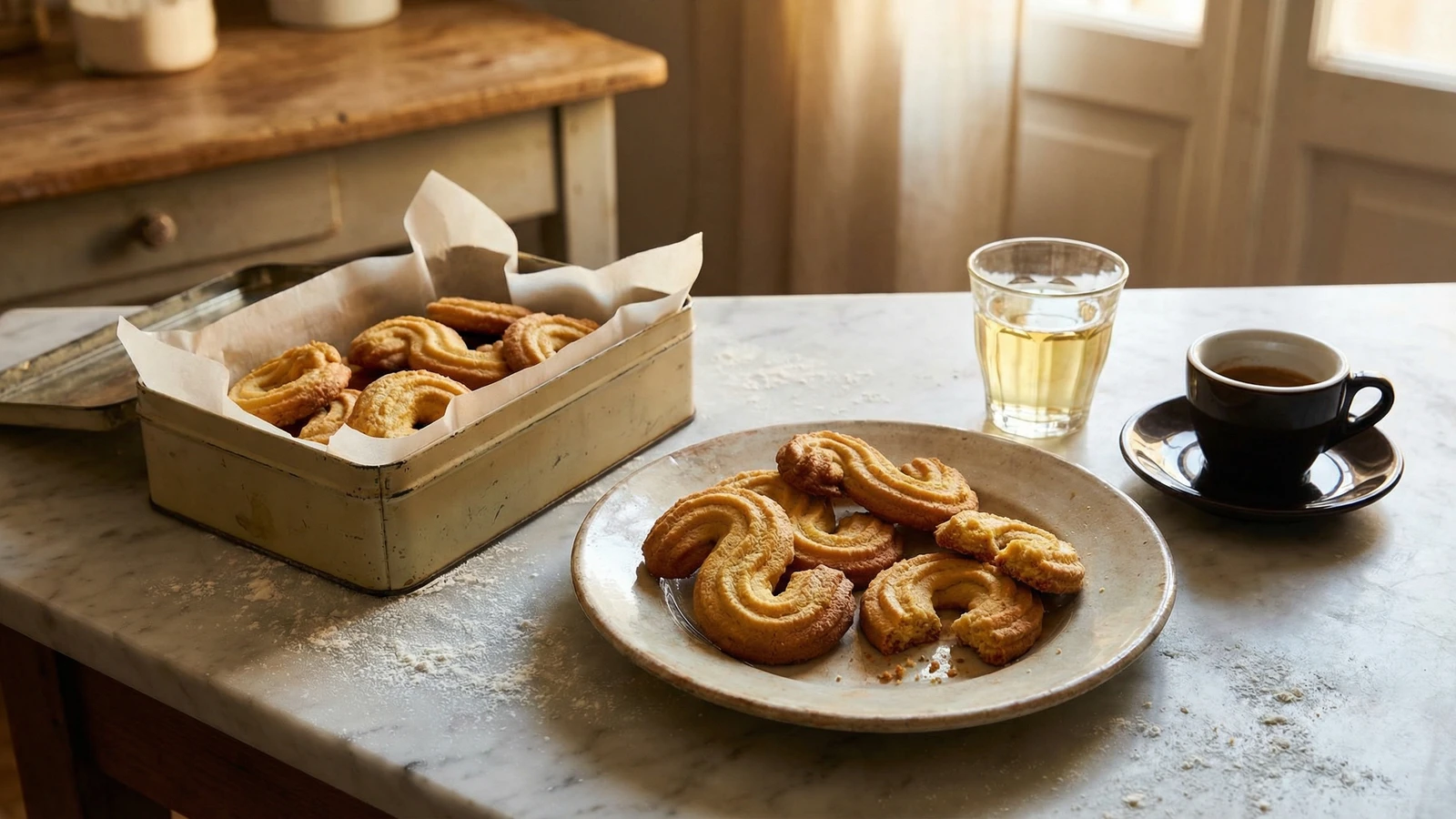
Paste di Meliga
Created by Chef Graziella
The humble cornmeal cookies of Piedmont's wine country, where farmers' wives turned polenta flour and butter into something that has outlasted fashions and earned a place beside the region's finest wines.
In Piedmont, corn is called meliga in dialect, and these are the cookies that farm wives made when wheat flour was precious and corn was plentiful. They are sandy, golden, and they shatter when you bite them. The cornmeal gives them a gentle grain and a warmth that wheat cookies cannot match.
The recipe requires restraint. Two egg yolks, not whole eggs. A whisper of lemon zest, not enough to announce itself. Butter of the finest quality, because you will taste every shortcut. What you keep out is as significant as what you put in. These cookies prove it.
Piedmontese families serve them with Moscato d'Asti, the gently sweet, barely fizzy wine of the Langhe hills. The pairing is not accidental. The cookies are not too sweet, the wine is not too strong, and together they find a balance that centuries of tradition have refined. You may also dunk them in espresso at breakfast, as the old farmers did. The cornmeal softens just enough to absorb the coffee without falling apart.
Paste di meliga emerged in the hill towns of southern Piedmont, in the Langhe and Monferrato, where corn arrived from the Americas in the 16th century and became a peasant staple. What began as a practical use of cheap cornmeal became, over generations, an emblem of Piedmontese identity. The town of Pamparato in the province of Cuneo claims the definitive version, and the cookies now carry the Slow Food Presidium designation that protects traditional foods from extinction.
The technique, the tradition, and the story behind every dish.
Discover Culinary AdvisorIngredients
fine-ground cornmeal
Quantity
200g
all-purpose flour
Quantity
150g
unsalted butter
Quantity
200g
softened
granulated sugar
Quantity
150g
large egg yolks
Quantity
2
pure vanilla extract
Quantity
1 teaspoon
lemon
Quantity
1
finely grated zest only
fine sea salt
Quantity
1/4 teaspoon
| Ingredient | Quantity |
|---|---|
| fine-ground cornmeal | 200g |
| all-purpose flour | 150g |
| unsalted buttersoftened | 200g |
| granulated sugar | 150g |
| large egg yolks | 2 |
| pure vanilla extract | 1 teaspoon |
| lemonfinely grated zest only | 1 |
| fine sea salt | 1/4 teaspoon |
Equipment Needed
- •Pastry bag with large star tip
- •Baking sheets
- •Parchment paper
- •Electric mixer or stand mixer
- •Wire cooling rack
Instructions
- 1
Prepare the dry ingredients
Whisk together the cornmeal, flour, and salt in a bowl. The cornmeal must be fine, what Italians call fioretto, not the coarse grind used for polenta. Coarse cornmeal produces gritty cookies. Set aside.
- 2
Cream butter and sugar
In a large bowl, beat the softened butter with the sugar until pale and fluffy, about 3 minutes with an electric mixer. The butter must be soft enough to cream properly but not melted. If it feels greasy, it is too warm. Stop and refrigerate it for 10 minutes.
Proper creaming is essential. Under-beaten butter produces dense cookies. You should see the mixture lighten in color and increase in volume. - 3
Add the yolks and flavorings
Add the egg yolks one at a time, beating well after each addition. Beat in the vanilla extract and lemon zest. The mixture should be smooth and homogeneous.
- 4
Incorporate the flour mixture
Add the cornmeal mixture to the butter mixture. Beat on low speed or fold with a spatula just until a soft dough forms. The dough will be slightly grainy from the cornmeal. This is correct. Do not overwork it.
- 5
Pipe the cookies
Transfer the dough to a pastry bag fitted with a large star tip. Pipe the cookies onto parchment-lined baking sheets in S-shapes, rings, or rosettes, each about 5 centimeters across. Leave 3 centimeters between cookies. If the dough is too soft to hold its shape, refrigerate it for 15 minutes.
Traditional paste di meliga are piped. If you lack a pastry bag, roll tablespoons of dough into balls and flatten slightly with a fork. The texture will be correct, though the presentation less refined. - 6
Bake until golden
Bake in a preheated oven at 170°C (340°F) until the edges are golden and the centers are just set, 12 to 15 minutes. The cookies should remain pale in the center with golden-brown edges. They will firm as they cool. Do not overbake; they go from done to burnt quickly.
- 7
Cool completely
Let the cookies cool on the baking sheet for 5 minutes, then transfer to a wire rack. They are fragile when warm and will break if handled too soon. Once cool, they should be sandy and tender, dissolving on the tongue. Store in an airtight tin.
Chef Tips
- •The cornmeal must be finely ground, labeled fioretto or farina di mais per dolci. Coarse polenta will not work. If you cannot find Italian cornmeal, use the finest American cornmeal you can source, passed through a fine-mesh sieve to remove any coarse particles.
- •Cold butter is your enemy here. Set it out 2 hours before you begin, or cut it into pieces and let it sit 30 minutes. It should yield easily when pressed but not be greasy.
- •These cookies improve after a day in a tin. The cornmeal absorbs moisture from the butter and becomes more tender. They keep well for two weeks, though they rarely last that long.
- •In Piedmont, some bakers add a tablespoon of Moscato d'Asti to the dough. This is traditional, though the alcohol bakes away. The floral notes remain.
Advance Preparation
- •The dough can be made one day ahead and refrigerated. Bring it to room temperature for 30 minutes before piping, or it will be too stiff.
- •Piped cookies can be frozen on the baking sheet, then transferred to a freezer bag. Bake from frozen, adding 2 to 3 minutes to the baking time.
- •Baked cookies keep in an airtight tin for two weeks at room temperature. Do not refrigerate; they will absorb moisture and lose their sandy texture.
Frequently Asked Questions
Nutrition Information
1 serving (about 20g)
Where cooking meets culture.
Culinary mentorship, cultural storytelling, and the editorial depth that makes cooking meaningful.
Explore Culinary Advisor