Culinary Advisor
A cooking platform built around craft, culture, and the stories behind what we eat.
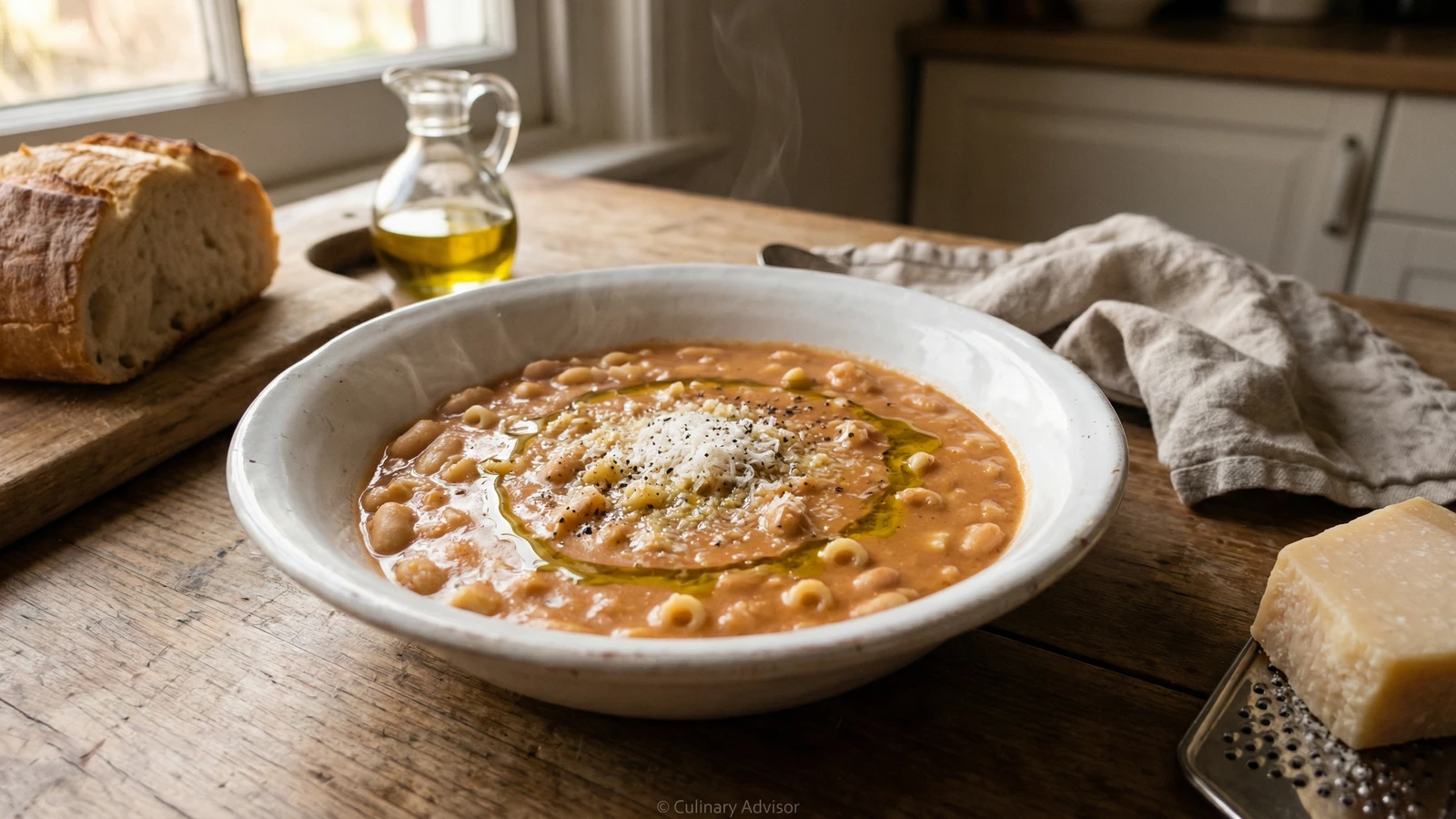
Pasta e Fagioli Napoletana
Created by Chef Graziella
The great bean soup of Naples, where humble cannellini and short pasta become something that warms you from the inside out. This is poverty cooking that proves restraint creates depth.
Pasta e fagioli is not a recipe. It is a survival strategy that became art. Neapolitan families have made this for centuries, stretching dried beans and a handful of pasta into meals that fed entire households. The genius is in the technique: you cook the pasta directly in the bean broth, so the starch thickens everything into something between soup and stew.
Americans often make this too thin, too brothy, with pasta cooked separately and added at the end. This is not pasta e fagioli. The pasta must surrender some of its starch to the broth. The beans must break down slightly at the edges. The whole pot should be creamy without a drop of cream.
The pancetta is not optional, but it is restrained. A few ounces. Enough to build a foundation of flavor, not enough to make this a meat dish. The tomato is similarly restrained: enough to give color and brightness, not enough to make this a tomato soup. What you keep out is as significant as what you put in.
Pasta e fagioli appears in Neapolitan cookbooks as early as the 16th century, though peasant families had been making versions of it long before anyone wrote recipes down. Each region of Italy claims its own version, from the brothier Venetian style to the thicker Neapolitan tradition. The Neapolitan version, enriched with tomato after its 18th-century introduction, became the model that spread to Italian-American kitchens.
The technique, the tradition, and the story behind every dish.
Discover Culinary AdvisorIngredients
dried cannellini beans
Quantity
1 pound
soaked overnight and drained
pancetta
Quantity
3 ounces
diced into small cubes
extra virgin olive oil
Quantity
3 tablespoons, plus more for finishing
yellow onion
Quantity
1 medium
diced fine
carrot
Quantity
1 medium
peeled and diced fine
celery stalks
Quantity
2
diced fine
garlic cloves
Quantity
2
minced
San Marzano tomatoes
Quantity
1 can (14 ounces)
crushed by hand
fresh rosemary
Quantity
1 sprig
bay leaf
Quantity
1
water or light chicken broth
Quantity
8 cups
ditalini or tubetti pasta
Quantity
8 ounces
kosher salt
Quantity
to taste
black pepper
Quantity
to taste
freshly ground
Parmigiano-Reggiano
Quantity
for serving
freshly grated
crushed red pepper flakes (optional)
Quantity
for serving
| Ingredient | Quantity |
|---|---|
| dried cannellini beanssoaked overnight and drained | 1 pound |
| pancettadiced into small cubes | 3 ounces |
| extra virgin olive oil | 3 tablespoons, plus more for finishing |
| yellow oniondiced fine | 1 medium |
| carrotpeeled and diced fine | 1 medium |
| celery stalksdiced fine | 2 |
| garlic clovesminced | 2 |
| San Marzano tomatoescrushed by hand | 1 can (14 ounces) |
| fresh rosemary | 1 sprig |
| bay leaf | 1 |
| water or light chicken broth | 8 cups |
| ditalini or tubetti pasta | 8 ounces |
| kosher salt | to taste |
| black pepperfreshly ground | to taste |
| Parmigiano-Reggianofreshly grated | for serving |
| crushed red pepper flakes (optional) | for serving |
Equipment Needed
- •Heavy 6-quart Dutch oven or soup pot
- •Wooden spoon or potato masher
Instructions
- 1
Render the pancetta
In a heavy-bottomed pot or Dutch oven, combine the diced pancetta and olive oil. Cook over medium heat, stirring occasionally, until the pancetta has rendered its fat and the edges are golden and slightly crisp, about 8 minutes. The fat is flavor. Do not discard it.
Starting the pancetta in cold oil allows the fat to render slowly and evenly. This creates the foundation for all the flavor that follows. - 2
Build the soffritto
Add the onion, carrot, and celery to the pot. Cook over medium heat, stirring occasionally, until the vegetables are completely soft and the onion is translucent with golden edges, about 15 minutes. Add the minced garlic and cook one minute more. The garlic should soften and become fragrant, nothing more. It must not brown.
- 3
Add tomatoes and beans
Add the crushed tomatoes and stir well, scraping up any bits from the bottom of the pot. Cook for 5 minutes until the tomatoes lose their raw edge. Add the drained beans, rosemary sprig, bay leaf, and water or broth. Bring to a simmer.
Crush the tomatoes by hand directly over the pot. Feel the texture of each one. This is cooking, not assembling. - 4
Simmer until beans are tender
Reduce heat to maintain a gentle simmer. The surface should barely move, with only an occasional lazy bubble. Cook uncovered, stirring occasionally, until the beans are completely tender and beginning to break down at the edges. This takes 1 to 1 1/2 hours, depending on the age of your beans. Do not rush this step. Undercooked beans cannot be corrected later.
- 5
Mash some beans
Remove and discard the rosemary sprig and bay leaf. Using a wooden spoon or potato masher, crush about one-third of the beans against the side of the pot. This thickens the broth and creates the creamy texture that defines proper pasta e fagioli. Season generously with salt and pepper. The soup should taste well-seasoned before the pasta goes in.
- 6
Cook the pasta in the soup
Bring the soup to a more active simmer. Add the ditalini directly to the pot. Stir frequently to prevent sticking. The pasta will absorb liquid as it cooks and release starch into the broth. Cook until the pasta is tender but with pleasant resistance, about 2 minutes less than the package suggests. The soup will continue to thicken off heat.
If the soup becomes too thick before the pasta is done, add hot water. Never add cold water to a simmering pot. - 7
Rest and serve
Remove from heat and let rest for 10 minutes. The soup thickens as it sits. This is correct. Ladle into warm bowls. Drizzle each serving generously with your best olive oil. Pass grated Parmigiano-Reggiano and red pepper flakes at the table. Serve immediately. The pasta continues to absorb liquid, so this does not improve with waiting.
Chef Tips
- •Dried beans must be soaked overnight. There are no shortcuts worth taking here. Quick-soaking methods produce inferior texture. If you forgot to soak, make something else.
- •The consistency should be thick, somewhere between soup and stew. Neapolitans say it should be 'dense enough to hold a wooden spoon upright.' A bit of exaggeration, but you understand the intention.
- •Canned beans are acceptable in a crisis. Use two 15-ounce cans, drained and rinsed. Add them after the soffritto and tomatoes, simmer only 30 minutes before adding pasta. The result is respectable, not transcendent.
- •Ditalini is traditional, but tubetti, small elbows, or broken spaghetti work. The pasta must be small enough to fit on a spoon with the beans. This is eaten with a spoon, not twirled on a fork.
Advance Preparation
- •The soup base, without pasta, can be made two days ahead and refrigerated. The flavor improves overnight.
- •Cook the pasta when you reheat. Never add pasta until you are ready to serve. Pasta held in liquid becomes paste.
- •Leftovers will thicken considerably in the refrigerator. Add water when reheating and adjust seasoning. Some consider the reheated version, with its almost risotto-like consistency, superior to the original.
Frequently Asked Questions
Nutrition Information
1 serving (about 500g)
Where cooking meets culture.
Culinary mentorship, cultural storytelling, and the editorial depth that makes cooking meaningful.
Explore Culinary Advisor