Culinary Advisor
A cooking platform built around craft, culture, and the stories behind what we eat.
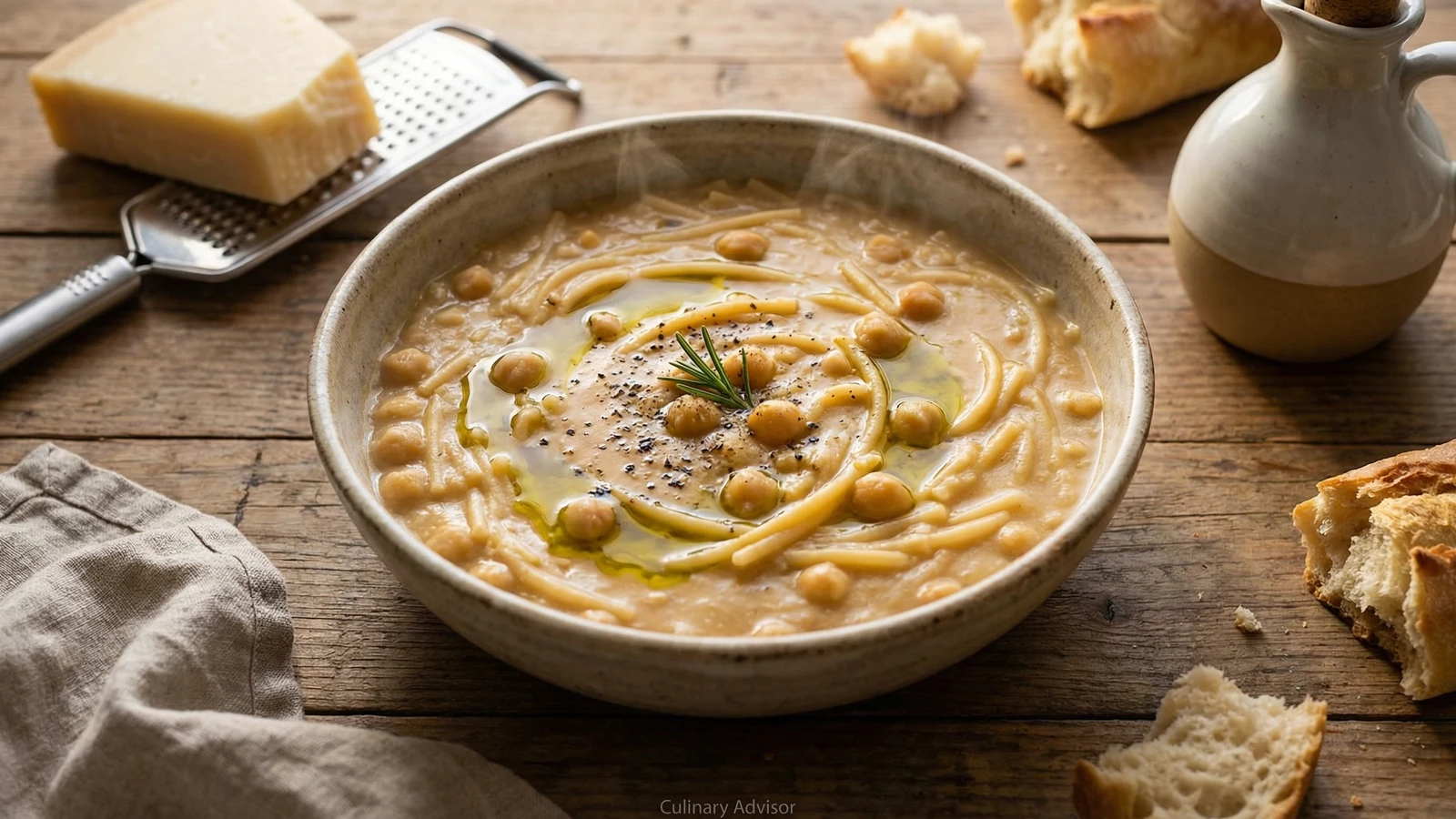
Pasta e Ceci alla Romana
Created by Chef Graziella
The Friday soup of Rome, where dried chickpeas and broken pasta become something greater than their humble origins suggest. What the pantry holds, patience transforms.
In Rome, Friday meant no meat. This was not hardship but opportunity. Roman cooks reached for the pantry staples: dried chickpeas, a handful of pasta, rosemary from the windowsill, garlic, good olive oil. From these simple things they created a dish that proves poverty can be its own kind of genius.
The pasta is broken by hand, not cut. This matters. The irregular pieces catch the creamy soup in unpredictable ways. Half the chickpeas are pureed to create body; the other half remain whole for texture. The rosemary perfumes the oil, then disappears. What remains is a soup that tastes of nothing but itself: earthy, warming, complete.
This is not restaurant food. This is what Roman grandmothers made on Friday afternoons while the city prepared for the sabbath. It improves overnight, when the starches relax and the flavors deepen. Simple does not mean easy. It means every ingredient must earn its place.
Pasta e ceci has sustained Romans since the medieval period, when the Church mandated meatless Fridays and the poor stretched their pantries through lean times. Chickpeas arrived in Italy via ancient trade routes from the Middle East, and Roman cooks adopted them as a foundation for cucina povera, the cooking of poverty that produced some of Italy's most enduring dishes.
The technique, the tradition, and the story behind every dish.
Discover Culinary AdvisorIngredients
dried chickpeas
Quantity
1 pound
soaked overnight in cold water
extra virgin olive oil
Quantity
1/3 cup, plus more for drizzling
garlic cloves
Quantity
4
peeled and lightly crushed
fresh rosemary
Quantity
2 sprigs
dried peperoncino
Quantity
1 small
crumbled
tomato paste
Quantity
2 tablespoons
water or light vegetable broth
Quantity
6 cups
kosher salt
Quantity
to taste
spaghetti or linguine
Quantity
8 ounces
broken by hand into irregular pieces
black pepper
Quantity
to taste
freshly ground
Pecorino Romano
Quantity
for serving
freshly grated
| Ingredient | Quantity |
|---|---|
| dried chickpeassoaked overnight in cold water | 1 pound |
| extra virgin olive oil | 1/3 cup, plus more for drizzling |
| garlic clovespeeled and lightly crushed | 4 |
| fresh rosemary | 2 sprigs |
| dried peperoncinocrumbled | 1 small |
| tomato paste | 2 tablespoons |
| water or light vegetable broth | 6 cups |
| kosher salt | to taste |
| spaghetti or linguinebroken by hand into irregular pieces | 8 ounces |
| black pepperfreshly ground | to taste |
| Pecorino Romanofreshly grated | for serving |
Equipment Needed
- •Heavy 6-quart soup pot or Dutch oven
- •Food mill or blender for pureeing chickpeas
- •Wooden spoon
Instructions
- 1
Prepare the chickpeas
Drain the soaked chickpeas and rinse them well. Place them in a large pot and cover with fresh cold water by three inches. Bring to a gentle simmer over medium heat, then reduce to the lowest flame. Cook until the chickpeas are completely tender, 45 minutes to one hour depending on their age. They should crush easily between your fingers. Drain, reserving two cups of the cooking liquid.
Old chickpeas take longer to cook. If yours have been in the pantry more than a year, expect to add another 20 minutes. Do not salt the cooking water. Salt toughens the skins. - 2
Create the flavor base
In a heavy soup pot, warm the olive oil over medium-low heat. Add the crushed garlic cloves and rosemary sprigs. Cook gently, pressing the garlic occasionally with a wooden spoon, until the garlic is pale gold and fragrant, about 3 minutes. The garlic must not brown. Add the crumbled peperoncino and stir once.
- 3
Add the tomato paste
Add the tomato paste to the pot. Stir it into the oil and cook for 2 minutes, until it darkens slightly and loses its raw smell. The tomato paste should coat the garlic and rosemary. This small amount of tomato provides depth without dominating. Roman cooks understand restraint.
- 4
Puree half the chickpeas
Remove the garlic cloves and rosemary sprigs from the pot and discard them. They have given what they have to give. Transfer half of the cooked chickpeas to a food mill or blender with one cup of the reserved cooking liquid. Puree until smooth. This creates the characteristic creamy texture of the soup while the remaining whole chickpeas provide substance.
A food mill produces the silkiest texture and removes any remaining skins. A blender works adequately. Do not use a food processor, which creates an unpleasant gluey consistency. - 5
Build the soup
Add the chickpea puree to the pot along with the remaining whole chickpeas. Pour in the water or broth and the remaining cup of reserved cooking liquid. Stir well and bring to a simmer. Season with salt. The soup should taste pleasantly of chickpeas and rosemary. Let it simmer gently for 15 minutes to marry the flavors.
- 6
Break and cook the pasta
Take the spaghetti in your hands and break it into irregular pieces, roughly one to two inches long. Do not be precise. Romans break the pasta directly over the pot, letting the pieces fall where they will. The irregular lengths are part of the character. Add the broken pasta to the simmering soup and cook, stirring occasionally, until the pasta is tender but still has pleasant resistance, about 10 minutes.
The pasta continues to absorb liquid as it sits. If you plan to serve over time, undercook slightly and expect to add water when reheating. The consistency should be thick but still fluid, more stew than soup. - 7
Rest and serve
Remove the pot from heat and let it rest for 5 minutes. The soup thickens as it sits. Taste for salt. Ladle into warm bowls, drizzle generously with your best olive oil, and finish with freshly ground black pepper. Pass the Pecorino Romano at the table. This is a Roman dish; it demands a Roman cheese.
Chef Tips
- •Dried chickpeas produce superior flavor and texture to canned. If you must use canned, use three 15-ounce cans, drained and rinsed. Skip the initial cooking and proceed directly to the flavor base. The soup will still be good. It will not be as good.
- •The garlic here is a whisper. You crush it, let it perfume the oil, then discard it. This is the proper use of garlic in Italian cooking. Those who add minced garlic to everything have missed the point entirely.
- •Pecorino Romano is not optional. Parmigiano-Reggiano, however magnificent, is wrong here. Rome has its own cheese. Use it.
- •Some Roman cooks add a small piece of prosciutto rind or guanciale to the simmering chickpeas for richness. This is delicious but no longer Friday food. Choose according to your conscience.
Advance Preparation
- •The chickpeas can be cooked up to two days ahead and refrigerated in their liquid. This is wise planning for a weeknight supper.
- •The completed soup, without pasta, keeps refrigerated for three days. Add the broken pasta when you reheat, cooking it directly in the soup.
- •The finished soup with pasta thickens considerably overnight. Add water when reheating to restore the proper consistency. Many Romans prefer it this way, denser and more intense.
Frequently Asked Questions
Nutrition Information
1 serving (about 380g)
Where cooking meets culture.
Culinary mentorship, cultural storytelling, and the editorial depth that makes cooking meaningful.
Explore Culinary Advisor