Culinary Advisor
A cooking platform built around craft, culture, and the stories behind what we eat.
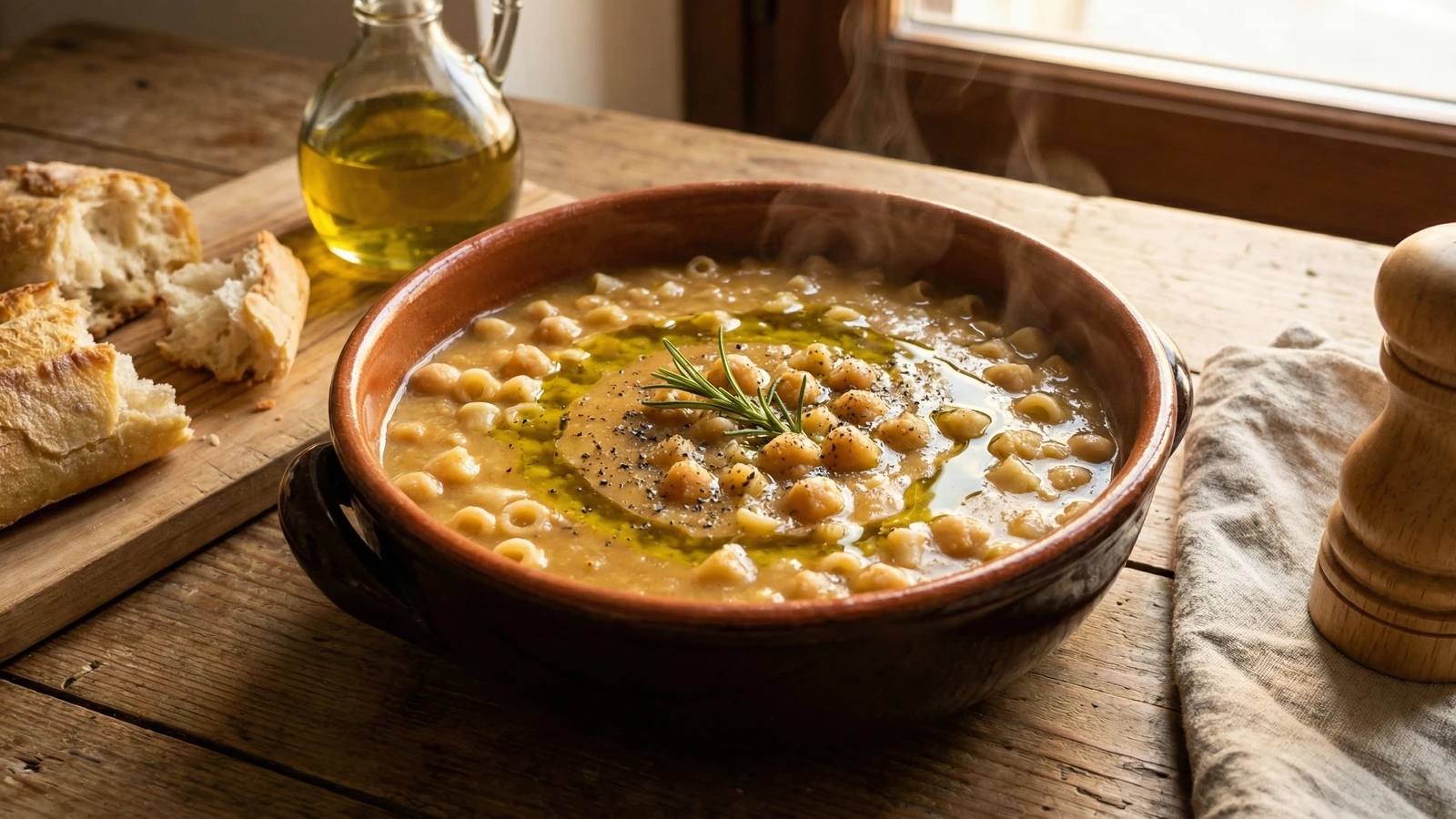
Pasta e Ceci alla Romana
Created by Chef Graziella
The humble chickpea soup of Rome, where dried legumes, a whisper of rosemary, and small pasta shapes create something that has sustained Romans since antiquity. This is poverty cooking that proves restraint is genius.
Pasta e ceci is Rome's answer to the question of how to feed a family when there is almost nothing in the house. Dried chickpeas, which last for years. A handful of pasta, broken if necessary. Rosemary from the bush growing outside the kitchen door. Garlic, olive oil, and time. From these, generations of Roman home cooks have created something that rivals any elaborate dish.
The chickpeas must be dried, not canned. I know this takes planning. I know you must soak them overnight. This is not negotiable. Canned chickpeas have a tinny taste and a texture that falls apart. Dried chickpeas, properly cooked, hold their shape while yielding to the tooth. The cooking liquid becomes your broth, rich with the essence of the legume itself.
The anchovy is traditional in many Roman versions, though not universal. It dissolves completely into the soffritto, leaving no fish taste, only depth. If you object to anchovy, you may omit it, but you will miss something. The rosemary is not optional. It is the soul of this dish, the flavor that announces this is Roman and nothing else.
Horace wrote of chickpeas in the first century BC, and Romans have eaten them with grain ever since. Pasta e ceci emerged as a Lenten staple, when meat was forbidden and the poor needed protein. The dish appears in Roman trattorie every Thursday by tradition, though no one quite remembers why Thursday became chickpea day.
The technique, the tradition, and the story behind every dish.
Discover Culinary AdvisorIngredients
dried chickpeas
Quantity
1 pound
soaked overnight in cold water
extra virgin olive oil
Quantity
1/3 cup, plus more for finishing
garlic cloves
Quantity
3
peeled and lightly crushed
fresh rosemary
Quantity
1 sprig (about 4 inches)
anchovy fillets (optional)
Quantity
2
packed in oil
red pepper flakes
Quantity
1/4 teaspoon
San Marzano tomatoes
Quantity
1 can (14 ounces)
crushed by hand
water
Quantity
8 cups
kosher salt
Quantity
to taste
small dried pasta
Quantity
8 ounces
black pepper
Quantity
to taste
freshly ground
extra virgin olive oil
Quantity
for finishing
| Ingredient | Quantity |
|---|---|
| dried chickpeassoaked overnight in cold water | 1 pound |
| extra virgin olive oil | 1/3 cup, plus more for finishing |
| garlic clovespeeled and lightly crushed | 3 |
| fresh rosemary | 1 sprig (about 4 inches) |
| anchovy fillets (optional)packed in oil | 2 |
| red pepper flakes | 1/4 teaspoon |
| San Marzano tomatoescrushed by hand | 1 can (14 ounces) |
| water | 8 cups |
| kosher salt | to taste |
| small dried pasta | 8 ounces |
| black pepperfreshly ground | to taste |
| extra virgin olive oil | for finishing |
Equipment Needed
- •Heavy 6-quart Dutch oven or soup pot
- •Blender or food processor
- •Large pot for cooking chickpeas
Instructions
- 1
Prepare the chickpeas
Drain the soaked chickpeas and rinse them under cold water. Place them in a large pot with 8 cups of fresh water. Do not add salt. Bring to a gentle simmer over medium heat, then reduce to low. Cook until the chickpeas are completely tender, 1 1/2 to 2 hours depending on their age. The chickpeas should crush easily between your fingers with no chalky center. Keep them in their cooking liquid.
Old chickpeas take longer to cook. If yours have been in the pantry for years, be patient. They will eventually soften. Salting now would toughen them. - 2
Build the base
In a heavy pot, warm the olive oil over medium-low heat. Add the crushed garlic cloves and the rosemary sprig. Cook gently, stirring occasionally, until the garlic is pale gold and fragrant, about 3 minutes. The garlic must not brown. If using anchovies, add them now and press them with a wooden spoon until they dissolve completely into the oil. Add the red pepper flakes and stir for 30 seconds.
- 3
Add tomatoes and chickpeas
Add the crushed tomatoes to the pot and cook for 5 minutes, stirring occasionally. Using a slotted spoon, transfer the cooked chickpeas to the pot, reserving all of the cooking liquid. Stir to combine. Remove and discard the garlic cloves and rosemary sprig. They have given what they have to give.
- 4
Create the texture
Transfer about one-third of the chickpea mixture to a blender or food processor. Add one cup of the reserved chickpea cooking liquid. Puree until smooth, then return this to the pot. Stir well. Add enough of the remaining cooking liquid to achieve a consistency slightly thinner than you want, about 4 to 5 cups. The pasta will absorb liquid as it cooks. Season with salt now that the chickpeas are tender.
The partial puree creates body without cream. This is how Roman cooks have thickened this dish for generations. The whole chickpeas give texture, the pureed ones give richness. - 5
Cook the pasta
Bring the soup to a steady simmer. Add the pasta directly to the pot. Stir frequently to prevent sticking. Cook until the pasta is tender but still has pleasant resistance, usually 2 to 3 minutes less than the package indicates. The pasta will continue cooking in the residual heat. The finished dish should be thick, somewhere between a soup and a stew. If it becomes too thick, add more of the reserved cooking liquid.
- 6
Rest and serve
Remove from heat and let the pasta e ceci rest for 5 minutes. It will thicken as it sits. Ladle into warm bowls and finish each portion with a generous drizzle of your finest olive oil and a grinding of black pepper. The finishing oil is not decoration. It is essential. Serve immediately, inviting your guests to eat before conversation.
Chef Tips
- •The consistency should be loose when you turn off the heat. Pasta e ceci thickens dramatically as it sits. Romans call the proper texture 'azzeccato,' meaning the pasta and chickpeas cling together without swimming in broth.
- •Broken spaghetti is traditional in many Roman households. Break it into pieces about an inch long. The irregular shapes catch the chickpeas and sauce differently than uniform pasta shapes.
- •Some Roman cooks add a Parmigiano rind to simmer with the chickpeas. This is not traditional, but I will not argue with anyone who does it. The cheese adds depth without announcing itself.
- •Never use canned chickpeas for this dish. The texture is wrong and the flavor is flat. If you have not soaked dried chickpeas, make something else and plan better tomorrow.
Advance Preparation
- •Chickpeas can be cooked up to two days ahead and refrigerated in their liquid. This actually improves their texture.
- •The complete dish, without pasta, can be made one day ahead. Add the pasta when you reheat, as it will absorb liquid and become mushy if stored in the soup.
- •Leftover pasta e ceci will be very thick the next day. Add water or broth when reheating. Some prefer it this way, almost like a porridge.
Frequently Asked Questions
Nutrition Information
1 serving (about 400g)
Where cooking meets culture.
Culinary mentorship, cultural storytelling, and the editorial depth that makes cooking meaningful.
Explore Culinary Advisor