Culinary Advisor
A cooking platform built around craft, culture, and the stories behind what we eat.
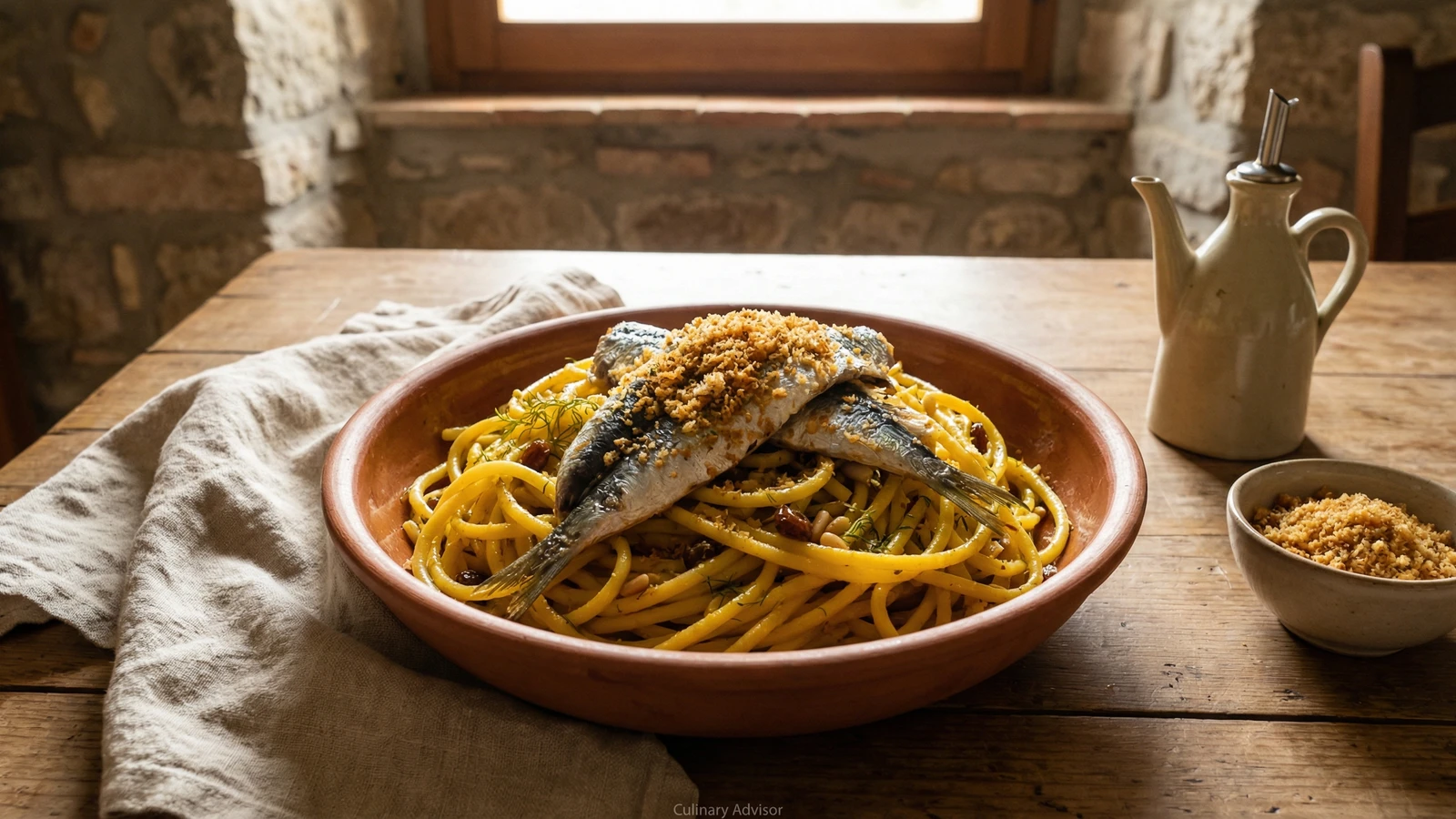
Pasta con le Sarde
Created by Chef Graziella
The baroque masterpiece of Palermo, where Arab spices meet Mediterranean sea in a sauce of wild fennel, saffron, pine nuts, and raisins, crowned with sardines and golden breadcrumbs.
Pasta con le sarde is Sicily on a plate. The sweet and savory together, the pine nuts and raisins whispering of Arab traders, the wild fennel that grows along every roadside from Palermo to Trapani, the sardines pulled fresh from the Mediterranean. This is not simple food. This is the baroque complexity of a island that has been conquered by everyone and absorbed them all.
The dish demands wild fennel, finocchietto selvatico, which grows abundantly in Sicily but remains difficult to find elsewhere. I will tell you how to approximate it. But know that the approximation is just that. Sicilians who taste your version will nod politely and miss their grandmother's cooking.
What makes this dish extraordinary is the layering. The fennel blanching water becomes the pasta water, so the fennel flavor penetrates every strand. The anchovies dissolve into the oil, providing depth without identification. The saffron, that Arab gift, colors everything gold. And then the toasted breadcrumbs at the end, la mollica, which Sicilians use where northerners would use cheese. Each element has a purpose. Nothing is decorative.
Pasta con le sarde traces to the Arab conquest of Sicily in the 9th century, when North African cooks introduced saffron, raisins, and pine nuts to the island's cuisine. Legend credits the dish to a cook in the army of the Arab general Euphemius, who needed to feed troops near Palermo using whatever grew wild along the coast. The combination of fennel from the hillsides and sardines from the sea became Sicily's most celebrated pasta.
The technique, the tradition, and the story behind every dish.
Discover Culinary AdvisorIngredients
fresh sardines
Quantity
1 pound (about 12)
cleaned and butterflied
wild fennel fronds
Quantity
1 large bunch (about 8 ounces)
bucatini or perciatelli
Quantity
1 pound
extra virgin olive oil
Quantity
1/2 cup, plus more for drizzling
yellow onion
Quantity
1 medium
sliced thin
anchovy fillets
Quantity
4
packed in oil
saffron threads
Quantity
1/4 teaspoon
warm water
Quantity
1/4 cup
pine nuts
Quantity
1/3 cup
golden raisins or currants
Quantity
1/3 cup
fresh breadcrumbs
Quantity
1/2 cup
from day-old bread
kosher salt
Quantity
to taste
black pepper
Quantity
to taste
freshly ground
| Ingredient | Quantity |
|---|---|
| fresh sardinescleaned and butterflied | 1 pound (about 12) |
| wild fennel fronds | 1 large bunch (about 8 ounces) |
| bucatini or perciatelli | 1 pound |
| extra virgin olive oil | 1/2 cup, plus more for drizzling |
| yellow onionsliced thin | 1 medium |
| anchovy filletspacked in oil | 4 |
| saffron threads | 1/4 teaspoon |
| warm water | 1/4 cup |
| pine nuts | 1/3 cup |
| golden raisins or currants | 1/3 cup |
| fresh breadcrumbsfrom day-old bread | 1/2 cup |
| kosher salt | to taste |
| black pepperfreshly ground | to taste |
Equipment Needed
- •Large pot for blanching fennel and cooking pasta
- •Large deep skillet (12-inch) for the sauce
- •Small skillet for toasting breadcrumbs and pine nuts
- •Slotted spoon for removing fennel
Instructions
- 1
Bloom the saffron
Crumble the saffron threads into the warm water and set aside. The saffron needs at least 15 minutes to release its color and perfume. This step is not optional. Dry saffron added directly to a dish gives only color, not flavor.
- 2
Blanch the fennel
Bring a large pot of well-salted water to a boil. Add the fennel fronds and cook until completely tender, about 15 minutes. Remove the fennel with a slotted spoon, reserving the cooking water for the pasta. Squeeze the fennel dry and chop it roughly. The cooking water now carries the fennel's essence. This is deliberate.
Wild fennel (finocchietto selvatico) grows along roadsides throughout Sicily. If you cannot find it, use the fronds from cultivated fennel bulbs and add half a teaspoon of fennel seeds, lightly crushed. It is not the same, but it is acceptable. - 3
Prepare the raisins and pine nuts
Soak the raisins in warm water for 15 minutes, then drain and squeeze dry. In a small dry skillet, toast the pine nuts over medium-low heat, shaking frequently, until golden and fragrant, about 3 minutes. Watch them constantly. They burn in seconds.
- 4
Toast the breadcrumbs
In the same small skillet, heat two tablespoons of olive oil over medium heat. Add the breadcrumbs and stir constantly until golden brown and crisp, about 4 minutes. Transfer to a bowl immediately. These are la mollica, the poor man's cheese of Sicily. They finish the dish.
- 5
Build the sauce base
In a large skillet, heat the remaining olive oil over medium heat. Add the sliced onion and cook slowly until completely soft and golden, about 15 minutes. Add the anchovy fillets and stir until they dissolve into the oil. This takes only a minute or two. They should melt, not fry.
The anchovies provide depth, not fishiness. When properly dissolved, no one will identify them. They will only sense that something profound is happening. - 6
Add fennel and saffron
Add the chopped fennel to the skillet and stir to combine. Pour in the saffron with its soaking liquid. Add the drained raisins and half the pine nuts. Stir well. The sauce should be fragrant and golden from the saffron. Season with salt and pepper. Keep warm over very low heat.
- 7
Cook the sardines
Season the butterflied sardines with salt. Lay half of them in the sauce, flesh side down, nestling them into the fennel mixture. Cook gently for 2 minutes, then turn carefully. They are delicate. They will break if you are rough. Set the cooked sardines aside and repeat with the remaining fish. Reserve four of the best-looking sardines for garnish. Gently break the rest into large pieces and fold them into the sauce.
- 8
Cook the pasta
Return the fennel cooking water to a rolling boil. Cook the bucatini until al dente, about one minute less than the package suggests. The pasta will finish in the sauce. Reserve one cup of pasta water before draining.
- 9
Finish and serve
Add the drained pasta to the skillet with the sauce. Toss vigorously over medium heat for one minute, adding splashes of pasta water as needed until the sauce clings to every strand. The pasta should be coated, not swimming. Transfer to a warm serving bowl. Top with the reserved whole sardines and scatter the remaining pine nuts over all. Bring to the table and shower with the toasted breadcrumbs. No cheese. This is a fish pasta. Cheese on fish pasta is not done.
Chef Tips
- •Ask your fishmonger to clean and butterfly the sardines. If you must do it yourself, cut along the belly, remove the guts, then press the fish open and pull out the spine. The heads can stay or go. Sicilians often leave them on.
- •Fresh sardines should smell of the sea, not of fish. If they smell fishy, they are not fresh. Do not buy them. Make something else.
- •The breadcrumbs must be from good bread, made fresh, and toasted in olive oil until deeply golden. Packaged breadcrumbs will not do. This is the dish's finishing glory.
- •Bucatini's hollow center catches the sauce inside and out. Spaghetti is acceptable but inferior. The pasta shape matters.
Advance Preparation
- •The fennel can be blanched and chopped one day ahead. Refrigerate in its cooking liquid, then drain and reserve the liquid separately.
- •The breadcrumbs can be toasted several hours ahead and kept at room temperature. They lose their crunch after a day.
- •This dish does not reheat well. The sardines become dry and the pasta loses its texture. Make it when you intend to eat it.
Frequently Asked Questions
Nutrition Information
1 serving (about 285g)
Where cooking meets culture.
Culinary mentorship, cultural storytelling, and the editorial depth that makes cooking meaningful.
Explore Culinary Advisor