Culinary Advisor
A cooking platform built around craft, culture, and the stories behind what we eat.
Pariserbof paa Rugbrod
Created by Chef Freja
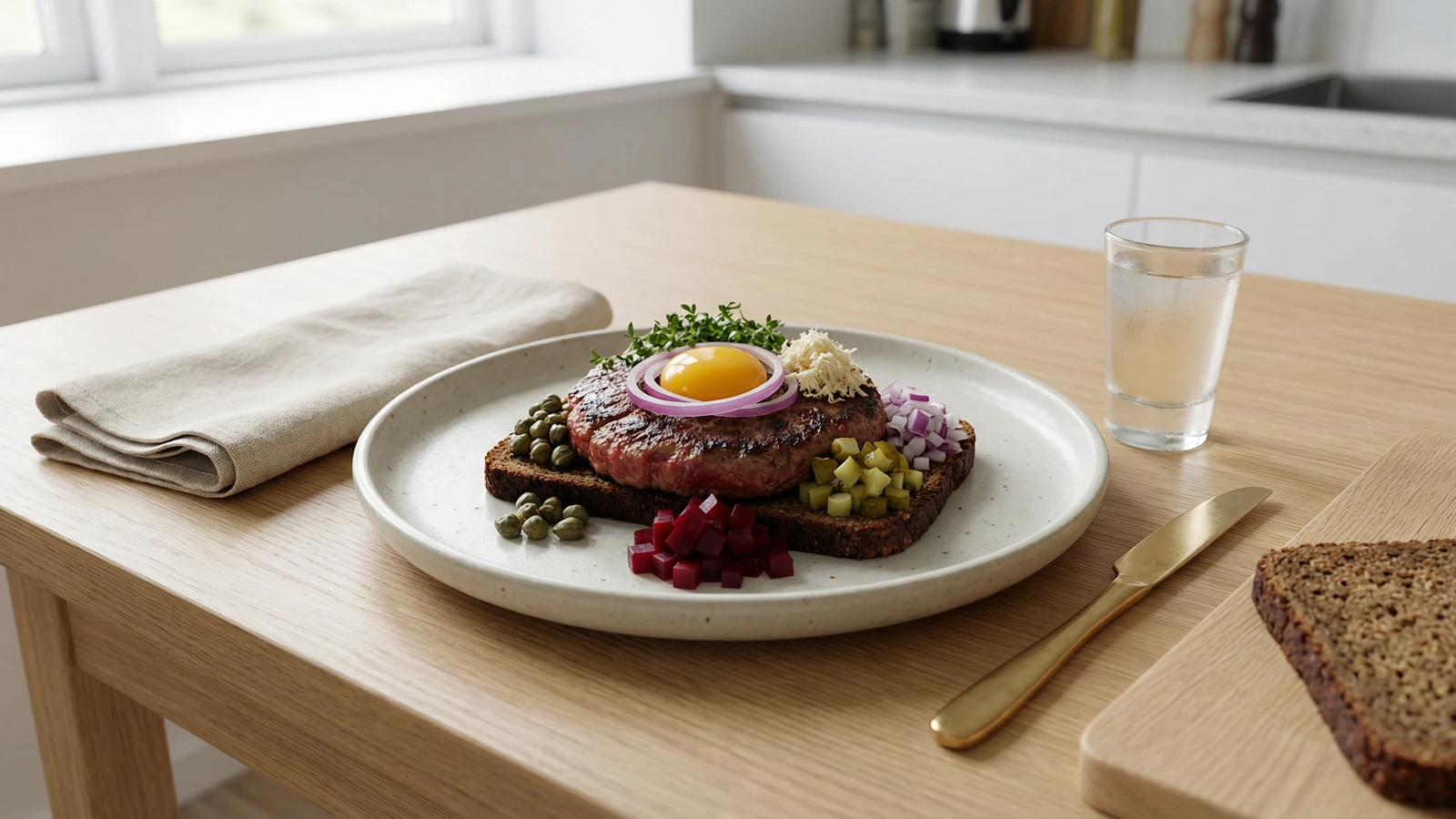
Pan-fried beef tartare on dark rugbrod, crusted outside and still blushing pink within, crowned with a raw egg yolk and ringed with capers, cornichons, pickled beet, and horseradish. Tatar's warm-hearted cousin.
Pariserbof is lunch restaurant food. It belongs to the frokostrestauranter of Copenhagen, the wood-paneled dining rooms where the day pauses for two hours and the table fills with smorrebrod, aquavit, and slow conversation. You don't make pariserbof in a hurry. You make it when you've decided that the afternoon is going to be a long one, and you want a piece of smorrebrod that can anchor the whole meal.
The idea is simple and slightly daring. Good beef, chopped by hand, shaped into a patty, and fried hot and fast so the outside takes on a dark crust while the inside stays completely raw. It sits on a slice of buttered rugbrod, and around it you build a small landscape of sharp things: capers, cornichons, chopped pickled beet, raw onion, grated horseradish, and a raw egg yolk at the center holding it all together. Tatar is the fully raw version. Pariserbof is its warm-hearted cousin, the one that went for a walk in the pan and came back with color in its cheeks.
What matters most here is two things: the quality of the beef and the heat of the pan. I'll tell you exactly what to look for in both. Buy the best meat you can find and chop it by hand, not in a machine. Get the pan properly hot before the patties go in. Everything else is assembly, and the assembly is a pleasure, because each garnish goes in its own small pile and the eater builds the perfect bite themselves. This is food that invites the table to slow down, and that invitation is the whole point.
The name pariserbof, Paris beef, points straight to its origin in the French bistro culture that swept through Northern European cities in the late 19th century. Danish lunch restaurants adopted the dish in the 1890s, when the Copenhagen frokost tradition was being codified, and it settled into the smorrebrod canon as the piece you ordered when you wanted something more substantial than a slice of fish. The raw egg yolk and the ring of sharp condiments are Danish additions; the French original was plainer. What began as a borrowed idea became, within a generation, a dish the Danes now claim as entirely their own.
The technique, the tradition, and the story behind every dish.
Discover Culinary AdvisorIngredients
beef tenderloin or top sirloin
Quantity
500g
very cold, trimmed of all sinew
dark rugbrod
Quantity
4 thick slices
unsalted butter (for the bread)
Quantity
30g
softened
neutral oil
Quantity
2 tablespoons
unsalted butter (for frying)
Quantity
20g
fine sea salt
Quantity
to taste
black pepper
Quantity
freshly ground, to taste
very fresh egg yolks
Quantity
4
capers
Quantity
2 tablespoons
drained
cornichons
Quantity
4
finely chopped
pickled beets
Quantity
2 small
finely chopped
red onion
Quantity
1 small
half finely chopped, half cut into thin rings
fresh horseradish
Quantity
2 teaspoons
freshly grated
cress or chives (optional)
Quantity
small handful
snipped
| Ingredient | Quantity |
|---|---|
| beef tenderloin or top sirloinvery cold, trimmed of all sinew | 500g |
| dark rugbrod | 4 thick slices |
| unsalted butter (for the bread)softened | 30g |
| neutral oil | 2 tablespoons |
| unsalted butter (for frying) | 20g |
| fine sea salt | to taste |
| black pepper | freshly ground, to taste |
| very fresh egg yolks | 4 |
| capersdrained | 2 tablespoons |
| cornichonsfinely chopped | 4 |
| pickled beetsfinely chopped | 2 small |
| red onionhalf finely chopped, half cut into thin rings | 1 small |
| fresh horseradishfreshly grated | 2 teaspoons |
| cress or chives (optional)snipped | small handful |
Equipment Needed
- •Sharp heavy chef's knife
- •Large wooden cutting board
- •Heavy frying pan, cast iron ideal
- •Fish slice or wide spatula
Instructions
- 1
Chop the beef by hand
Put the beef on a cold cutting board and chop it by hand with a sharp heavy knife. Not minced, not pureed. You want fine, even pieces about the size of a grain of rice. A food processor turns the meat into paste and paste fries like a hockey puck. Hand-chopped beef keeps its texture and tells you what it is when you bite into it. Work quickly so the meat stays cold. Cold meat holds its shape; warm meat turns greasy.
Put the cutting board and the knife in the freezer for ten minutes before you start. Cold tools keep the meat cold, and cold meat is what makes this dish work. - 2
Prepare the garnishes
Arrange the capers, chopped cornichons, chopped pickled beets, finely chopped red onion, and grated horseradish in small piles on a board or plate. Everything needs to be ready before the beef hits the pan, because the frying takes less than four minutes from start to finish and you won't have time to chop once you've started. The onion rings go aside separately; they hold the egg yolks at the end.
- 3
Shape the patties
Divide the beef into four equal portions and shape each one into a flat oval about a centimeter and a half thick. Don't pack them tightly. Firm them just enough to hold together. Overworked meat tightens up and goes tough in the pan. Season the tops and bottoms generously with salt and pepper only in the last minute before frying. Salt pulls moisture out of raw meat, and wet meat doesn't crust.
- 4
Butter the rugbrod
Spread each slice of rugbrod with a thin layer of softened butter, going right to the edges. The butter is not optional and it is not garnish. It's what keeps the rye from soaking up the juices from the meat and turning into a wet mess underneath. Set the bread out on the plates where you'll serve.
- 5
Fry hot and fast
Heat the oil and butter together in a heavy frying pan over high heat. You want the pan properly hot. When the butter foams and starts to smell of hazelnuts, lay the patties in with space between them. Press them down once, lightly, with a spatula. Cook for about forty-five seconds on the first side until a deep brown crust has formed, then flip and cook for another forty-five seconds on the other side. The outside should be dark and crusted. The inside should still be raw and red. That contrast is the whole point of pariserbof, and you'll know when it's right by the feel: firm on the outside, yielding in the middle.
- 6
Build the smorrebrod
Place a hot patty onto each slice of buttered rugbrod. Lay an onion ring in the center of the patty and carefully slide a raw egg yolk into the ring so it sits in its own little cup. Arrange the capers, cornichons, pickled beets, chopped raw onion, and grated horseradish around the yolk in small separate heaps. Don't mix them into one pile. Part of the pleasure of pariserbof is choosing, with each forkful, which combination of pickles and sharp things you want alongside the meat.
Separate the egg yolks just before serving. A yolk sitting on a warm patty for more than a minute starts to set on the underside, and you want it fully liquid when the fork goes in. - 7
Finish and serve
Scatter a few sprigs of cress or snipped chives across the top for a green note, and serve immediately with a knife and fork. The eater breaks the yolk themselves, stirs it through the garnishes, and cuts down through the patty into the buttered rye. An ice-cold beer or a small glass of aquavit belongs alongside. Tak for mad.
Chef Tips
- •Buy the best beef you can afford and ask the butcher for tenderloin or top sirloin from a trusted source. You're eating it nearly raw, so quality and freshness are not negotiable. If you can tell the butcher you're making pariserbof, they will understand exactly what you need.
- •Chop by hand, always. A food processor crushes the meat and destroys the texture that makes this dish what it is. A sharp heavy knife and ten minutes of focus is all you need.
- •Use the freshest eggs you can find for the yolks. Farm eggs from a source you trust are ideal. The yolk is eaten raw, so this is not a place for corner-cutting.
- •An ice-cold Danish pilsner or a small glass of aquavit is the drink. Red wine fights with the raw egg and the vinegary garnishes. Beer and aquavit were made for this dish.
Advance Preparation
- •The garnishes can all be prepped an hour ahead and kept covered on the counter or in the fridge. The pickled beets and cornichons can be chopped the day before.
- •The beef should be chopped no more than thirty minutes before frying. Hand-chopped beef starts to lose its bright color and fresh texture if it sits around too long.
- •Everything comes together at the last minute. Have the bread buttered, the garnishes laid out, and the plates ready before the pan goes on the heat. Pariserbof is not a dish you keep waiting.
Frequently Asked Questions
Nutrition Information
1 serving (about 210g)
Where cooking meets culture.
Culinary mentorship, cultural storytelling, and the editorial depth that makes cooking meaningful.
Explore Culinary Advisor