Culinary Advisor
A cooking platform built around craft, culture, and the stories behind what we eat.
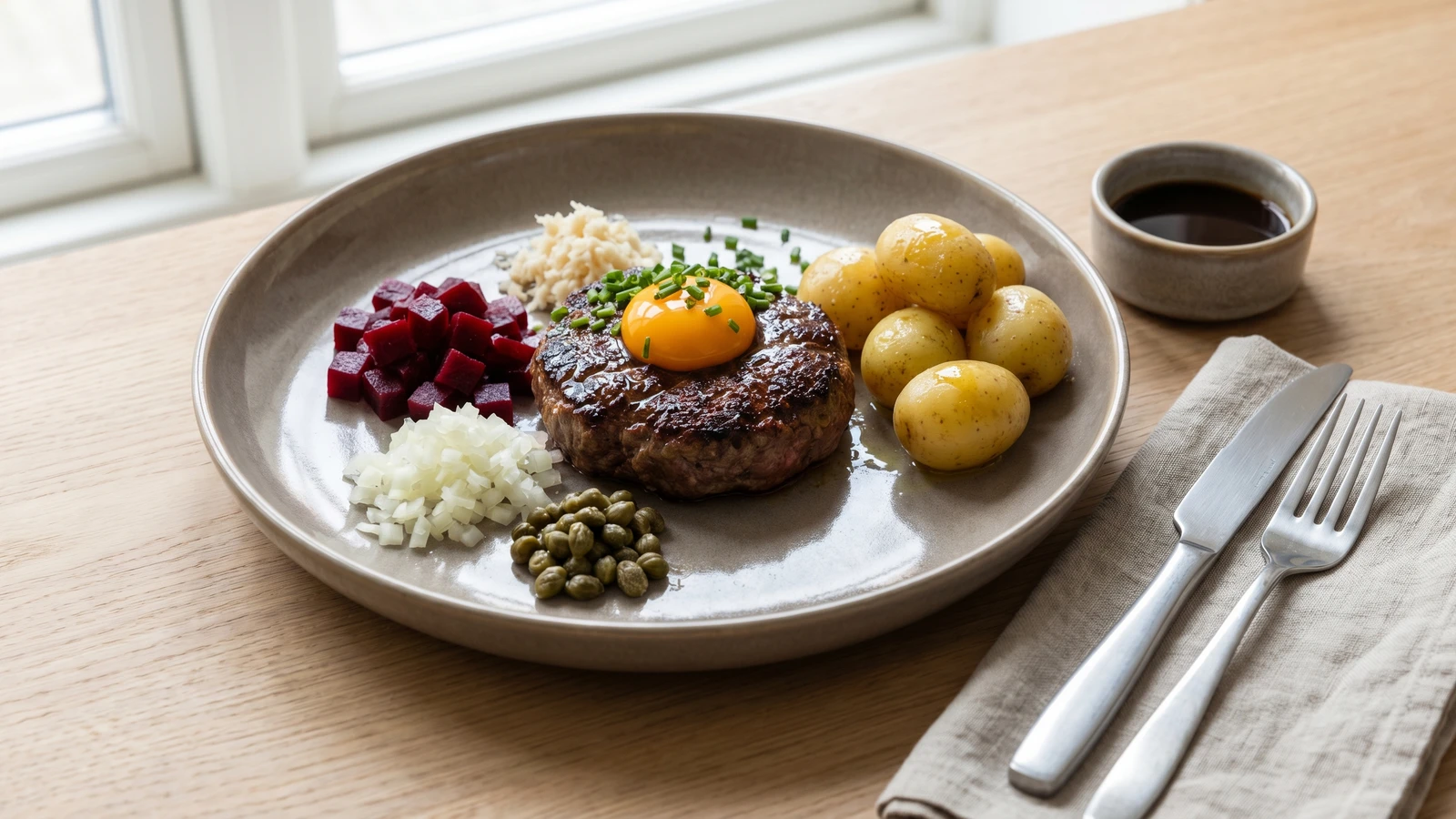
Pariserbof med Kartofler
Created by Chef Freja Lund
A quick-seared beef patty with a crown of raw egg yolk, surrounded by capers, pickled beets, raw onion, and fresh horseradish. The hot dinner plate that proves Danish simplicity is its own kind of sophistication.
Some dishes carry more history than their cooking time suggests. Pariserbof takes fifteen minutes from pan to plate, but there are a hundred years of Danish restaurant culture folded into that seared patty with its crown of raw egg yolk. This is one of the great weeknight dinners, the kind that feels like an occasion even when it isn't one.
The technique is simple and exact. You shape good ground beef into thick patties, sear them hard in butter and oil so the outside forms a deep brown crust while the center stays pink. Then you plate them hot, nestle a raw egg yolk on top, and surround the whole thing with the cold accompaniments that make this dish unmistakably Danish: capers, pickled beets, raw onion, and freshly grated horseradish. The contrast between hot beef and cold, sharp condiments is the whole point, and it's the reason the dish has held its place on Danish tables for over a century.
What matters most is the sear. Your pan needs to be properly hot before the beef goes in. If the pan is too cool, the patty steams instead of browning, and you lose the crust that holds everything together. You'll know when it's right: the beef should hiss the moment it touches the surface, and the kitchen should smell of browned butter and iron. The rest is arrangement, placing each condiment with intention so the plate tells you how to eat it. I'll walk you through all of it, so everything lands exactly as it should.
Despite its French name, pariserbof is a thoroughly Danish invention. The "Parisian" label dates to the late 1800s, when Copenhagen restaurants borrowed French terminology to lend sophistication to their menus, much as they did with bearnaise and creme caramel. The dish likely evolved from the steak tartare tradition, but where tartare is served raw, the Danish version is seared, a practical adaptation that suited northern tastes and the caution around raw meat that comes with cold climates. By the mid-twentieth century, pariserbof had become a fixture of both restaurant menus and home kitchens, with the dinner plate version (med kartofler) distinguishing itself from the smorrebrod version by trading the rye bread for a generous helping of buttered potatoes.
The technique, the tradition, and the story behind every dish.
Discover Culinary AdvisorIngredients
ground beef
Quantity
600g
15-20% fat, coarsely ground
egg yolks
Quantity
4 large
very fresh
small waxy potatoes
Quantity
800g
pickled beetroot
Quantity
200g
finely diced
yellow onion
Quantity
1 medium
finely diced
capers
Quantity
3 tablespoons
drained
fresh horseradish
Quantity
40g piece
finely grated
unsalted butter (for the patties)
Quantity
30g
neutral oil
Quantity
1 tablespoon
unsalted butter (for the potatoes)
Quantity
30g
fine sea salt
Quantity
to taste
black pepper
Quantity
freshly ground, to taste
Worcestershire sauce (optional)
Quantity
to serve
chives
Quantity
small bunch
finely snipped
| Ingredient | Quantity |
|---|---|
| ground beef15-20% fat, coarsely ground | 600g |
| egg yolksvery fresh | 4 large |
| small waxy potatoes | 800g |
| pickled beetrootfinely diced | 200g |
| yellow onionfinely diced | 1 medium |
| capersdrained | 3 tablespoons |
| fresh horseradishfinely grated | 40g piece |
| unsalted butter (for the patties) | 30g |
| neutral oil | 1 tablespoon |
| unsalted butter (for the potatoes) | 30g |
| fine sea salt | to taste |
| black pepper | freshly ground, to taste |
| Worcestershire sauce (optional) | to serve |
| chivesfinely snipped | small bunch |
Equipment Needed
- •Heavy frying pan, cast iron or stainless steel
- •Box grater for the horseradish
- •Large pot for the potatoes
Instructions
- 1
Boil the potatoes
Put the potatoes in a large pot of cold, well-salted water. Bring to a boil, then lower the heat and simmer until a knife slides through the center without resistance, about fifteen to twenty minutes depending on size. Starting in cold water matters: it lets the potatoes heat evenly from edge to core, so you don't end up with chalky centers. Drain them well and set aside.
- 2
Prepare the condiments
While the potatoes cook, arrange your accompaniments. Dice the pickled beetroot into small, even cubes, no larger than your smallest fingernail. Dice the onion just as fine. Drain the capers and leave them whole. Grate the horseradish on the fine side of a box grater. Keep each ingredient in its own small pile or bowl. The visual separation matters: when these go on the plate, each one should be distinct. That's the architecture of the dish, and it gives the person eating the freedom to combine as they like.
Grate the horseradish last. It loses its heat quickly once exposed to air. If your eyes water, that's how you know it's fresh enough. - 3
Shape the patties
Divide the ground beef into four equal portions, about 150g each. Shape each one into a thick round patty, roughly two centimeters tall and ten centimeters across. Press a shallow indent into the center of each with your thumb. The indent keeps the patty flat as it cooks. Without it, the center swells and the edges lose contact with the pan. Season both sides generously with salt and pepper. Handle the meat gently. Overworking ground beef compresses it, and compressed beef cooks dense and tough. You want these just firm enough to hold together, nothing more.
If you can still see the coarse texture of the meat after shaping, you've handled it right. If the surface looks smooth and tight, you've gone too far. Start again with a lighter touch. - 4
Sear the beef
Heat the butter and oil in a heavy frying pan over high heat. Wait until the butter has stopped foaming and the surface shimmers. Lay the patties in carefully and do not move them. Let them sear for three minutes on the first side. You want a deep, dark brown crust, almost the color of mahogany. That crust is where the flavor concentrates. Flip once and cook for two minutes more. The center should still be pink. This is not a dish that benefits from well-done beef. The warmth of the meat meeting the cold condiments and the richness of the raw yolk is the whole point.
If the patty doesn't hiss the moment it hits the pan, pull it out and wait. The pan isn't hot enough. A quiet pan means no crust, and no crust means you've lost the dish. - 5
Finish the potatoes
While the patties rest for a minute on a warm plate, return the drained potatoes to their pot with the remaining butter and a good pinch of flaky salt. Toss them gently over low heat until the butter coats every surface and the skins go faintly golden in places. You'll know when it's right: the butter should smell nutty and warm, not burned, and the potatoes should glisten.
- 6
Plate the pariserbof
Place each seared patty on a warm plate. Separate the egg yolk from its white and nestle the yolk gently into the indent on top of the patty. Arrange the diced beets, diced onion, capers, and grated horseradish in small, neat piles around the beef. Each condiment gets its own place. Scatter the snipped chives over the egg yolk. Cluster the buttered potatoes alongside. Set the Worcestershire sauce on the table for those who want it. Serve immediately. The egg yolk breaks at the table, running into the hot beef and mixing with the condiments as you eat. That is the moment the dish comes together, and it is yours to share. Tak for mad.
Use the freshest eggs you can find for the raw yolk. A deep orange, glossy yolk from a pastured egg is half the beauty of this plate. If the yolk is pale and thin, the whole dish looks tired.
Chef Tips
- •The fat content of the beef matters. You want fifteen to twenty percent. Lean beef dries out the moment it hits a hot pan, and the patty will be tough instead of juicy. Talk to your butcher. Ask for chuck or a mix of chuck and brisket, coarsely ground. Fine-ground beef turns to paste when you sear it.
- •Use the best eggs you can find for the raw yolk. A pastured egg with a deep orange yolk doesn't just look better on the plate, it tastes richer and rounder. This is one of those dishes where the egg is not a garnish. It is a main ingredient.
- •Fresh horseradish has a clean, sinus-clearing heat that no jar can match. If you can find a piece at the market, grate it yourself. If you must use prepared horseradish, choose one with minimal ingredients: horseradish, vinegar, salt. Nothing else.
- •A splash of Worcestershire sauce at the table is traditional, not essential. Some Danes swear by it. Others find it too strong. Put it on the table and let your guests decide. That's the generous way.
Advance Preparation
- •The condiments can be prepared a few hours ahead. Dice the beets and onion, drain the capers, and store them covered in the fridge. Grate the horseradish no more than thirty minutes before serving, or it loses its bite.
- •The potatoes can be boiled ahead and rewarmed in butter just before plating. The patties cannot wait. Sear them last, plate them immediately, and serve while the crust is still singing.
Frequently Asked Questions
Nutrition Information
1 serving (about 430g)
Where cooking meets culture.
Culinary mentorship, cultural storytelling, and the editorial depth that makes cooking meaningful.
Explore Culinary Advisor