Culinary Advisor
A cooking platform built around craft, culture, and the stories behind what we eat.
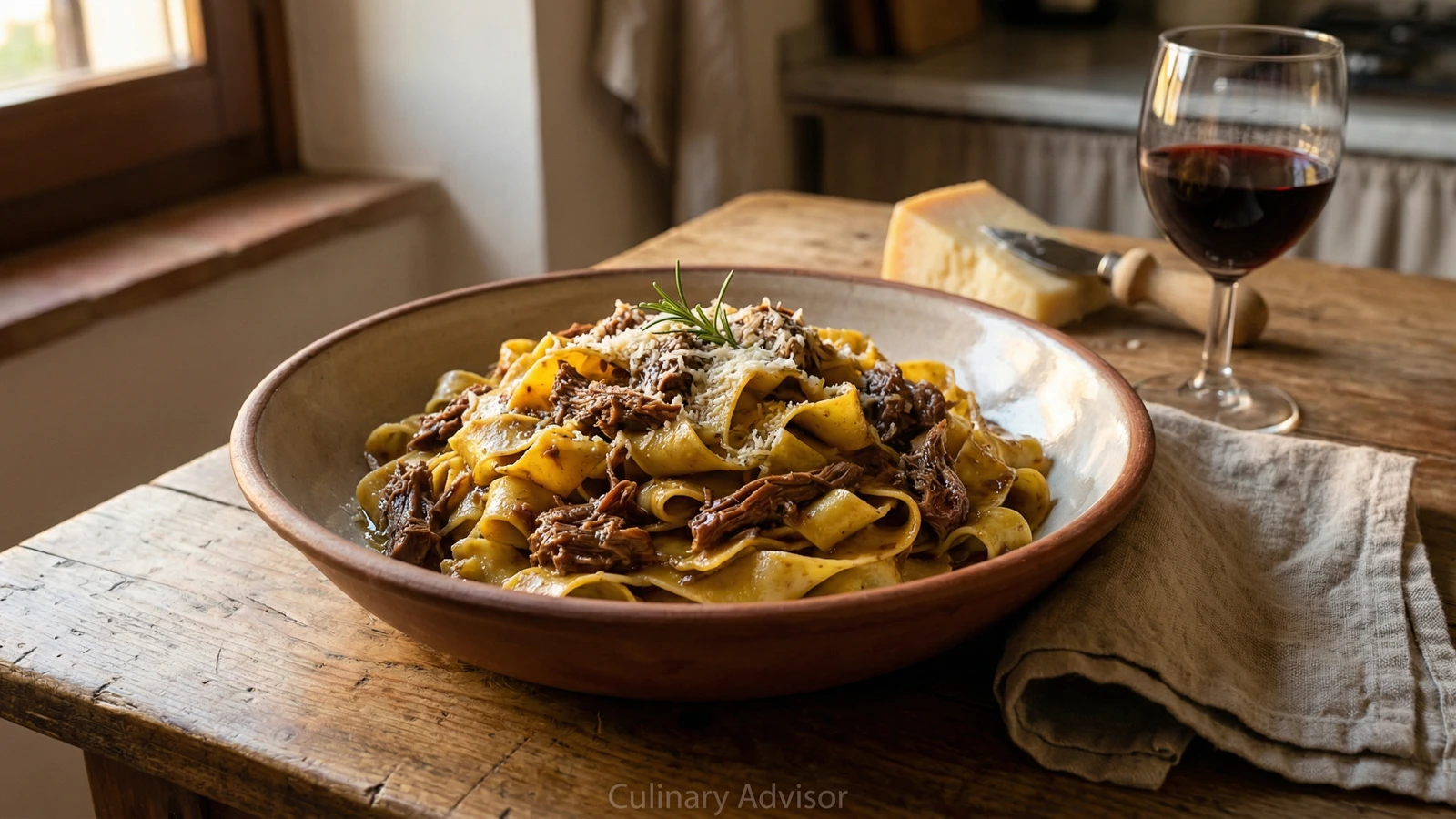
Pappardelle al Cinghiale
Created by Chef Graziella
Wide ribbons of fresh egg pasta draped in the dark, gamey ragù of Tuscan hunting country. The boar roam the forests of Maremma and Chianti; the sauce simmers for hours until wildness becomes tenderness.
In the hills of Tuscany, where chestnut forests cover the slopes and wild boar root through the underbrush, this is what hunters' wives have cooked for generations. Cinghiale is not domesticated pork. It is lean, muscular, deeply flavored meat from an animal that has lived free. It demands respect and time.
The ragù builds from a proper soffritto, as all Italian sauces must. Onion, carrot, and celery cooked until they nearly dissolve. Then red wine, not white. Tuscans drink Chianti; they cook with it too. The juniper berries are essential. They echo the forests where the boar lived, the wild aromatics it ate. Rosemary, bay, a whisper of cinnamon and clove. These are medieval flavors, and this is a medieval dish dressed in modern form.
Pappardelle are the only correct pasta. These wide ribbons catch the shredded meat and thick sauce in their folds. Narrow pasta would be overwhelmed. This is robust food for cold weather, for Sunday lunch after a morning in the hills, for feeding people you love when the wind rattles the shutters.
Wild boar hunting in Tuscany dates to Etruscan times, and cinghiale ragù evolved in the kitchens of hunting lodges and farmhouses across Maremma and Chianti. The dish gained broader recognition in the late 20th century as Tuscan cuisine became celebrated beyond Italy, though its roots remain firmly in the rural traditions of families who hunted to fill their tables, not for sport.
The technique, the tradition, and the story behind every dish.
Discover Culinary AdvisorIngredients
wild boar shoulder
Quantity
2 pounds
cut into 1-inch cubes
extra virgin olive oil
Quantity
1/4 cup
yellow onion
Quantity
1 medium
diced fine
carrot
Quantity
1 large
peeled and diced fine
celery stalks
Quantity
2
diced fine
garlic cloves
Quantity
2
sliced thin
dry red wine
Quantity
2 cups
San Marzano tomatoes
Quantity
1 can (28 ounces)
crushed by hand
beef or game stock
Quantity
1 cup
juniper berries
Quantity
6
lightly crushed
fresh rosemary
Quantity
2 sprigs
bay leaves
Quantity
2
cinnamon stick
Quantity
1 small
whole cloves
Quantity
4
kosher salt
Quantity
to taste
black pepper
Quantity
to taste
freshly ground
fresh pappardelle
Quantity
1 pound
Pecorino Toscano
Quantity
for serving
freshly grated
| Ingredient | Quantity |
|---|---|
| wild boar shouldercut into 1-inch cubes | 2 pounds |
| extra virgin olive oil | 1/4 cup |
| yellow oniondiced fine | 1 medium |
| carrotpeeled and diced fine | 1 large |
| celery stalksdiced fine | 2 |
| garlic clovessliced thin | 2 |
| dry red wine | 2 cups |
| San Marzano tomatoescrushed by hand | 1 can (28 ounces) |
| beef or game stock | 1 cup |
| juniper berrieslightly crushed | 6 |
| fresh rosemary | 2 sprigs |
| bay leaves | 2 |
| cinnamon stick | 1 small |
| whole cloves | 4 |
| kosher salt | to taste |
| black pepperfreshly ground | to taste |
| fresh pappardelle | 1 pound |
| Pecorino Toscanofreshly grated | for serving |
Equipment Needed
- •Heavy 6-quart Dutch oven with lid
- •Wooden spoon
- •Large pot for pasta
Instructions
- 1
Season the meat
Pat the boar cubes thoroughly dry with paper towels. Season generously with salt and pepper. The meat must be dry or it will steam instead of brown. Wet meat does not develop flavor.
- 2
Brown the boar
Heat the olive oil in a heavy Dutch oven over medium-high heat until it shimmers. Working in batches to avoid crowding, brown the boar on all sides. This takes 8 to 10 minutes per batch. Do not move the pieces constantly. Let them sit until they release from the pan, then turn. Transfer browned meat to a plate.
Crowding the pan drops the temperature and the meat stews in its own juices. Brown in three batches if necessary. Patience here builds the foundation of flavor. - 3
Build the soffritto
Reduce heat to medium. Add the onion, carrot, and celery to the pot with the browned bits remaining. Cook slowly, stirring and scraping the bottom, until the vegetables are completely soft and golden, about 15 minutes. Add the sliced garlic and cook one minute more. The garlic should become fragrant but not color.
- 4
Add wine and reduce
Pour in the red wine. It will sizzle and steam. Scrape up any browned bits from the bottom of the pot. Let the wine simmer vigorously until it reduces by half, about 10 minutes. You should no longer smell raw alcohol. The wine leaves behind only its depth and acidity.
- 5
Braise the meat
Return the browned boar and any accumulated juices to the pot. Add the crushed tomatoes, stock, juniper berries, rosemary, bay leaves, cinnamon stick, and cloves. Stir to combine. Bring to a bare simmer. Cover the pot, leaving the lid slightly ajar, and reduce heat to the lowest possible setting. The liquid should barely bubble. Braise until the meat is completely tender and falls apart when pressed with a spoon, 3 to 3 1/2 hours.
Wild boar is leaner than pork and tougher than beef. It requires long, slow cooking to become tender. Check occasionally and add a splash of water if the sauce reduces too much. - 6
Finish the ragù
Remove and discard the rosemary stems, bay leaves, cinnamon stick, and cloves. Using two forks, shred the meat into the sauce. Some cooks leave larger pieces. The texture is yours to decide, but the meat should be falling apart. Taste and adjust salt. The ragù should be thick and rich, not watery. If too thin, simmer uncovered for 15 minutes.
- 7
Cook the pappardelle
Bring abundant water to a vigorous boil. Salt it until it tastes like the sea. Cook fresh pappardelle until tender but with pleasant resistance, 2 to 3 minutes. Reserve one cup of the starchy cooking water before draining.
- 8
Marry pasta and sauce
Add the drained pappardelle directly to the pot with the ragù. Toss vigorously over low heat, adding splashes of pasta water as needed to help the sauce cling to the ribbons. The starch in the water creates the bond. The pasta should be dressed, not drowning. Every ribbon should glisten with sauce. Serve immediately in warm bowls. Pass Pecorino Toscano at the table.
Once the pasta is sauced, serve it promptly, inviting your guests and family to put off talking and start eating. Pasta waits for no one.
Chef Tips
- •If wild boar is unavailable, use pork shoulder with a tablespoon of red wine vinegar added to approximate the gamey tang. It will not be the same, but it will be good. Do not use beef.
- •The juniper berries must be crushed lightly to release their oils. Place them under the flat of your knife and press. Whole berries contribute nothing.
- •Some Tuscan cooks marinate the boar overnight in red wine with the aromatics. This tenderizes the meat and deepens the flavor. If you have time, do this. If not, the long braise compensates.
- •Pecorino Toscano is traditional here, not Parmigiano-Reggiano. The sheep's milk cheese has a slight tang that complements the game. If unavailable, aged Pecorino Romano will serve.
Advance Preparation
- •The ragù improves dramatically if made one or two days ahead. Refrigerate and reheat gently, adding a splash of water to loosen.
- •The completed sauce freezes well for up to three months. Thaw overnight in the refrigerator.
- •Do not cook the pasta until ready to serve. Fresh pappardelle cannot wait.
Frequently Asked Questions
Nutrition Information
1 serving (about 460g)
Where cooking meets culture.
Culinary mentorship, cultural storytelling, and the editorial depth that makes cooking meaningful.
Explore Culinary Advisor