Culinary Advisor
A cooking platform built around craft, culture, and the stories behind what we eat.
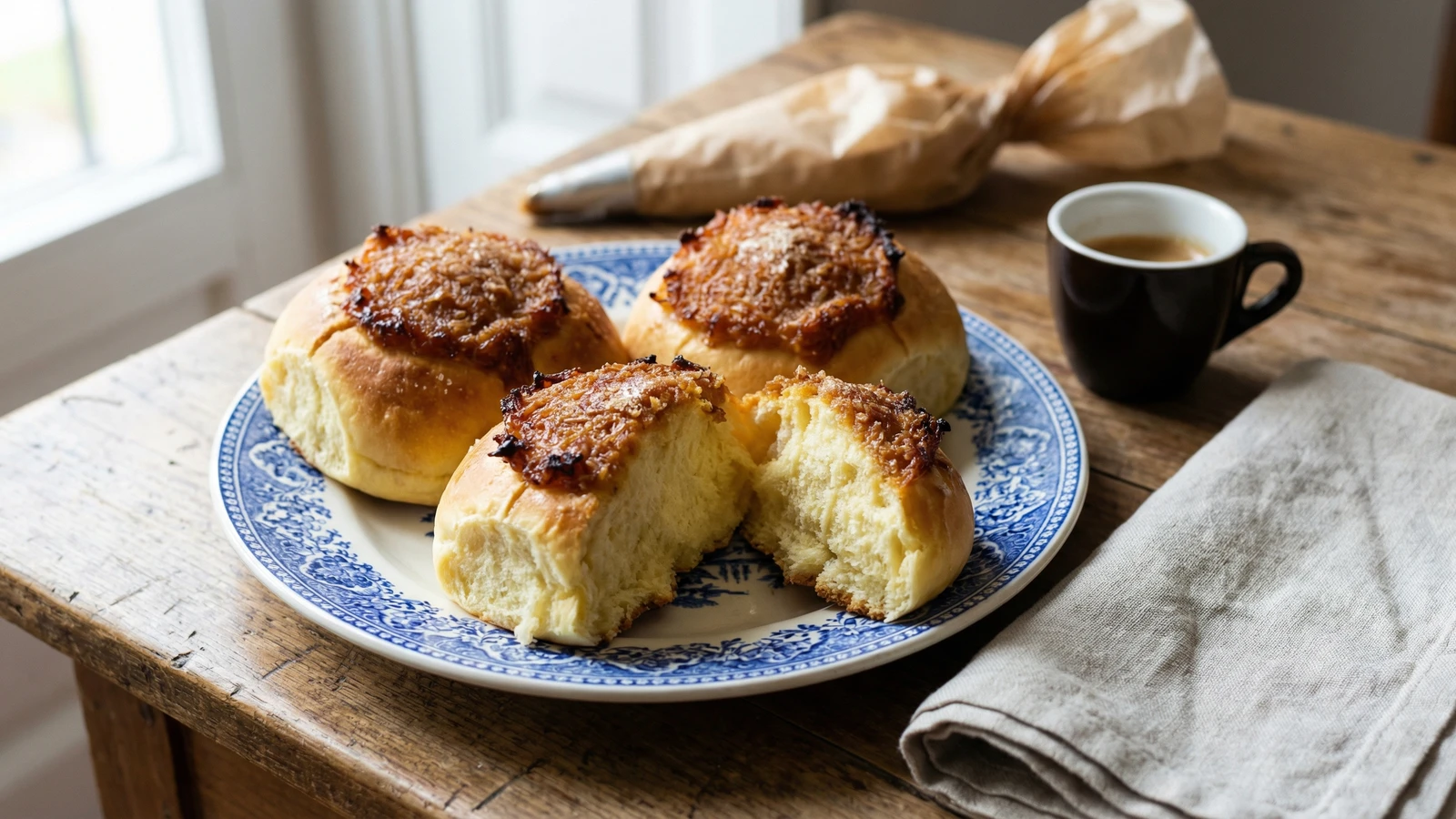
Pão de Deus
Created by
Soft sweet rolls crowned with golden coconut and sugar, the kind of simple perfection that made Portuguese padarias famous. Called 'bread of God' because that's exactly what they taste like.
Walk into any padaria in Lisbon before eight in the morning and you'll see them: golden domes of coconut and sugar sitting in neat rows, still warm from the oven. Pão de Deus. Bread of God. The name isn't poetry. It's accuracy.
I remember being small enough to press my nose against the glass case at the padaria near Avó Leonor's house in Évora. The woman behind the counter would slide one onto a small paper, still warm, and hand it down to me. The coconut topping slightly crunchy, the bread underneath soft as a cloud. That combination of textures is everything.
This is not complicated baking. It's enriched bread dough with butter and eggs, the kind that every Portuguese grandmother knows by feel. The magic is in the topping: coconut, sugar, egg, and butter pressed into a golden crown that caramelizes in the oven. Simple ingredients, transformed.
At Mesa da Avó, I sometimes serve these at the end of a meal instead of dessert. People always ask for the recipe. They can't believe something so good comes from ingredients so humble. But that's Portuguese baking. That's always been Portuguese baking. We take what we have and make it taste like heaven.
Pão de Deus emerged from Lisbon's padarias in the mid-20th century, when coconut from Portuguese colonies in Africa and Brazil became widely available. The recipe belongs to the tradition of pão doce (sweet bread) that has anchored Portuguese breakfast tables for generations. Though younger than convent sweets, it has become one of the most beloved everyday pastries in Portugal.
The technique, the tradition, and the story behind every dish.
Discover Culinary AdvisorIngredients
all-purpose flour
Quantity
500g
plus more for kneading
sugar
Quantity
80g
instant yeast
Quantity
7g
fine salt
Quantity
1 teaspoon
lemon
Quantity
1
zested
unsalted butter
Quantity
100g
softened
eggs
Quantity
2 large
room temperature
whole milk
Quantity
150ml
lukewarm
vanilla extract
Quantity
1 teaspoon
shredded coconut
Quantity
150g
sugar (for topping)
Quantity
150g
egg (for topping)
Quantity
1 large
unsalted butter (for topping)
Quantity
30g
melted
egg yolk
Quantity
1
beaten with 1 tablespoon milk
| Ingredient | Quantity |
|---|---|
| all-purpose flourplus more for kneading | 500g |
| sugar | 80g |
| instant yeast | 7g |
| fine salt | 1 teaspoon |
| lemonzested | 1 |
| unsalted buttersoftened | 100g |
| eggsroom temperature | 2 large |
| whole milklukewarm | 150ml |
| vanilla extract | 1 teaspoon |
| shredded coconut | 150g |
| sugar (for topping) | 150g |
| egg (for topping) | 1 large |
| unsalted butter (for topping)melted | 30g |
| egg yolkbeaten with 1 tablespoon milk | 1 |
Equipment Needed
- •Large mixing bowl
- •Two baking sheets
- •Parchment paper
- •Wire cooling rack
Instructions
- 1
Make the dough
In a large bowl, combine the flour, sugar, yeast, salt, and lemon zest. Make a well in the center. Add the softened butter, eggs, lukewarm milk, and vanilla. Mix with a wooden spoon until a shaggy dough forms. The dough will look rough. That's fine. Turn it onto a lightly floured surface.
The milk should be warm to the touch but not hot. Too hot kills the yeast. If you can hold your finger in it comfortably, you're good. - 2
Knead until silky
Knead the dough for 10 to 12 minutes. At first it will be sticky and resist you. Keep going. Don't add too much flour. The butter needs time to incorporate. After 10 minutes, the dough should be smooth, elastic, and slightly tacky. When you poke it, it should spring back slowly. This is the dough telling you it's ready.
- 3
First rise
Shape the dough into a ball and place it in a lightly oiled bowl. Cover with a clean kitchen towel or plastic wrap. Let it rise in a warm spot until doubled in size, about 1 hour to 1 hour 30 minutes. The time depends on your kitchen. Don't rush it. The yeast works on its own schedule.
Avó Leonor put her dough near the window in winter, where the sun came through. In summer, the counter was warm enough. Find your kitchen's warm spot. - 4
Shape the rolls
Punch down the risen dough to release the air. Divide it into 12 equal pieces, about 70g each. Roll each piece into a smooth ball, tucking the seams underneath. Place the balls on two parchment-lined baking sheets, spacing them about 5cm apart. Cover loosely and let rise for another 30 minutes. They should look puffy and proud.
- 5
Make the coconut topping
While the rolls rise, prepare the topping. In a bowl, mix the shredded coconut, sugar, egg, and melted butter until everything is evenly combined. The mixture should be moist and hold together when pressed. If it seems dry, add another small splash of melted butter. Set aside.
- 6
Top and bake
Preheat your oven to 180°C (350°F). Brush each risen roll with the egg wash. Take a generous spoonful of the coconut mixture and press it onto the top of each roll, shaping it into a little dome. Don't be shy. The topping is the whole point. Bake for 16 to 18 minutes until the rolls are golden and the coconut topping turns a beautiful amber color. The kitchen will smell like heaven. That's how they got their name.
Watch the coconut carefully in the last few minutes. It goes from golden to burned quickly. If it's browning too fast, tent loosely with foil. - 7
Cool and serve
Let the rolls cool on the baking sheet for 5 minutes, then transfer to a wire rack. They're best eaten the same day, still slightly warm, with a strong coffee beside you. This is breakfast in Portugal. This is Sunday afternoon. This is who we are.
Chef Tips
- •The dough should be soft and slightly tacky, not stiff. Resist adding too much flour during kneading. A sticky dough makes a tender roll.
- •Use fine shredded coconut, not the large flakes. The fine texture creates that signature crispy-chewy topping that caramelizes properly.
- •These freeze beautifully before the final rise. Shape the rolls, freeze on the tray, then bag them. Thaw overnight in the fridge, let rise, add topping, and bake fresh.
- •Day-old Pão de Deus makes incredible French toast. Slice in half, soak briefly in egg and milk, and pan-fry in butter. The coconut topping gets impossibly crispy.
Advance Preparation
- •The dough can be made the night before and refrigerated after the first rise. Punch down, cover tightly, and refrigerate. The next morning, let it come to room temperature for 30 minutes before shaping.
- •Shaped rolls can be frozen before the final rise. Thaw in the refrigerator overnight, then let rise at room temperature before topping and baking.
- •These are best eaten the day they're baked. Store leftovers in an airtight container; refresh in a 150°C oven for 5 minutes.
Frequently Asked Questions
Nutrition Information
1 serving (about 100g)
Where cooking meets culture.
Culinary mentorship, cultural storytelling, and the editorial depth that makes cooking meaningful.
Explore Culinary Advisor