Culinary Advisor
A cooking platform built around craft, culture, and the stories behind what we eat.
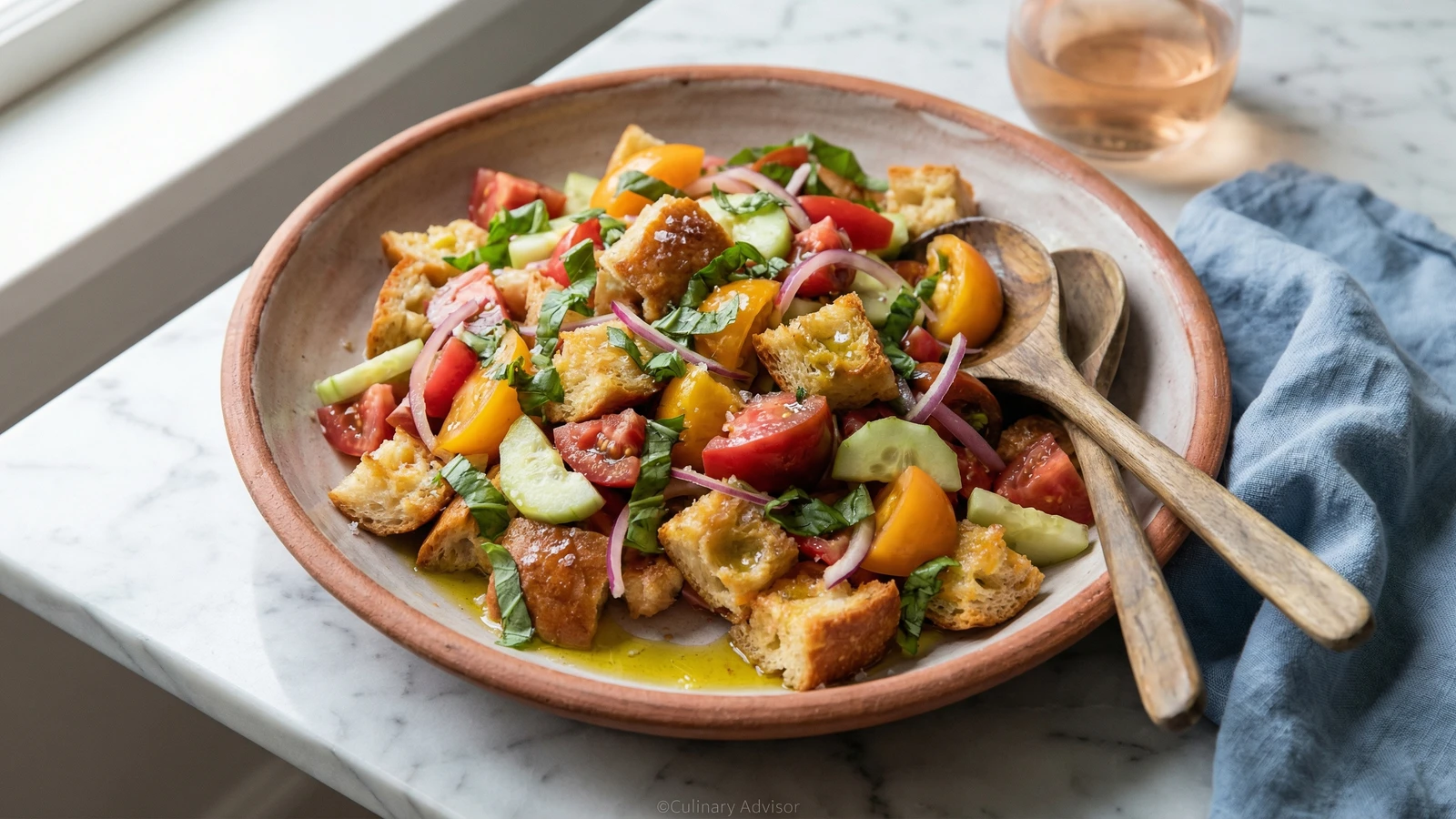
Panzanella (Tuscan Bread Salad)
Created by
Sun-ripened tomatoes surrender their juices to crusty bread in this Tuscan celebration of summer, each bite a perfect balance of vinegar-bright dressing, fragrant basil, and the satisfying chew of bread that has earned its place at the table.
Panzanella exists because Tuscan farmwives refused to waste bread. In a region where loaves are baked without salt and turn stale within hours, this salad transformed necessity into genius. The bread absorbs tomato juices and vinaigrette like a sponge accepts water, becoming something entirely new: tender, saturated with flavor, yet retaining enough texture to reward the teeth.
This is not a recipe that tolerates mediocrity. Your tomatoes must be heavy with summer, splitting at the seams with juice. Your bread must have backbone, a crusty loaf with substance, not the cotton-soft slices that dissolve at first contact with moisture. The vinaigrette demands proper emulsification, that creamy suspension where oil and vinegar become one.
I first encountered panzanella in a farmhouse outside Florence, served on a cracked ceramic platter by a woman who measured nothing. She tore bread with her hands, crushed tomatoes between her palms, and dressed the whole affair by instinct. The result was transcendent. This recipe captures her method with enough precision for those still learning to trust their palates.
The dish improves with rest. Give it thirty minutes after assembly and the transformation is complete. The bread softens at the edges while maintaining its core. The tomatoes release their final reserves of juice. Everything melds into something greater than its parts.
The technique, the tradition, and the story behind every dish.
Discover Culinary AdvisorIngredients
crusty Italian bread
Quantity
1 pound
preferably day-old, ciabatta or rustic sourdough
extra-virgin olive oil (for toasting)
Quantity
3 tablespoons
ripe summer tomatoes
Quantity
2 pounds
variety of colors if available
flaky sea salt (for tomatoes)
Quantity
1 teaspoon
English cucumber
Quantity
1
halved lengthwise and sliced
red onion
Quantity
1/2 medium
thinly sliced
red wine vinegar
Quantity
1/4 cup
garlic
Quantity
1 small clove
minced to a paste
Dijon mustard
Quantity
1 teaspoon
kosher salt
Quantity
1/2 teaspoon
black pepper
Quantity
1/4 teaspoon
freshly ground
extra-virgin olive oil (for dressing)
Quantity
1/2 cup
fresh basil leaves
Quantity
1 cup
torn
capers
Quantity
2 tablespoons
drained and patted dry
flaky sea salt
Quantity
for finishing
| Ingredient | Quantity |
|---|---|
| crusty Italian breadpreferably day-old, ciabatta or rustic sourdough | 1 pound |
| extra-virgin olive oil (for toasting) | 3 tablespoons |
| ripe summer tomatoesvariety of colors if available | 2 pounds |
| flaky sea salt (for tomatoes) | 1 teaspoon |
| English cucumberhalved lengthwise and sliced | 1 |
| red onionthinly sliced | 1/2 medium |
| red wine vinegar | 1/4 cup |
| garlicminced to a paste | 1 small clove |
| Dijon mustard | 1 teaspoon |
| kosher salt | 1/2 teaspoon |
| black pepperfreshly ground | 1/4 teaspoon |
| extra-virgin olive oil (for dressing) | 1/2 cup |
| fresh basil leavestorn | 1 cup |
| capersdrained and patted dry | 2 tablespoons |
| flaky sea salt | for finishing |
Equipment Needed
- •Large rimmed baking sheet
- •Colander and large bowl for draining tomatoes
- •Large mixing or serving bowl
- •Whisk for emulsifying dressing
Instructions
- 1
Prepare the bread
Tear or cut the bread into rough 1-inch cubes, keeping some irregular edges. The uneven surfaces create more area to absorb dressing and tomato juices. If your bread is fresh, spread the cubes on a baking sheet and let them sit uncovered for several hours, or toast them in a 375°F oven for 10 to 12 minutes until golden at the edges but not dried through. You want stale, not croutons.
Truly stale bread, left out overnight, is superior to oven-dried. The slow moisture loss creates a different internal texture that absorbs more evenly. - 2
Toast the bread cubes
Toss the bread cubes with three tablespoons of olive oil, spreading them on a rimmed baking sheet in a single layer. Toast in a 375°F oven until the edges turn golden and the cubes feel dry on the surface but still yield slightly when pressed, about 10 to 12 minutes. They should have color without being crunchy throughout. Let them cool while you prepare the remaining components.
- 3
Season the tomatoes
Core the tomatoes and cut them into irregular chunks, roughly the same size as your bread cubes. Place them in a colander set over a large bowl. Sprinkle with one teaspoon of flaky salt and toss gently. Let them drain for 15 to 20 minutes. The salt draws out their juices, which you will use to dress the bread. This step is essential. Do not skip it.
Save every drop of that tomato water. It contains concentrated flavor that commercial tomato juice cannot replicate. - 4
Tame the onion
While tomatoes drain, soak the sliced red onion in ice water for 10 minutes. This removes the harsh sulfur compounds that make raw onion aggressive on the palate, leaving behind sweet crunch without the bite that lingers for hours. Drain thoroughly and pat dry with paper towels.
- 5
Build the vinaigrette
Pour the collected tomato juices into a medium bowl. You should have roughly three tablespoons. Add the red wine vinegar, minced garlic paste, Dijon mustard, half teaspoon kosher salt, and black pepper. Whisk until the salt dissolves. Now add the olive oil in a slow, steady stream while whisking constantly. The mustard acts as an emulsifier, binding oil and acid into a creamy, unified dressing that clings rather than separates.
The dressing should look opaque and slightly thickened. If it breaks and the oil pools on top, add a few drops of cold water and whisk vigorously to bring it back together. - 6
Dress the bread
Place the toasted bread cubes in your largest mixing bowl. Pour about two-thirds of the vinaigrette over them and toss thoroughly, ensuring every cube gets coated. Let the bread sit for 5 minutes to begin absorbing the dressing. The cubes should feel moistened but not sodden, still holding their shape with slight resistance when pressed.
- 7
Assemble the salad
Add the drained tomatoes, soaked and dried onion, cucumber slices, and capers to the dressed bread. Pour the remaining vinaigrette over the vegetables. Toss gently but thoroughly, lifting from the bottom to distribute everything evenly. Taste a piece of bread with a tomato chunk. Adjust salt and vinegar if needed. The bread should taste bright and full-flavored on its own.
- 8
Rest and finish
Let the assembled panzanella rest at room temperature for 20 to 30 minutes. This resting period allows the bread to absorb the tomato juices and dressing fully while the flavors marry. Just before serving, tear the basil leaves and fold them through the salad. Finish with a drizzle of your finest olive oil and a scattering of flaky salt. Serve immediately after adding the basil.
Basil darkens and loses its perfume within minutes of being dressed. Always add it at the very end, never during the resting period.
Chef Tips
- •Seek out tomatoes that feel heavy for their size and smell like summer at the stem end. Refrigeration destroys tomato texture and dulls their flavor. Keep them at room temperature, stem-side down, and use them within days of peak ripeness.
- •The bread matters more than you might think. Look for loaves with a dense, chewy crumb and thick crust. Ciabatta, pugliese, or a rustic country sourdough all work beautifully. Avoid anything soft or airy, which will turn to mush.
- •A sharp Chianti or crisp Vermentino makes a natural companion. The wine's acidity mirrors the vinaigrette while its fruit echoes the ripe tomatoes.
- •For a more substantial meal, add torn fresh mozzarella, chunks of good tuna packed in olive oil, or white beans dressed with lemon and garlic. Each addition should earn its place without overwhelming the essential simplicity.
Advance Preparation
- •Bread cubes can be toasted up to 2 days ahead and stored in an airtight container at room temperature. They should be completely cool before storing.
- •The vinaigrette base (without tomato juices) can be made up to 1 week ahead and refrigerated. Whisk in the fresh tomato juices just before dressing the salad.
- •The completed salad should rest 20 to 30 minutes before serving but does not hold well beyond 2 hours. The bread continues absorbing liquid and eventually becomes too soft. Never refrigerate assembled panzanella.
Frequently Asked Questions
Nutrition Information
1 serving (about 450g)
Where cooking meets culture.
Culinary mentorship, cultural storytelling, and the editorial depth that makes cooking meaningful.
Explore Culinary Advisor