Culinary Advisor
A cooking platform built around craft, culture, and the stories behind what we eat.
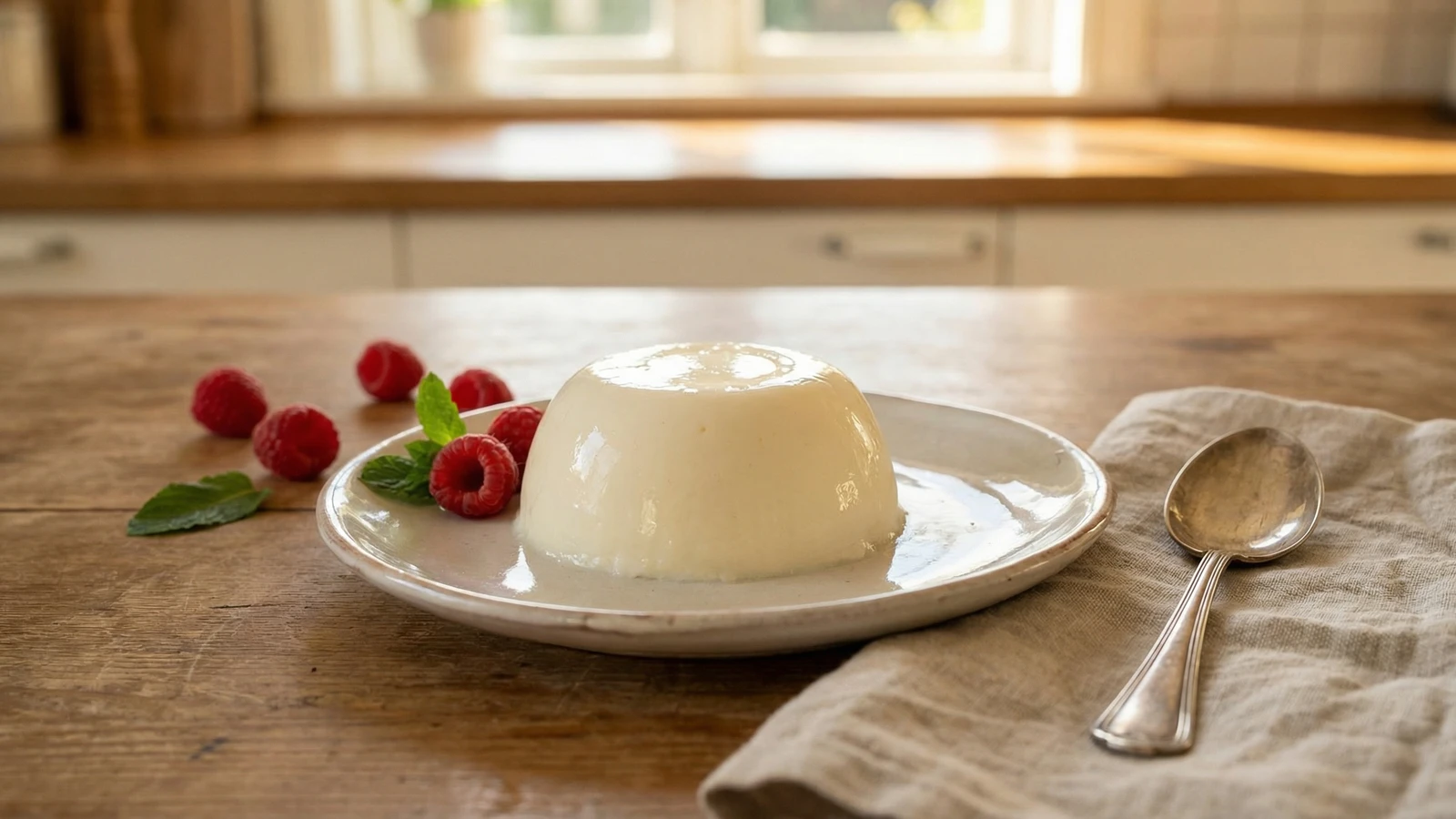
Panna Cotta
Created by Chef Graziella
The quivering cream of Piedmont, set with just enough gelatin to hold its shape and not a grain more. Pure dairy, pure vanilla, pure restraint.
Panna cotta means cooked cream. That is all it is: cream that has been gently warmed with sugar and vanilla, then set with gelatin. The ingredient list takes one sentence to recite. The technique takes ten minutes. And yet most people get it wrong.
The error is always the same: too much gelatin. Americans are nervous cooks. They want insurance. They add extra gelatin to make certain the thing will set, and they end up with something that bounces when dropped. Proper panna cotta does not bounce. It shivers. It trembles. When you touch the mold, the surface should ripple like the skin of a pond when a leaf falls upon it. This is the test, and there is no faking it.
The flavor must be pure. Cream and vanilla, nothing competing. Some add fruit purees or chocolate or coffee, and these can be pleasant, but they are not panna cotta. They are something else wearing its name. Learn the original first. Master the wobble. Then, if you wish, you may experiment. But I suspect you will find, as I have, that the simple version needs nothing more.
Panna cotta's origins are surprisingly recent and surprisingly murky. Most food historians trace it to the Langhe hills of Piedmont in the early 20th century, though it remained a local specialty until the 1960s. Its international ascent began in the 1990s, when Italian restaurants worldwide discovered that this simple cream could be made ahead, unmolded beautifully, and charmed everyone who tried it.
The technique, the tradition, and the story behind every dish.
Discover Culinary AdvisorIngredients
heavy cream
Quantity
2 cups
whole milk
Quantity
1 cup
granulated sugar
Quantity
1/2 cup
vanilla bean
Quantity
1
split lengthwise
unflavored gelatin powder
Quantity
2 1/4 teaspoons (1 envelope)
cold water
Quantity
3 tablespoons
fine sea salt
Quantity
pinch
| Ingredient | Quantity |
|---|---|
| heavy cream | 2 cups |
| whole milk | 1 cup |
| granulated sugar | 1/2 cup |
| vanilla beansplit lengthwise | 1 |
| unflavored gelatin powder | 2 1/4 teaspoons (1 envelope) |
| cold water | 3 tablespoons |
| fine sea salt | pinch |
Equipment Needed
- •Six 4-ounce ramekins or panna cotta molds
- •Medium saucepan
- •Fine-mesh strainer (optional but recommended)
Instructions
- 1
Bloom the gelatin
Pour the cold water into a small bowl. Sprinkle the gelatin evenly over the surface. Do not stir. Let it sit undisturbed for 5 minutes. The gelatin will absorb the water and become soft and spongy. This is called blooming, and it ensures the gelatin dissolves smoothly into the cream without lumps.
The water must be cold. Hot water causes the gelatin to clump onthe surface, and you will never achieve a smooth result. - 2
Infuse the cream
In a medium saucepan, combine the cream, milk, and sugar. Scrape the seeds from the vanilla bean using the back of a knife, and add both the seeds and the pod to the pan. Set the heat to medium. Stir occasionally until the sugar dissolves and the mixture is hot but not boiling. Small bubbles will appear around the edges. Remove from heat the moment you see steam rising steadily. Do not let it boil.
- 3
Dissolve the gelatin
Add the bloomed gelatin and the pinch of salt to the hot cream. Stir gently but thoroughly for 2 minutes, until the gelatin dissolves completely. You should feel no grains when you rub a drop between your fingers. Fish out the vanilla pod and discard it.
If you are uncertain whether the gelatin has dissolved, strain the mixture through a fine sieve. Better to strain unnecessarily than to serve panna cotta with rubbery specks. - 4
Pour into molds
Divide the mixture evenly among six 4-ounce ramekins or molds. Traditional panna cotta molds are slightly wider at the top than the bottom, which helps with unmolding. If using straight-sided ramekins, you may serve directly from the vessel. Place the molds on a small tray for easy handling.
- 5
Chill until set
Cover each mold with plastic wrap, pressing it gently against the surface to prevent a skin from forming. Refrigerate for at least 4 hours, or overnight. The panna cotta is ready when it holds its shape but trembles when you nudge the mold. It should quiver like a living thing, not bounce like rubber.
- 6
Unmold and serve
To unmold, dip each ramekin into hot water for 5 seconds. No longer. Run a thin knife around the edge, being careful not to cut into the cream. Invert onto a serving plate and give a gentle shake. The panna cotta should release with a soft sigh. Serve immediately, plain or with a simple accompaniment.
Chef Tips
- •One envelope of gelatin (2 1/4 teaspoons) per 3 cups of liquid produces the ideal texture: set but trembling. This ratio is not negotiable. More gelatin creates rubber. Less creates soup.
- •Vanilla extract is acceptable if you cannot find vanilla beans, but reduce it to 1 teaspoon and add it after heating. The flavor will be less nuanced, less perfumed. Real vanilla is worth seeking.
- •The dipping time matters. Five seconds in hot water loosens the edges. Ten seconds begins to melt the outer layer. If you lose your nerve and over-dip, the panna cotta will slouch when unmolded.
- •Panna cotta requires no sauce, but if you wish to add one, keep it simple: fresh berries crushed with a fork and a little sugar, or a thread of aged balsamic from Modena. Never chocolate sauce. Never caramel from a jar.
Advance Preparation
- •Panna cotta must be made at least 4 hours ahead, making it ideal for entertaining. It can be refrigerated for up to 3 days, covered, without loss of quality.
- •Unmold just before serving. Once out of the mold, the panna cotta begins to weep slightly, and the pristine surface dulls.
Frequently Asked Questions
Nutrition Information
1 serving (about 145g)
Where cooking meets culture.
Culinary mentorship, cultural storytelling, and the editorial depth that makes cooking meaningful.
Explore Culinary Advisor