Culinary Advisor
A cooking platform built around craft, culture, and the stories behind what we eat.
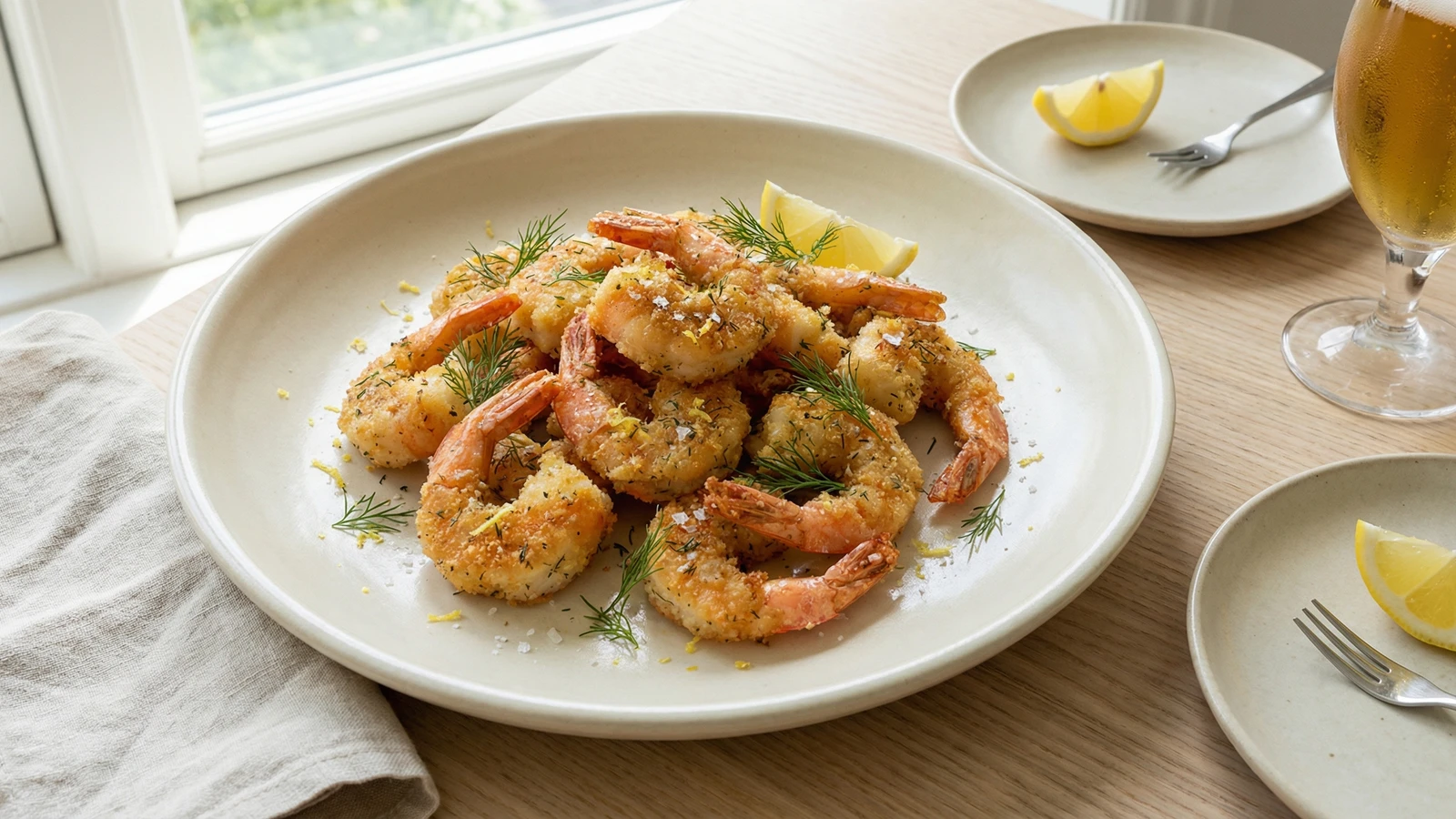
Panerede Rejer med Dild og Citron
Created by Chef Freja
Danish breaded shrimp shallow-fried in butter and oil until the coating turns deep gold, served with lemon wedges and fresh dill. The summer starter that belongs to long evenings outside.
The Danish summer kitchen runs on light. Long evenings, late dinners, the table moved outside under whatever shelter the garden offers. The food turns lighter to match. Heavy braises and root vegetable soups belong to October. June and July belong to fish, dill, new potatoes, and the kind of starters you can make in twenty minutes and serve with a glass of something cold.
Panerede rejer med dild og citron is exactly that kind of dish. Larger shrimp, breaded with lemon zest and fresh dill folded into the crumbs, shallow-fried in butter and oil until the coating turns the color of dark honey. They are eaten with your fingers or with a small fork, with lemon wedges to squeeze over and a glass of cold beer or aquavit alongside. This is summer faellesspisning at its simplest, the shared meal where nobody is performing and everyone is welcome.
What I want you to pay attention to is the breading. The dill and lemon zest go into the breadcrumbs, not sprinkled over the top at the end. That way the flavor sits against the shrimp from the first bite, and the fresh dill on top is decoration and freshness, not the only place the herb lives. The other thing is the butter. You're shallow-frying, not deep-frying, and the butter has to be foaming and just starting to smell of hazelnuts before the shrimp go in. Earlier and the coating soaks up grease. Later and the butter turns dark and bitter. You'll know when it's right because your kitchen will smell of brown butter, dill, and lemon all at once, and that smell is half the dish.
The Danish breaded shrimp tradition grew up alongside the cold kitchen of the late 19th century, when Copenhagen's lunch restaurants began offering warm fried items as counterpoints to the long parade of cold smorrebrod. The technique came partly from Austrian and German cooks working in Danish kitchens, who brought the schnitzel method of flour, egg, and crumbs with them. Danish cooks adapted it for the small fjord and North Sea shrimp that have been harvested along the Jutland coast since the Middle Ages, and the addition of dill and lemon zest into the breadcrumbs themselves is the local fingerprint, the detail that turns a borrowed technique into something unmistakably Danish.
The technique, the tradition, and the story behind every dish.
Discover Culinary AdvisorIngredients
large raw shrimp
Quantity
500g
peeled and deveined, tails left on
plain flour
Quantity
60g
eggs
Quantity
2 large
fine dry breadcrumbs
Quantity
120g
fine sea salt
Quantity
1 teaspoon
white pepper
Quantity
freshly ground, to taste
unwaxed lemon zest
Quantity
from 1 lemon
finely grated
fresh dill
Quantity
small bunch
finely chopped, plus extra fronds to finish
unsalted butter
Quantity
60g
neutral oil
Quantity
2 tablespoons
lemon wedges
Quantity
from 1 lemon, to serve
flaky sea salt
Quantity
to finish
| Ingredient | Quantity |
|---|---|
| large raw shrimppeeled and deveined, tails left on | 500g |
| plain flour | 60g |
| eggs | 2 large |
| fine dry breadcrumbs | 120g |
| fine sea salt | 1 teaspoon |
| white pepper | freshly ground, to taste |
| unwaxed lemon zestfinely grated | from 1 lemon |
| fresh dillfinely chopped, plus extra fronds to finish | small bunch |
| unsalted butter | 60g |
| neutral oil | 2 tablespoons |
| lemon wedges | from 1 lemon, to serve |
| flaky sea salt | to finish |
Equipment Needed
- •Three shallow bowls for the breading station
- •Heavy frying pan, 28cm
- •Tongs
- •Tray lined with kitchen paper for draining
Instructions
- 1
Dry the shrimp
Lay the peeled shrimp on a tray lined with kitchen paper and pat them completely dry, top and bottom. Wet shrimp steam in the pan instead of crisping, and the breadcrumbs slide off them in sheets. A few minutes with paper towels saves the whole dish.
If your shrimp are previously frozen, dry them twice. They release more water than fresh ones, and you want every drop gone before they meet the flour. - 2
Set up the three bowls
Put the flour in one shallow bowl with the salt and a few twists of white pepper. Beat the eggs in a second bowl. In a third, combine the breadcrumbs with the lemon zest and the chopped dill. Mix the breadcrumbs through with your fingers until the green and yellow are evenly distributed. The zest and dill go into the coating, not on top at the end. That way the flavor sits against the shrimp from the moment you bite in.
- 3
Bread the shrimp
Working with one shrimp at a time, holding it by the tail, dip it first in the flour and shake off any excess. Then into the egg, letting the extra drip back into the bowl. Then into the breadcrumb mixture, pressing gently so the crumbs cling to every curve. Lay the breaded shrimp on a clean tray and keep going until they are all coated. Don't pile them on top of each other. The crumbs will smudge and the coating will weaken.
Keep one hand for dry, one for wet. If both hands get sticky, you'll lose half the breadcrumbs to your fingers and the coating will turn patchy. - 4
Heat the butter and oil
Set a heavy frying pan over medium-high heat. Add the oil first, then the butter. Butter alone will burn before the shrimp are cooked through. Oil alone tastes of nothing. Together they give you the deep golden crust and the nutty richness that make these taste like a Danish summer kitchen and not a fish-and-chip shop. Wait until the butter is foaming and just starting to smell of hazelnuts. That's the moment.
- 5
Shallow-fry in batches
Lay the shrimp into the foaming butter in a single layer, leaving space between each one. Don't crowd the pan. Crowded shrimp release steam, the steam softens the crumbs, and you lose the crisp. Cook for about a minute and a half on the first side, until the breadcrumbs are deep gold and the edges of the shrimp have turned coral pink. Flip with tongs and cook for another minute on the second side. The shrimp are done when the flesh is opaque all the way through and the coating is the color of dark honey. You'll know when it's right because the kitchen smells of brown butter and dill and the sound from the pan goes from a sizzle to a softer hush.
- 6
Drain and finish
Lift the cooked shrimp onto a plate lined with kitchen paper to catch any extra butter. Scatter with flaky sea salt straight away, while the surface is still hot enough to hold it. Wipe the pan if there are any dark crumbs left behind, add fresh butter and oil, and fry the next batch. Repeat until they are all done.
- 7
Serve at once
Pile the shrimp loosely on a serving plate. Tuck the lemon wedges around the edge and scatter the extra dill fronds across the top. Serve immediately, while the coating is still crisp and the butter is still singing in the air. Tak for mad.
Chef Tips
- •Buy the largest shrimp you can. Tiny fjord shrimp are wonderful in salads and on smorrebrod, but they are too small to bread and fry. For this dish you want shrimp big enough to hold their shape and give you a real bite of fish under the crust.
- •Make your own breadcrumbs if you have time. Dry slightly stale white bread in a low oven, then blitz in a food processor. The texture is irregular and rough, and that gives you a much better crust than the uniform commercial kind.
- •Serve with a cold beer, an aquavit, or a glass of dry white wine. A crisp Riesling or a Danish white from the islands works beautifully. The fat of the butter wants something sharp and cold to cut through it.
- •If you want to make this into a proper starter, set out a small bowl of remoulade or a quick dill mayonnaise alongside. Stir chopped dill, lemon juice, and a little Dijon into good mayonnaise. That's it.
Advance Preparation
- •The shrimp can be breaded up to two hours ahead and kept on a tray in the fridge, uncovered, so the coating stays dry. Don't cover them with cling film or the breadcrumbs will go soft.
- •Fry just before serving. These do not hold. A panerede rejer that has been sitting on a plate for fifteen minutes is a sad thing, and not the dish you want.
Frequently Asked Questions
Nutrition Information
1 serving (about 165g)
Where cooking meets culture.
Culinary mentorship, cultural storytelling, and the editorial depth that makes cooking meaningful.
Explore Culinary Advisor