Culinary Advisor
A cooking platform built around craft, culture, and the stories behind what we eat.
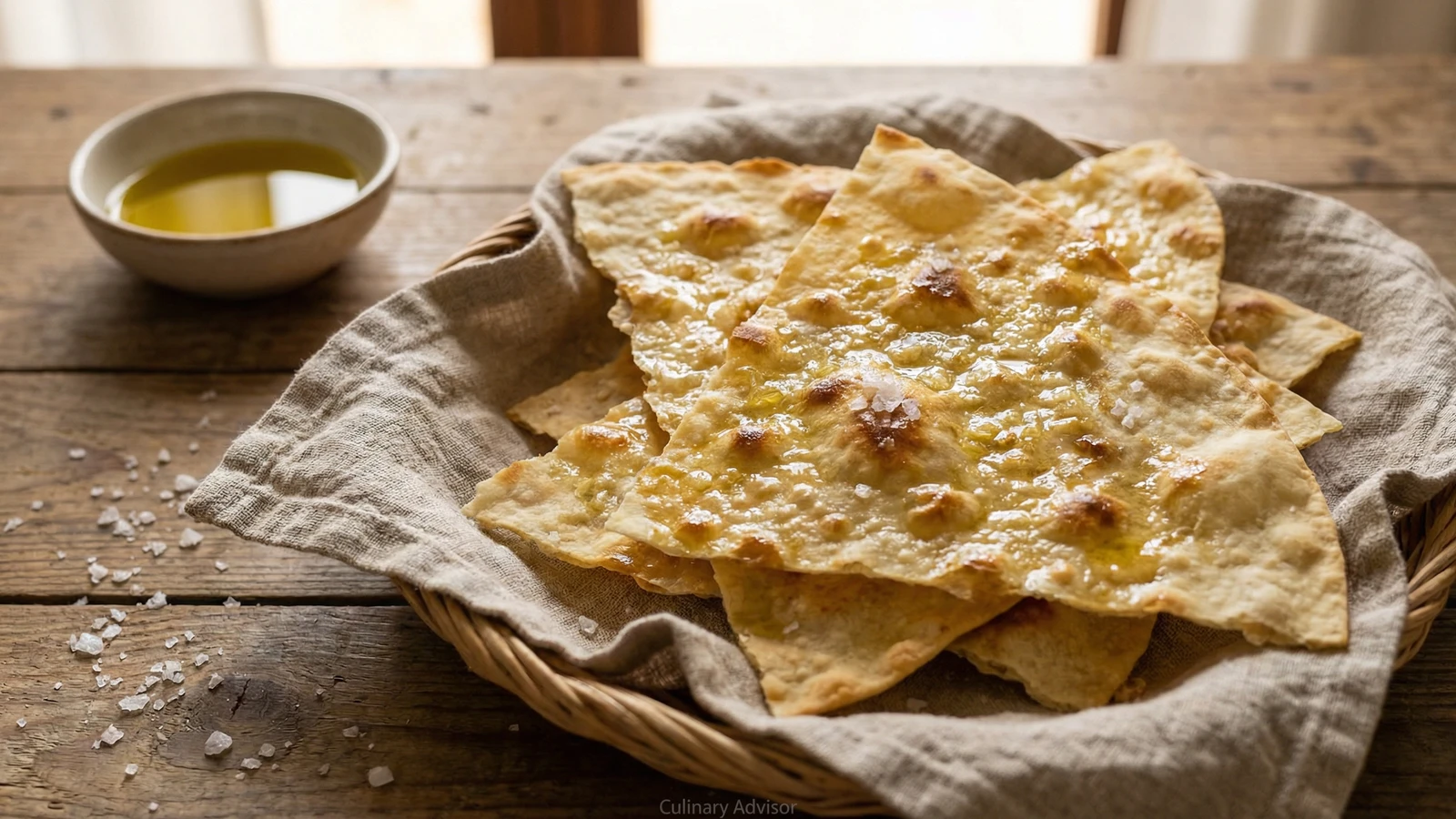
Pane Guttiau
Created by Chef Graziella
The shepherd's reward after weeks in the hills with his flock. Paper-thin Sardinian bread, transformed by olive oil and salt into something you cannot stop eating.
Pane carasau is one of the oldest breads in the Mediterranean, made the same way for perhaps three thousand years. Sardinian shepherds carried it into the hills because it weighs nothing and lasts for months. It sustained them through weeks away from home, dry and practical, eaten with whatever cheese or meat they had.
When the shepherd returned to his family, his wife would take this same bread and brush it with good olive oil, scatter it with salt, and pass it through a hot oven. Guttiau means dripped, referring to the oil. The transformation is remarkable. What was survival food becomes something you cannot stop eating.
This is not a recipe that requires technique. It requires three good ingredients and attention. The pane carasau must be authentic. The olive oil must be your best. The salt must be flaky and visible. Then you apply heat for exactly long enough and not one moment more. Simple does not mean easy. It means everything depends on what you start with.
Pane carasau, the foundation of this dish, dates to the Bronze Age in Sardinia, where archaeological evidence confirms its existence over 3,000 years ago. Shepherds practicing transhumance needed bread that would not spoil during months in the mountains. The twice-baked, paper-thin sheets solved this problem. Guttiau is what happened when they came home and their wives made austerity delicious.
The technique, the tradition, and the story behind every dish.
Discover Culinary AdvisorIngredients
pane carasau
Quantity
4 sheets (about 200g)
extra virgin olive oil
Quantity
4 tablespoons
flaky sea salt
Quantity
to taste
| Ingredient | Quantity |
|---|---|
| pane carasau | 4 sheets (about 200g) |
| extra virgin olive oil | 4 tablespoons |
| flaky sea salt | to taste |
Equipment Needed
- •Baking sheets
- •Pastry brush
Instructions
- 1
Preheat the oven
Set your oven to 400°F (200°C). The bread needs high heat for a brief moment. It must crisp further without burning. This happens quickly, so do not wander from the kitchen.
- 2
Prepare the bread
Lay the sheets of pane carasau on baking sheets in a single layer. They may overlap slightly at the edges but should lie mostly flat. If your sheets are very large, you may break them into halves or quarters. This is practical, not heresy.
Pane carasau is fragile. Handle it as you would handle something precious. It cracks easily, and while broken pieces taste the same, whole sheets are more beautiful at the table. - 3
Apply the oil
Using a pastry brush, paint each sheet generously with olive oil. The oil should coat the entire surface but not pool. Use your best oil. This is one of three ingredients. There is nowhere for mediocrity to hide.
- 4
Season with salt
Scatter flaky sea salt over the oiled surface. Be generous but not reckless. The salt should be visible, little crystals catching the light. Fine salt dissolves and disappears. Flaky salt provides texture and bursts of flavor.
- 5
Bake briefly
Place the baking sheets in the hot oven. Watch carefully. The bread needs only 2 to 3 minutes. You are looking for the edges to darken slightly and the oil to sizzle into the surface. The moment you smell toasting bread, check it. Remove when golden, not brown.
The difference between perfect and burnt is 30 seconds. Do not answer the telephone. Do not check your messages. Stand at the oven and watch. - 6
Serve immediately
Transfer to a basket or wooden board and serve at once. Pane guttiau is best warm from the oven, when the oil has just set and the salt still sparkles. It becomes softer as it cools. Break pieces with your hands at the table.
Chef Tips
- •Seek pane carasau from Sardinian producers or well-stocked Italian grocers. It comes in rounds roughly the size of a large pizza. The texture should be brittle and the color pale gold. Avoid anything soft or bendable.
- •The olive oil makes or breaks this dish. Use a grassy, peppery Sardinian or Tuscan oil if possible. You will taste every note of it.
- •For variation, some Sardinians add rosemary or a light dusting of dried oregano before baking. Others rub the warm bread with a cut garlic clove. These are additions, not improvements. The pure version needs nothing.
Advance Preparation
- •Plain pane carasau keeps for months in a dry place. This is its purpose.
- •Once made into guttiau, the bread should be eaten within hours. It softens as it sits. Do not make it ahead for a dinner party. Make it at the last moment while your guests watch.
Frequently Asked Questions
Nutrition Information
1 serving (about 65g)
Where cooking meets culture.
Culinary mentorship, cultural storytelling, and the editorial depth that makes cooking meaningful.
Explore Culinary Advisor