Culinary Advisor
A cooking platform built around craft, culture, and the stories behind what we eat.
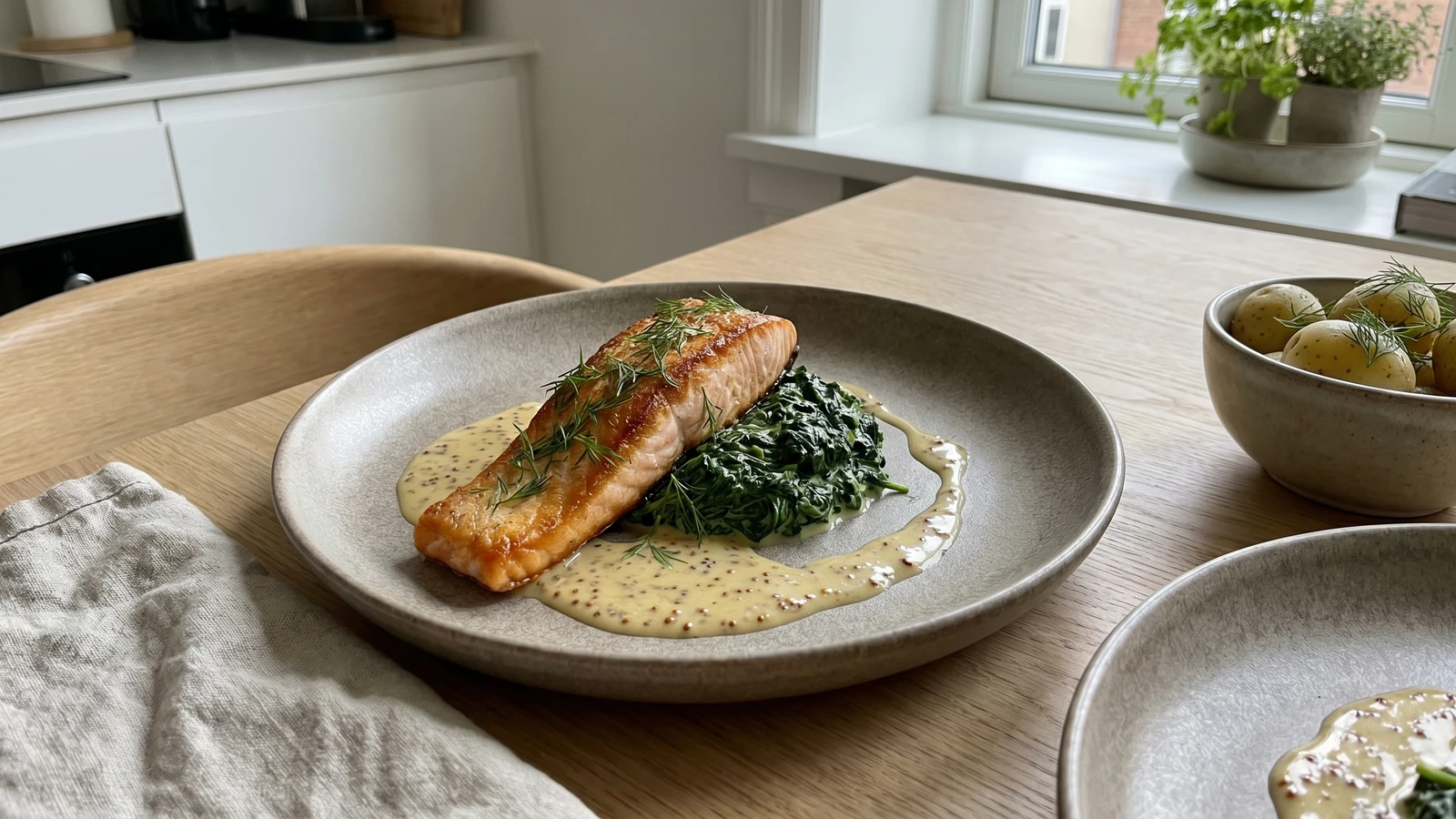
Pandestegt Laks med Sennepssauce og Stuvet Spinat
Created by Chef Freja
Salmon pan-fried to a crackling skin in brown butter, draped in a mustard cream sauce stirred together off the heat so the sennep keeps its bite, beside a quiet mound of nutmeg-warmed stuvet spinat. A Danish weeknight dinner that feels like a gift.
There are evenings in spring when you want something that takes half an hour and feels like twice the effort. This is that dish. Pandestegt laks is modern Danish home cooking at its most confident: a piece of good salmon, a hot pan, butter, and the restraint to leave it alone while the skin turns to glass.
Sennepssauce is the partner. Danish mustard sauce belongs to the same family as persillesovs and logsovs, the cream-based sauces that have anchored Danish plates for generations. But sennepssauce has a sharpness the others don't, a warmth that cuts through the richness of the fish and the cream. The key is when you add the mustard: off the heat, always. Heat kills the volatile oils in mustard, the ones that give it its bite. Cook it in the sauce and you lose exactly the quality you're reaching for. Stir it in at the end, and the sauce stays alive.
Studet spinat rounds the plate. It's spinach folded into a simple cream base with nutmeg, the kind of side dish that sounds like nothing and tastes like everything is in the right place. I'll walk you through each part so they come together at the same time, which is the only real skill this dish asks of you. You'll know when it's right: the skin crackles when you press it, the sauce coats the spoon, and the spinach tastes of butter and warmth.
Sennepssauce has appeared alongside fish in Danish kitchens since at least the early 1800s, when the French mother sauces were adapted through a distinctly Danish lens: less refined, more generous, always built on cream rather than stock reduction. The pairing of mustard and salmon became especially common in the 20th century as farmed laks replaced the more expensive wild havorred and regnbueorred on everyday tables. Stuvet spinat, spinach folded into a roux-thickened cream, belongs to the broader tradition of stuvede grontsager, the creamed vegetables that have been a defining feature of Danish home cooking since the 1700s, when the technique arrived from French bourgeois kitchens and was democratized across Danish households within a generation.
The technique, the tradition, and the story behind every dish.
Discover Culinary AdvisorIngredients
salmon fillets
Quantity
2, about 180g each
skin on, pin-boned
fine sea salt
Quantity
to taste
black pepper
Quantity
freshly ground, to taste
neutral oil
Quantity
1 tablespoon
unsalted butter (for the salmon)
Quantity
20g
dry white wine
Quantity
200ml
heavy cream
Quantity
200ml
coarse-grain Danish mustard
Quantity
2 tablespoons
Dijon mustard
Quantity
1 teaspoon
white wine vinegar
Quantity
1 teaspoon
sugar
Quantity
pinch
fresh spinach
Quantity
400g
washed, stems removed
unsalted butter (for the spinach)
Quantity
20g
plain flour
Quantity
1 tablespoon
whole milk
Quantity
200ml
nutmeg
Quantity
pinch, freshly grated
fresh dill
Quantity
small bunch
fronds picked
nye kartofler or boiled potatoes (optional)
Quantity
to serve
| Ingredient | Quantity |
|---|---|
| salmon filletsskin on, pin-boned | 2, about 180g each |
| fine sea salt | to taste |
| black pepper | freshly ground, to taste |
| neutral oil | 1 tablespoon |
| unsalted butter (for the salmon) | 20g |
| dry white wine | 200ml |
| heavy cream | 200ml |
| coarse-grain Danish mustard | 2 tablespoons |
| Dijon mustard | 1 teaspoon |
| white wine vinegar | 1 teaspoon |
| sugar | pinch |
| fresh spinachwashed, stems removed | 400g |
| unsalted butter (for the spinach) | 20g |
| plain flour | 1 tablespoon |
| whole milk | 200ml |
| nutmeg | pinch, freshly grated |
| fresh dillfronds picked | small bunch |
| nye kartofler or boiled potatoes (optional) | to serve |
Equipment Needed
- •Heavy frying pan, cast iron or stainless steel, not non-stick (non-stick won't give you the fond for the sauce)
- •Small saucepan for the stuvet spinat
- •Fish spatula or thin flexible spatula
Instructions
- 1
Wilt the spinach
Bring a large pot of well-salted water to a rolling boil. Drop in the spinach and count to thirty. No longer. You want the leaves to wilt and turn vivid green, not cook down to grey mush. Drain in a colander and run cold water over the spinach to stop the cooking. Once cool enough to handle, squeeze it in your fists, pressing out as much water as you possibly can. The spinach must be dry. Wet spinach will thin the cream base and you'll end up with soup, not stuvet spinat. Chop it roughly and set aside.
Don't be timid about squeezing. Form a tight ball in both hands and press hard. You'll be surprised how much liquid comes out. This step is the difference between a velvety side dish and a watery one. - 2
Make the cream base
Melt the 20g of butter for the spinach in a small saucepan over medium heat. When it foams, add the flour and stir constantly for one minute. You're cooking the raw taste out of the flour without letting it color. Pour in the milk a little at a time, stirring after each addition to keep the sauce smooth. If you add it all at once, you'll have lumps, and no amount of whisking will save them entirely. Let the sauce simmer gently for three to four minutes until it thickens enough to coat the back of a spoon. Season with salt, white pepper, and a grating of fresh nutmeg. Nutmeg and spinach have been together since the 1600s, and the reason is simple: nutmeg lifts the iron taste of spinach and replaces it with warmth.
- 3
Finish the stuvet spinat
Fold the chopped spinach into the cream base and stir until every leaf is coated. Taste it. Adjust the salt. The spinach should taste of cream, butter, and that quiet warmth of nutmeg. Keep it on the lowest heat with a lid on while you cook the fish. It will hold happily.
- 4
Prepare the salmon
Take the salmon fillets out of the fridge fifteen minutes before you cook them. Cold fish in a hot pan seizes and curls. Room temperature fish stays flat and cooks evenly. Pat the skin side completely dry with kitchen paper. This is worth doing twice. Moisture is the enemy of a crisp skin. Season both sides generously with fine sea salt and black pepper.
Run your finger across the flesh side against the grain. If you feel tiny pin bones, pull them out with tweezers now. They're small but unpleasant to bite into. - 5
Pan-fry the salmon
Heat the oil in a heavy frying pan over medium-high heat until it shimmers. Lay the fillets in skin-side down and press them flat with a spatula for the first thirty seconds. The skin wants to contract and buckle in the heat, and pressing it keeps it in full contact with the pan, which is where the crispness happens. Reduce the heat to medium. Cook for four to five minutes without touching the fish. Watch the sides: you'll see the color change climbing from translucent pink to opaque as the heat moves through the flesh. When two-thirds of the fillet has turned opaque, add the butter to the pan. It will foam around the fish. Tilt the pan and spoon the foaming butter over the top of the fillets two or three times. Then flip. Cook for one minute more, no longer. The center should still be slightly translucent. It will carry on cooking after you take it out of the pan.
If the skin sticks, the pan wasn't hot enough or the skin wasn't dry enough. Don't force it. Give it another thirty seconds and try again. It will release when it's ready. - 6
Build the sennepssauce
Transfer the salmon to a warm plate and let it rest. In the same pan, with the butter and fish juices still in it, pour in the white wine. Let it bubble hard for two minutes, scraping the bottom of the pan with a wooden spoon to lift all the golden bits. These are pure flavor. Reduce the wine by half. Pour in the cream and let the sauce simmer for three to four minutes until it thickens enough to coat a spoon lightly. Take the pan off the heat. This is the critical moment: stir in the coarse-grain mustard and Dijon now, off the heat. Mustard is stirred in after the sauce comes off the heat because heat destroys the volatile compounds that give mustard its sharpness and warmth. Cook it in the sauce and it turns dull and faintly bitter. Add the white wine vinegar and the pinch of sugar. Taste. The sauce should be creamy, tangy, with a warm mustard bite at the end. Adjust salt if needed.
Two mustards give the sauce its depth. The coarse grain adds texture and a gentle heat. The Dijon adds sharpness. Together they create a sennepssauce with character. - 7
Plate and serve
Spoon a generous mound of stuvet spinat onto each warm plate, slightly off-centre. Lean a salmon fillet against it, skin-side up so the crisp skin stays crisp. Spoon the sennepssauce around and over the fish, letting it pool beside the spinach. Finish with fresh dill fronds laid across the salmon. Serve with nye kartofler if they're in season, or any good boiled potato. Tak for mad.
Chef Tips
- •Buy your salmon from a fishmonger you trust, not from a supermarket shelf where it has been sitting under lights. The flesh should be firm and bright, and it should smell of the sea, not of fish. If it smells of fish, it isn't fresh enough for this dish.
- •Use real butter, not margarine. Margarine doesn't brown. It just gets hot and starts to smell wrong. Butter browns because of its milk solids, and those browned solids are where the nutty sweetness lives that carries the whole pan.
- •The sauce reheats poorly because the mustard loses its bite when it meets heat a second time. Make only what you need. If you have leftover sauce, stir it cold into a potato salad the next day.
- •If you can get nye kartofler, the small waxy new potatoes that appear in Danish markets from late May, serve them alongside. Boiled with a sprig of dill in the water, scraped not peeled. They belong here the way bread belongs beside soup.
Advance Preparation
- •The stuvet spinat can be made up to a day ahead and reheated gently with a splash of milk to loosen it. The flavor improves overnight as the nutmeg settles in.
- •The salmon and the sennepssauce must be made fresh. The skin loses its crispness within minutes, and the mustard in the sauce loses its bite if reheated. This is a dish that rewards you for cooking it start to finish right before you sit down.
Frequently Asked Questions
Nutrition Information
1 serving (about 450g)
Where cooking meets culture.
Culinary mentorship, cultural storytelling, and the editorial depth that makes cooking meaningful.
Explore Culinary Advisor