Culinary Advisor
A cooking platform built around craft, culture, and the stories behind what we eat.
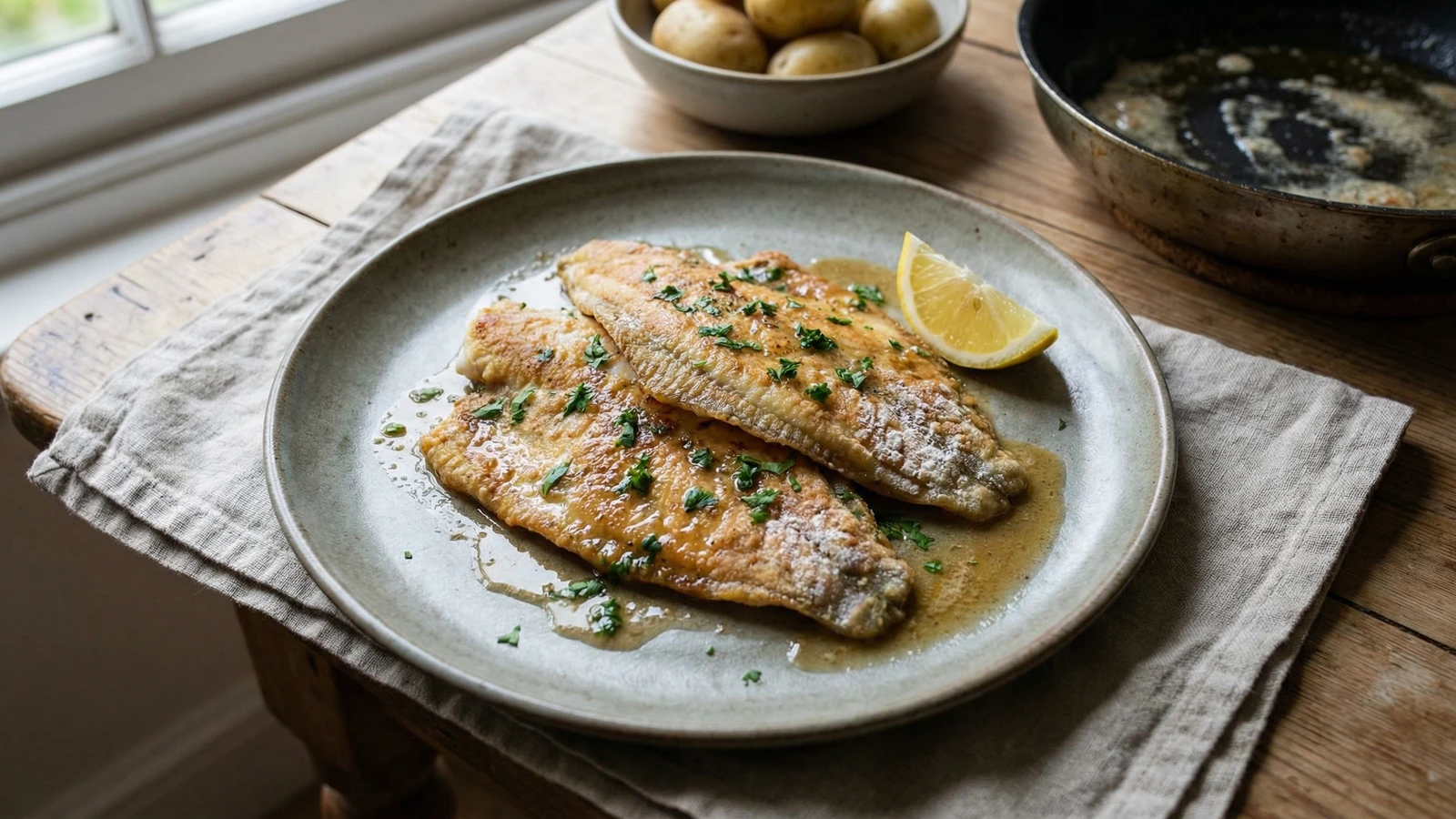
Pan-Fried Plaice with Lemon and Butter
Created by Chef Thomas
Plaice dusted in flour and fried in foaming butter until the edges go golden and the kitchen smells of something worth sitting down for, finished with lemon and not much else.
The fishmonger had plaice on Saturday. Flat, slippery, unremarkable-looking things, but the eyes were clear and the flesh was firm when I pressed it, and that's all you need to know. Spring plaice is a different creature from the wan fillets you get in winter. The flesh is sweet, the texture holds, and it takes to a hot pan and butter the way a cat takes to a warm windowsill.
This is a ten-minute supper. Flour, butter, lemon, a hot pan, and your full attention for the time it takes. That's the deal. The fish doesn't ask much of you, but it asks that you don't wander off and check your phone while it's cooking. Stand at the stove. Watch the butter foam. Listen to the edges crisp. This is cooking at its most immediate and there's a pleasure in it that slower dishes can't quite match.
I wrote it down in the notebook years ago: plaice, brown butter, lemon, Tuesday, the kitchen window open. I've cooked it dozens of times since and the note still holds. There are few better feelings than putting a warm plate of fish in front of someone on a weeknight and watching them reach for the lemon. We're only making dinner. But sometimes dinner is the best part of the day.
The technique, the tradition, and the story behind every dish.
Discover Culinary AdvisorIngredients
whole plaice or fillets
Quantity
2 whole or 4 fillets
trimmed and cleaned, patted dry
plain flour
Quantity
2-3 tablespoons
fine sea salt
Quantity
to taste
black pepper
Quantity
to taste
unsalted butter
Quantity
50g
light olive oil or groundnut oil
Quantity
1 tablespoon
lemon
Quantity
1
flat-leaf parsley (optional)
Quantity
small handful
roughly chopped
| Ingredient | Quantity |
|---|---|
| whole plaice or filletstrimmed and cleaned, patted dry | 2 whole or 4 fillets |
| plain flour | 2-3 tablespoons |
| fine sea salt | to taste |
| black pepper | to taste |
| unsalted butter | 50g |
| light olive oil or groundnut oil | 1 tablespoon |
| lemon | 1 |
| flat-leaf parsley (optional)roughly chopped | small handful |
Equipment Needed
- •Large heavy-based frying pan, the widest you have
- •Fish slice or thin spatula
- •Wide plate for flouring
Instructions
- 1
Dry and dust the fish
Lay the plaice on a board and pat it properly dry with kitchen paper. Both sides. This matters. Wet fish won't crisp; it will steam and stick and you'll lose the skin. Season the flour with salt and pepper on a wide plate, then lay each fish or fillet in it, pressing gently to coat, and shake off the excess. You want a whisper of flour, not a crust. Just enough to give the butter something to cling to.
If using whole plaice, ask the fishmonger to trim the fins and remove the dark skin if you prefer, though it crisps beautifully and I'd leave it. - 2
Heat the pan
Set your widest heavy pan over a medium-high heat. Add the oil and half the butter. Wait. The butter will melt, then foam, then the foam will start to calm. That calm moment, when the bubbling settles and the butter smells warm and faintly nutty, is when the fish goes in. Not before. A pan that isn't ready will give you something pale and limp, and life is too short for pale and limp fish.
The oil is there to stop the butter burning. It buys you a little time and a few extra degrees of heat. Use something neutral: groundnut, sunflower, light olive oil. Not extra virgin. - 3
Fry the plaice
Lay the fish in the pan, presentation side down. If it's a whole fish, that's the darker side. If fillets, skin side down. Don't crowd the pan. If they don't all fit comfortably, cook in batches. Let them be. No prodding, no peeking, no anxious spatula work. Three to four minutes for fillets, a little longer for whole fish. You'll know it's time to turn when the edges go golden and the flesh has turned opaque about two-thirds of the way up. Flip once. Just once. Another two to three minutes on the other side. The flesh should be white and firm but still yielding, not dry, not chalky.
If the butter starts to go too dark, lower the heat. Brown butter is beautiful. Black butter is a mistake. Your nose will tell you the difference before your eyes do. - 4
Finish with lemon butter
Lift the fish out onto warm plates. Keep the pan on the heat. Add the remaining butter and let it foam. When it starts to colour, a proper golden brown that smells of hazelnuts, squeeze in the juice of half the lemon. It will hiss and spit. Swirl the pan. The butter and lemon will come together into a glossy, sharp sauce in seconds. Spoon it over the fish immediately. Scatter the parsley if you have it. Cut the remaining lemon into wedges and put them on the plate. Dinner is ready.
Chef Tips
- •Buy the fish on the day you cook it. Plaice doesn't wait around. If the fishmonger's plaice looks tired, buy something else. A fresh piece of lemon sole or dab will do the same job. The market decides.
- •Get the pan properly hot before the fish goes in. This is the whole secret. A hot pan gives you golden, crisp edges and fish that lifts cleanly when you turn it. A warm pan gives you something stuck and steamed. The difference between a good fish supper and a disappointing one happens in the first thirty seconds.
- •Serve it with whatever feels right. New potatoes if you've got them. A green salad dressed with a bit of lemon. Bread to mop up the butter. I've eaten it with nothing but a glass of cold white wine and a wedge of lemon, standing at the kitchen counter, and felt no need for anything more.
- •Season and taste. The lemon butter at the end wants a pinch of salt in the pan. Not much. Just enough to bring the sharpness and the richness into line. Then taste it off the spoon. Your instinct will tell you if it needs more.
Advance Preparation
- •This isn't a dish that waits. Cook it and eat it. The fish takes minutes and the butter sauce is made in the pan while the plates are warming. Any preparation beyond buying good fish and having a lemon in the kitchen is overthinking it.
- •If you're cooking for more than two, use two pans rather than crowding one. Crowded fish steams. Fish that has space around it fries.
Frequently Asked Questions
Nutrition Information
1 serving (about 200g)
Where cooking meets culture.
Culinary mentorship, cultural storytelling, and the editorial depth that makes cooking meaningful.
Explore Culinary Advisor