Culinary Advisor
A cooking platform built around craft, culture, and the stories behind what we eat.
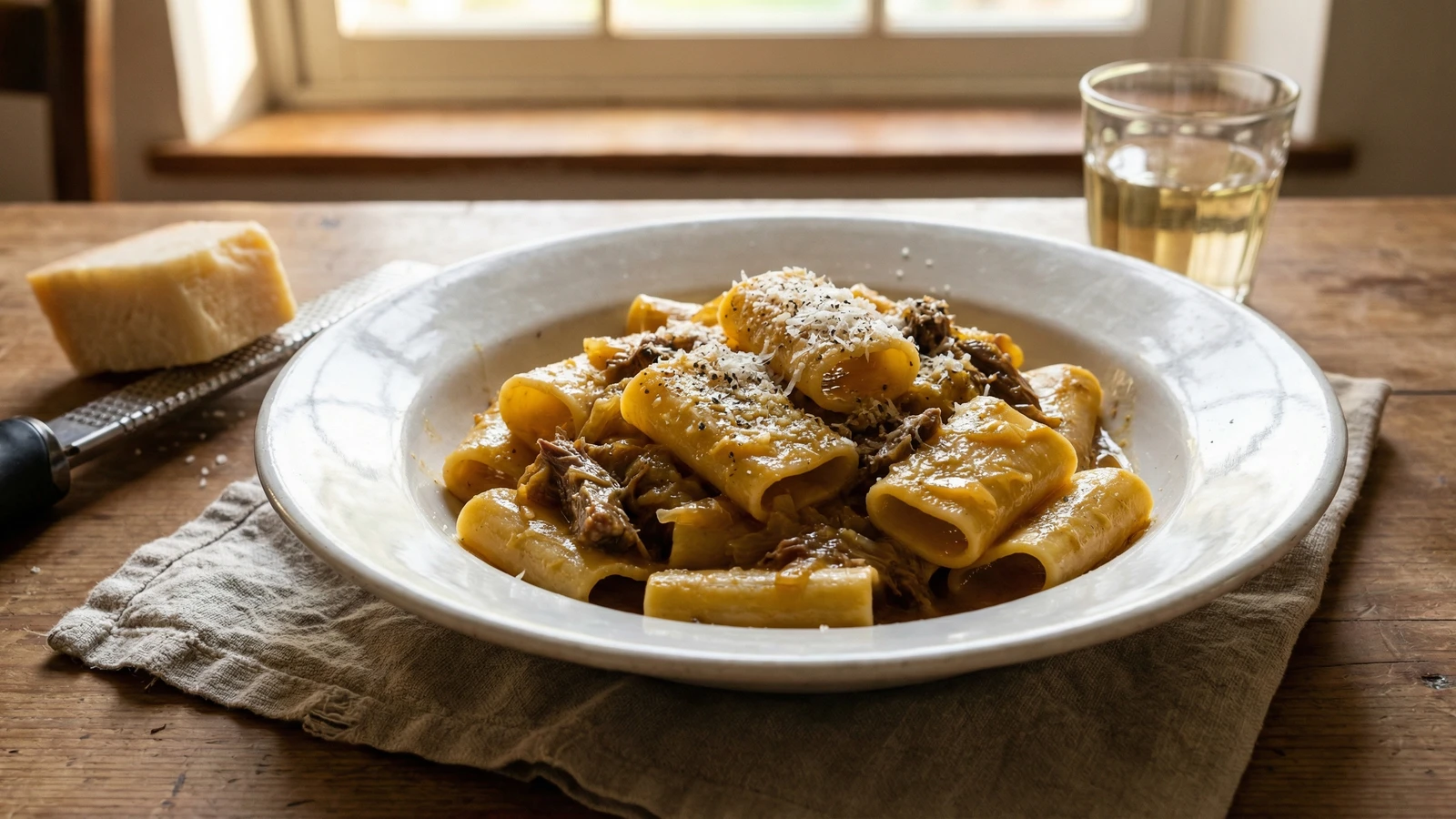
Paccheri alla Genovese
Created by Chef Graziella
The great onion ragù of Naples, where three pounds of onions and a piece of beef surrender completely to time, becoming a sauce so sweet and deep it requires no tomato at all.
La Genovese is not from Genoa. This confuses everyone, and the confusion pleases Neapolitans. They have kept this sauce for themselves while the world obsesses over their tomato ragù. Let the tourists have the red sauce. La Genovese belongs to those who understand that the greatest flavors come from patience, not from adding more ingredients.
You will look at the pile of onions and think there has been a mistake. There has not. Three pounds of onions to one pound of meat. This ratio is not negotiable. The onions must dissolve completely, melting into the beef fat and the meat juices until you cannot distinguish where onion ends and sauce begins. This takes eight hours. It cannot take less.
What emerges from that pot will be a revelation if you have never tasted it: a sauce the color of old gold, sweet without sugar, rich without cream, complex without a single herb or spice beyond salt and pepper. The beef, which began as a solid piece, will have surrendered to the onions, shredding at the touch of a fork. This is what time does to humble ingredients when you leave them alone.
The name 'Genovese' has sparked debate for centuries. Some claim Genoese merchants brought the dish to Naples in the 15th century; others insist it was created by a Neapolitan cook nicknamed 'il Genovese.' What is certain is that Naples adopted this onion ragù as its own, serving it on feast days when families could afford the time, if not the expense, to cook something this slowly.
The technique, the tradition, and the story behind every dish.
Discover Culinary AdvisorIngredients
beef chuck
Quantity
2 pounds
in one piece
yellow onions
Quantity
3 pounds (about 8 large)
pancetta
Quantity
4 ounces
diced fine
carrot
Quantity
1 medium
peeled and chopped
celery stalk
Quantity
1
chopped
dry white wine
Quantity
1 cup
extra virgin olive oil
Quantity
3 tablespoons
unsalted butter
Quantity
2 tablespoons
kosher salt
Quantity
to taste
black pepper
Quantity
to taste
freshly ground
paccheri
Quantity
1 pound
Pecorino Romano
Quantity
for serving
freshly grated
| Ingredient | Quantity |
|---|---|
| beef chuckin one piece | 2 pounds |
| yellow onions | 3 pounds (about 8 large) |
| pancettadiced fine | 4 ounces |
| carrotpeeled and chopped | 1 medium |
| celery stalkchopped | 1 |
| dry white wine | 1 cup |
| extra virgin olive oil | 3 tablespoons |
| unsalted butter | 2 tablespoons |
| kosher salt | to taste |
| black pepperfreshly ground | to taste |
| paccheri | 1 pound |
| Pecorino Romanofreshly grated | for serving |
Equipment Needed
- •Heavy 8-quart Dutch oven with tight-fitting lid
- •Two forks for shredding meat
- •Large pot for pasta
Instructions
- 1
Prepare the onions
Slice all the onions in half through the root, then slice each half into thin half-moons. This will take time. You will cry. Accept this. The pile will seem absurd, nearly overflowing your largest bowl. This is correct.
Yellow onions are traditional. Do not substitute sweet onions like Vidalias. They lack the depth that develops over hours of cooking. You want onions that start sharp and end sweet. - 2
Season the beef
Season the beef chuck generously with salt and pepper on all sides. Let it sit at room temperature while you prepare the aromatics. The meat should not be cold when it enters the pot.
- 3
Render the pancetta
In a heavy Dutch oven, combine the olive oil, butter, and pancetta. Cook over medium heat, stirring occasionally, until the pancetta has rendered its fat and begun to crisp at the edges, about 8 minutes. The fat is as important as the meat here.
- 4
Brown the beef
Push the pancetta to the sides and add the beef. Brown it thoroughly on all sides, turning every few minutes, until a dark crust forms. This takes 12 to 15 minutes. Do not rush it. Remove the beef and set it aside.
The fond that develops on the bottom of the pot is concentrated flavor. Do not let it burn, but do not be afraid of deep color. This darkness becomes sweetness. - 5
Build the base
Add the carrot and celery to the pot. Cook for 5 minutes, stirring and scraping up any browned bits. Pour in the wine and let it bubble until reduced by half, scraping the bottom of the pot. The alcohol must cook away completely.
- 6
Add the onions
Add all the onions to the pot. They will fill it completely. This is expected. Stir to combine with the fat and aromatics. The onions will seem impossible to fit. Press them down. They will cook down dramatically.
Season the onions with salt now. This draws out moisture and begins the breakdown. About one teaspoon at this stage is sufficient. You will adjust at the end. - 7
Nestle the beef
Push the onions aside to create a well and nestle the browned beef into the center. Pile the onions over and around it until the meat is buried. Cover the pot with a tight-fitting lid.
- 8
Begin the long cook
Place the pot over the lowest possible heat. The contents should never bubble vigorously. You want the faintest simmer, a lazy bubble that rises once every few seconds. Cook for 4 hours without lifting the lid. The onions will release their liquid and begin to collapse.
- 9
Check and continue
After 4 hours, remove the lid. The onions will have reduced by more than half, swimming in their own liquid. Stir gently, turning the meat. Replace the lid slightly ajar and continue cooking for another 3 to 4 hours. The liquid must evaporate and the onions must turn from pale gold to deep amber.
- 10
Finish the sauce
The sauce is ready when the onions have completely dissolved into a creamy mass, the color of dark honey. The meat should shred when pressed with a fork. Remove the meat, shred it with two forks, and return it to the pot. Stir to combine. The sauce should coat a spoon thickly. Taste and adjust salt and pepper.
If the sauce seems thin, cook uncovered for another 30 minutes. If it threatens to stick, add water one tablespoon at a time. The final consistency should be dense, almost jammy. - 11
Cook the paccheri
Bring abundant salted water to a vigorous boil. Add the paccheri and cook until tender with pleasant resistance, usually one minute less than package instructions. Reserve one cup of pasta water before draining. Paccheri are large tubes. They take longer than you expect.
- 12
Marry pasta and sauce
Add the drained paccheri to the pot with the Genovese. Toss vigorously over low heat for one minute, adding splashes of pasta water as needed. The sauce should coat the inside and outside of each tube. Once the pasta is sauced, serve it promptly, inviting your guests and family to put off talking and start eating. Pass Pecorino Romano at the table.
Chef Tips
- •The onion-to-meat ratio cannot be altered. Three pounds of onions to every one to two pounds of meat. Less onion means less sauce, and the sauce is the point.
- •Some Neapolitan cooks add a small piece of prosciutto rind or a pork rib to the pot for additional depth. This is acceptable but not required. The pancetta provides sufficient pork flavor.
- •If you must stop cooking before the sauce is finished, turn off the heat, let the pot cool, and refrigerate overnight. Resume the next day. The interruption does no harm.
- •Leftover Genovese makes an extraordinary filling for arancini or a sauce for polenta. It keeps refrigerated for five days.
Advance Preparation
- •The Genovese improves dramatically after resting overnight. Make it a day ahead, refrigerate, and reheat gently before serving.
- •The sauce freezes well for up to three months. Thaw in the refrigerator overnight and reheat slowly, adding a splash of water if needed.
Frequently Asked Questions
Nutrition Information
1 serving (about 420g)
Where cooking meets culture.
Culinary mentorship, cultural storytelling, and the editorial depth that makes cooking meaningful.
Explore Culinary Advisor