Culinary Advisor
A cooking platform built around craft, culture, and the stories behind what we eat.
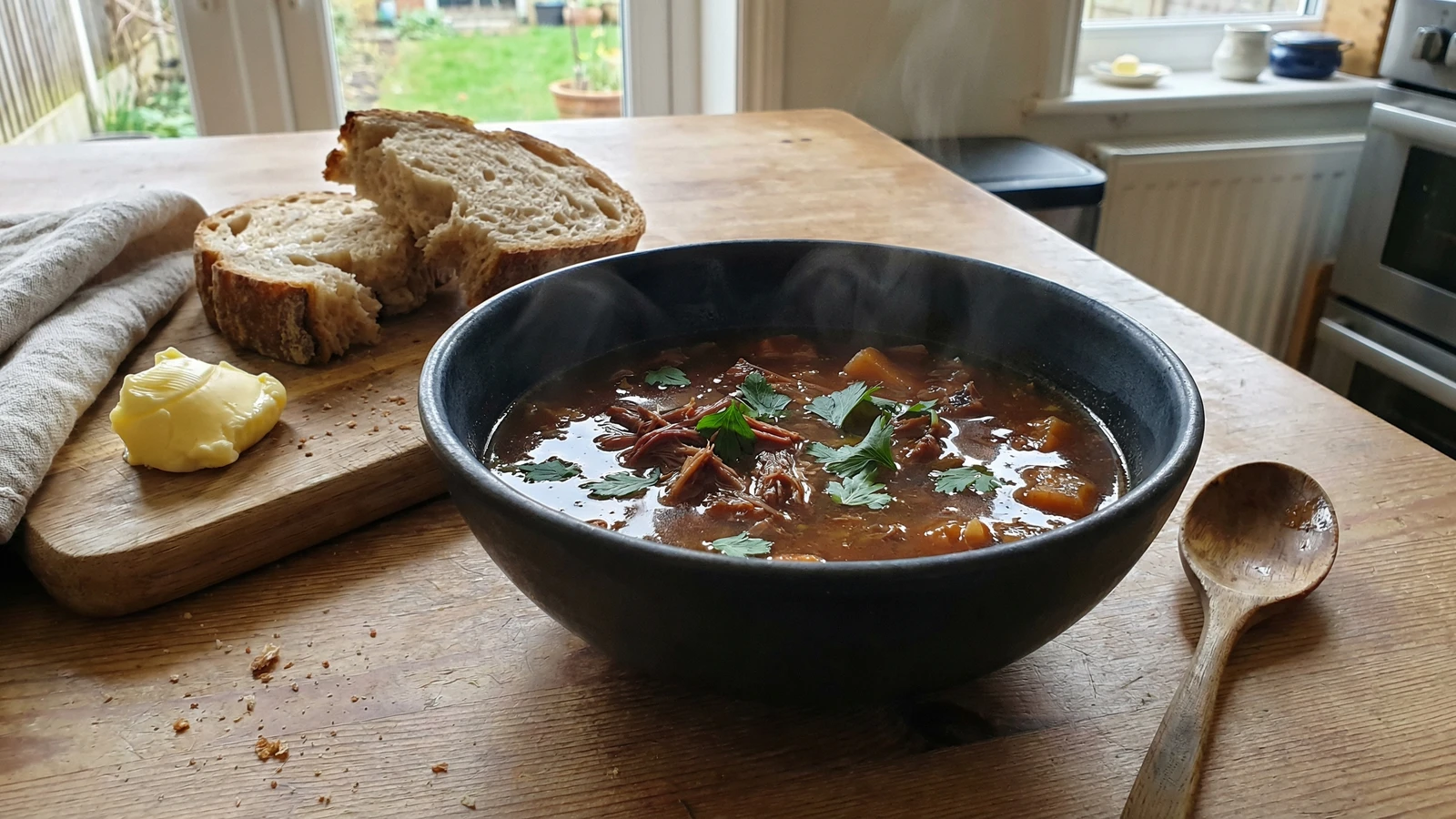
Oxtail Soup
Created by Chef Thomas
Oxtails simmered for hours in a pot with root vegetables and bay until the broth turns dark and silky with gelatin, finished with a good pour of dry sherry that lifts everything quietly into place.
January. The kind of afternoon where it gets dark at half past three and the kitchen window runs with condensation. I came back from the market with a bag of oxtail, the pieces cold and heavy in my hand, and the evening wrote itself.
Oxtail soup belongs to the deep cold. It's not a dish you make because you've planned it. You make it because the weather demands something slow and restorative, and because you have four hours and nowhere else to be. The oxtail goes into the pot with onions, carrots, celery, a small turnip, some thyme, a couple of bay leaves. Then you walk away. The kitchen fills with a smell that starts savoury and meaty and gradually becomes something richer, more complex, almost sweet. After three or four hours the broth has turned dark and glossy, thickened by all the gelatin the bones have surrendered. The meat falls from the bone at a touch.
The sherry at the end is not optional. A good Amontillado, stirred through just before serving, brings warmth and a dry, nutty depth that rounds out the whole pot. It's the detail that separates a solid broth from something you want to write down. I wrote it down in the notebook: oxtail, sherry, dark January, rain on the window. That was enough.
This is Victorian cooking at its most sensible. A cheap cut, slow heat, patience, and the kind of alchemy that turns bone and sinew into silk. We're only making dinner. But some dinners carry more weight than others, and this is one of them.
The technique, the tradition, and the story behind every dish.
Discover Culinary AdvisorIngredients
oxtail
Quantity
1.5kg
cut into pieces by the butcher
beef dripping or olive oil
Quantity
2 tablespoons
onions
Quantity
2
roughly chopped
carrots
Quantity
3
peeled and cut into thick rounds
celery
Quantity
3 sticks
sliced
turnip
Quantity
1 small
peeled and diced
bay leaves
Quantity
2
thyme
Quantity
a few sprigs
black peppercorns
Quantity
6
tomato purée
Quantity
1 tablespoon
beef stock or water
Quantity
2 litres
dry sherry
Quantity
75ml
Amontillado or Oloroso
fine sea salt
Quantity
to taste
black pepper
Quantity
to taste
flat-leaf parsley
Quantity
small handful
chopped
| Ingredient | Quantity |
|---|---|
| oxtailcut into pieces by the butcher | 1.5kg |
| beef dripping or olive oil | 2 tablespoons |
| onionsroughly chopped | 2 |
| carrotspeeled and cut into thick rounds | 3 |
| celerysliced | 3 sticks |
| turnippeeled and diced | 1 small |
| bay leaves | 2 |
| thyme | a few sprigs |
| black peppercorns | 6 |
| tomato purée | 1 tablespoon |
| beef stock or water | 2 litres |
| dry sherryAmontillado or Oloroso | 75ml |
| fine sea salt | to taste |
| black pepper | to taste |
| flat-leaf parsleychopped | small handful |
Equipment Needed
- •Large heavy-bottomed casserole or stockpot with lid
- •Kitchen tongs
- •Ladle
- •Slotted spoon
Instructions
- 1
Brown the oxtail
Pat the oxtail pieces dry with kitchen paper and season them well with salt and pepper. Heat the dripping in a large, heavy-bottomed pan or casserole over a high heat. When it shimmers and starts to smoke faintly, lay in the oxtail pieces, a few at a time. Don't crowd them. They need space and contact with the hot metal. Let each side take on a proper, deep brown colour before turning. This isn't a step you can rush. You're building the foundation of the whole pot. It takes fifteen minutes, maybe more. The kitchen will smell of caramelised meat and rendered fat, and that smell is the promise of what's coming.
Ask the butcher to cut the oxtail into pieces for you. The thicker pieces near the base have more meat; the thinner tail end gives up its gelatin more readily. You want both. - 2
Soften the vegetables
Lift the browned oxtail onto a plate. Turn the heat down. There will be sticky, dark residue on the bottom of the pan. Good. That's flavour. Add the onions, carrots, celery, and turnip. Stir them through the fat and let them cook gently for eight to ten minutes, scraping up the browned bits as the vegetables release their moisture. The onions should go soft and translucent, the carrots slightly yielding. Stir in the tomato purée and let it cook for a minute until it darkens and loses its raw, tinny smell.
- 3
Build the broth
Return the oxtail to the pan and nestle the pieces in among the vegetables. Tuck in the bay leaves, thyme, and peppercorns. Pour over the stock or water. It should just cover everything. If it doesn't, add a little more. Bring it to a gentle simmer, then turn the heat as low as it will go. You want the surface to barely tremble, a bubble rising every few seconds. Not a boil. Never a boil. A boil turns the broth cloudy and the meat tough.
Water is perfectly fine here instead of stock. The oxtail gives up so much flavour and body on its own that it will make its own stock as it cooks. Sometimes simpler is better. - 4
Braise low and slow
Put the lid on, slightly ajar to let a thread of steam escape, and leave it alone. Three and a half to four hours. Check on it once an hour, not to do anything useful, but because the smell will pull you back to the kitchen anyway. Skim any scum or fat that rises to the surface if you like, though much of this can be dealt with later. The soup is ready when the meat is falling from the bone with no resistance at all, and the broth has turned silky and rich, coating the back of a spoon with a faint, glossy sheen. That sheen is gelatin. It's the whole point.
- 5
Shred the meat
Lift the oxtail pieces out carefully. They'll be fragile now, the meat barely holding on. Let them cool enough to handle, then pull the meat from the bones, shredding it into rough pieces. Discard the bones, the fat, and any sinew. Return the shredded meat to the pot. Fish out the bay leaves and thyme stalks. Taste the broth. Season it properly. More salt than you think, probably.
- 6
Finish with sherry
Bring the soup back to a gentle heat. Stir in the sherry. It should hit you immediately, a warm, nutty, slightly sweet fragrance rising from the pot that lifts the whole thing from good to something you'll remember. Taste again. Adjust. Ladle into warm bowls and scatter the parsley over the top. Serve with thick-cut bread and salted butter. There are few better feelings than putting this bowl in front of someone on a cold evening.
Use a decent sherry, not cooking sherry. Amontillado has a dry, nutty depth that suits this soup best. Oloroso works too, a little richer and more rounded. Either way, it should be something you'd happily drink a glass of while the soup finishes.
Chef Tips
- •The browning matters. Take your time. Each piece of oxtail needs a proper, dark crust on every side. This isn't cosmetic. The Maillard reaction at that temperature is building the base flavour of the entire soup. Rush it and the broth will taste flat.
- •Make it the day before if you can. Refrigerated overnight, the fat solidifies on the surface and lifts off in a clean sheet. The soup beneath will be clearer and the flavour will have deepened. Reheat it gently the next day and add the sherry then.
- •A good butcher will have oxtail, though you may need to ask for it. The pieces vary in size: the wider, meatier sections from the base and the narrower, bonier pieces from the tip. Use both. The thin pieces won't give you much meat, but they give up their gelatin generously, and that's what makes the broth coat your mouth.
- •If you have a bottle of red wine open, a glass of it added after browning the vegetables, simmered until it nearly evaporates, will deepen the colour and add a quiet acidity. It's not essential, but it's a good thing to do.
Advance Preparation
- •Best made a full day ahead. The flavour deepens overnight and the fat can be removed easily once chilled. Reheat gently and add the sherry just before serving.
- •The soup keeps refrigerated for up to four days and freezes well for three months. The gelatin-rich broth sets to a firm jelly in the fridge, which is a sign of a good pot.
Frequently Asked Questions
Nutrition Information
1 serving (about 480g)
Where cooking meets culture.
Culinary mentorship, cultural storytelling, and the editorial depth that makes cooking meaningful.
Explore Culinary Advisor