Culinary Advisor
A cooking platform built around craft, culture, and the stories behind what we eat.
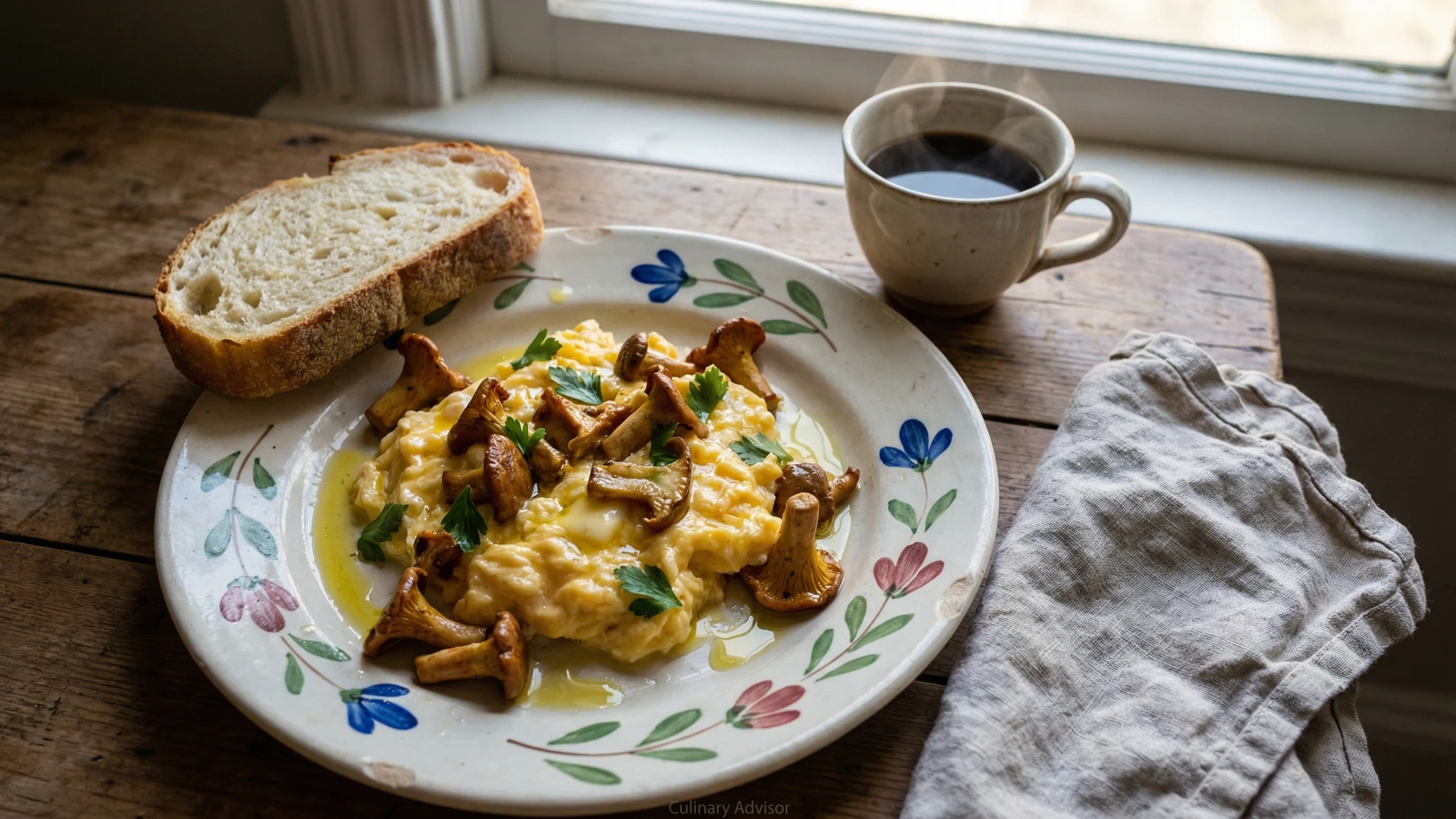
Ovos Mexidos com Cogumelos Silvestres
Created by
When autumn rain brings the mushrooms up through the forest floor, this is what ends up on the breakfast table. Soft eggs, earthy fungi, garlic, parsley, and the good sense to keep it simple.
There's a moment in autumn when the rains come and the forests of Trás-os-Montes and Beira suddenly give up their secrets. Míscaros push through the pine needles. Tortulhos appear near the oaks. The old men and women who know where to look fill their baskets and bring them home.
This is what happens next. Eggs from the chickens out back. Mushrooms from the morning's walk. Garlic hanging in braids by the kitchen door. A handful of salsa from the pot on the windowsill. Nothing fancy. Everything essential.
Avó Leonor wasn't a mushroom hunter herself (the Alentejo plains aren't mushroom country), but she taught me how to treat eggs. Slowly. Gently. With the kind of patience that young cooks think they don't have time for. "Os ovos não gostam de pressa," she'd say. Eggs don't like to be rushed. She was right about most things.
At my Mesa da Avó dinners, I sometimes serve this for a late breakfast gathering. People expect something complicated. They get soft eggs and wild mushrooms on a warm plate, bread on the side, and they understand. A cozinha é memória. The simplest things, done right, are the ones that stay with you.
Wild mushroom foraging has been part of rural Portuguese life since before recorded history, with knowledge of edible species passed through generations. The pairing of foraged mushrooms with eggs represents the intersection of two forms of subsistence: the forest and the farmyard. In mountainous regions like Trás-os-Montes, autumn mushroom season remains a cultural event, with families returning to secret spots known only to them.
The technique, the tradition, and the story behind every dish.
Discover Culinary AdvisorIngredients
mixed wild mushrooms
Quantity
250g
cleaned and torn into pieces
eggs
Quantity
4 large
extra virgin olive oil (azeite)
Quantity
3 tablespoons, divided
garlic
Quantity
2 cloves
sliced thin
fresh flat-leaf parsley (salsa)
Quantity
2 tablespoons
chopped
butter
Quantity
1 tablespoon
flaky sea salt
Quantity
to taste
black pepper
Quantity
to taste
freshly ground
crusty bread
Quantity
for serving
| Ingredient | Quantity |
|---|---|
| mixed wild mushroomscleaned and torn into pieces | 250g |
| eggs | 4 large |
| extra virgin olive oil (azeite) | 3 tablespoons, divided |
| garlicsliced thin | 2 cloves |
| fresh flat-leaf parsley (salsa)chopped | 2 tablespoons |
| butter | 1 tablespoon |
| flaky sea salt | to taste |
| black pepperfreshly ground | to taste |
| crusty bread | for serving |
Equipment Needed
- •Wide nonstick or well-seasoned skillet
- •Wooden spoon or heat-resistant spatula
Instructions
- 1
Clean the mushrooms
Brush or wipe the mushrooms clean with a damp cloth. Never soak them. They drink water like sponges and you'll end up steaming instead of searing. Tear larger ones into bite-sized pieces. Leave small ones whole. Irregular shapes are good here. This isn't restaurant food.
If using foraged mushrooms, be absolutely certain of identification. If using cultivated, a mix of cremini and shiitake captures some of that wild earthiness. - 2
Sear the mushrooms
Heat 2 tablespoons of azeite in a wide skillet over medium-high heat. When the oil shimmers, add the mushrooms in a single layer. Don't crowd them. Let them sit undisturbed for 2 minutes until they develop golden edges. Stir, then cook another 2 minutes. They should smell of the forest, earthy and sweet. Season with a pinch of salt.
- 3
Add the garlic
Reduce heat to medium-low. Add the sliced garlic and remaining tablespoon of azeite. Cook for 1 minute, stirring, until the garlic is fragrant but not brown. Burnt garlic is bitter garlic. Transfer the mushrooms to a plate and wipe the pan clean.
Avó Leonor sliced her garlic thin as paper. Thin slices melt into the dish. Thick chunks stay chunky. - 4
Scramble the eggs slowly
Crack the eggs into a bowl and beat them lightly with a fork. Just enough to combine. Season with salt and pepper. Return the pan to low heat and add the butter. When it foams, pour in the eggs. Now comes the patience. Stir slowly with a wooden spoon or spatula, pushing the eggs gently from the edges to the center. Let curds form, then fold them over. This takes 4 to 5 minutes. Não tenhas pressa. The eggs should stay soft, creamy, almost wet.
Stop cooking while the eggs still look slightly underdone. They'll continue setting from their own heat. If they look done in the pan, they're overdone on the plate. - 5
Bring it together
When the eggs are just set but still glossy, remove from heat immediately. Fold in the seared mushrooms and half the parsley. The residual heat will warm everything through. Transfer to warm plates. Scatter the remaining parsley on top. Drizzle with a little fresh azeite if you like. Serve with good bread, still warm from the padaria if you're lucky.
Chef Tips
- •The eggs must be room temperature, not cold from the refrigerator. Cold eggs seize up in the pan. Take them out 30 minutes before cooking.
- •If you can't find wild mushrooms, don't despair. A mix of cremini and shiitake, seared properly until golden, will give you earthiness and depth. The technique matters more than the species.
- •Some families add a splash of white wine to the mushrooms. Some stir cream into the eggs. Both are valid. But the purest version needs nothing more than what's listed here.
- •The bread is not optional. You need something to soak up what's left on the plate. That's not waste; that's the best part.
Advance Preparation
- •The mushrooms can be cleaned and torn into pieces up to a day ahead. Store in a paper bag in the refrigerator, not plastic.
- •This dish cannot be made ahead. It must be cooked and served immediately. Scrambled eggs wait for no one.
Frequently Asked Questions
Nutrition Information
1 serving (about 220g)
Where cooking meets culture.
Culinary mentorship, cultural storytelling, and the editorial depth that makes cooking meaningful.
Explore Culinary Advisor