Culinary Advisor
A cooking platform built around craft, culture, and the stories behind what we eat.
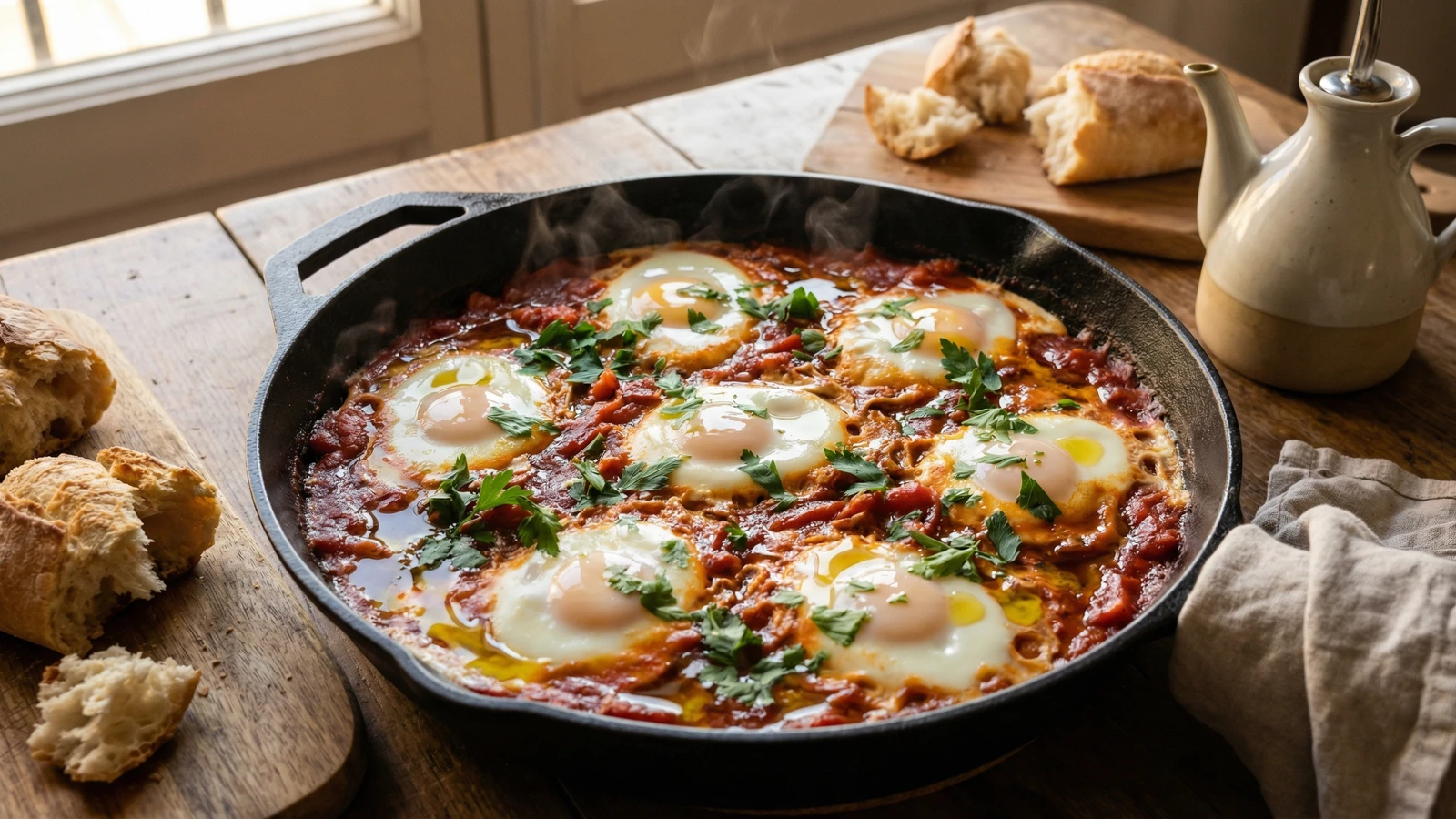
Ovos Escalfados em Tomatada
Created by
Eggs poached in a slow-cooked tomato stew, the way Alentejo grandmothers have made them for generations. The yolk breaks into the sauce. The bread catches everything. This is breakfast that means something.
Avó Leonor made this on mornings when she decided we weren't leaving the table until we'd sopped up every last bit of sauce with bread. She'd start the tomatada before I was even awake, the smell of onions slowly surrendering to the heat drifting through the house. By the time I wandered into the kitchen, the tomatoes had collapsed into something sweet and jammy, and she was cracking eggs directly into the pan.
This isn't fancy cooking. It's not Instagram cooking. It's the kind of breakfast that happens when you have tomatoes, eggs, olive oil, and the good sense to let time do the work. The refogado is everything here. Rush it and you get tomato sauce. Give it patience and you get tomatada: sweet, concentrated, the onions practically melted into the tomatoes until you can't tell where one ends and the other begins.
In Alentejo, this is what working people ate before a long day in the fields. Protein from the eggs, energy from the bread, flavor from the slow-cooked sauce. It sustained families through harvests and hard times. At Mesa da Avó, I serve it for Sunday brunch and watch people go quiet when they taste it. That silence is recognition. Their bodies remember this food even if they've never had it before.
The bread is not a side dish. The bread is the point. You tear it, you drag it through the sauce, you let the yolk break and mix with the tomato. Without bread, you're just eating eggs. With bread, you're eating history.
Ovos escalfados em tomatada emerged from Alentejo's tradition of egg-based dishes that stretched precious protein with abundant local produce. The dish reflects the region's agricultural calendar: fresh tomatoes in summer, preserved or canned through winter. Similar preparations appear across the Mediterranean, but the Portuguese version is distinguished by its slower cooking and sweeter, more concentrated sauce.
The technique, the tradition, and the story behind every dish.
Discover Culinary AdvisorIngredients
extra virgin olive oil (azeite)
Quantity
1/4 cup
onions
Quantity
2 large
halved and sliced thin
garlic
Quantity
4 cloves
sliced
ripe tomatoes
Quantity
1 kg
roughly chopped (or 800g canned whole tomatoes, crushed by hand)
bay leaf
Quantity
1
sweet paprika (pimentão doce)
Quantity
1 teaspoon
sugar
Quantity
1 teaspoon
fine sea salt
Quantity
to taste
black pepper
Quantity
to taste
freshly ground
eggs
Quantity
8 large
fresh parsley or cilantro (coentros)
Quantity
for garnish
roughly chopped
crusty bread
Quantity
for serving
| Ingredient | Quantity |
|---|---|
| extra virgin olive oil (azeite) | 1/4 cup |
| onionshalved and sliced thin | 2 large |
| garlicsliced | 4 cloves |
| ripe tomatoesroughly chopped (or 800g canned whole tomatoes, crushed by hand) | 1 kg |
| bay leaf | 1 |
| sweet paprika (pimentão doce) | 1 teaspoon |
| sugar | 1 teaspoon |
| fine sea salt | to taste |
| black pepperfreshly ground | to taste |
| eggs | 8 large |
| fresh parsley or cilantro (coentros)roughly chopped | for garnish |
| crusty bread | for serving |
Equipment Needed
- •Large wide pan or skillet with lid (at least 30cm)
- •Small bowl for cracking eggs
Instructions
- 1
Build the refogado
Heat the azeite in a large, wide pan or skillet over medium-low heat. Add the sliced onions and a pinch of salt. Cook slowly, stirring occasionally, until the onions are completely soft, golden, and starting to caramelize at the edges. This takes 15 to 20 minutes. Não tenhas pressa. The sweetness of this dish comes from patience with the onions. In the last minute, add the sliced garlic and stir until fragrant.
Avó Leonor would say: if you can still see individual onion pieces, you're not done. They should practically melt into the oil. - 2
Add the tomatoes
Add the chopped tomatoes (or crushed canned tomatoes), bay leaf, pimentão doce, and sugar. Stir to combine. Increase heat to medium and let the sauce come to a gentle bubble. Then reduce heat to medium-low and let it simmer, stirring occasionally, until the tomatoes break down completely and the sauce thickens and turns a deep brick red, about 20 minutes. The oil should start to pool around the edges. Taste and adjust seasoning with salt and pepper.
The sugar isn't about making it sweet. It balances the acidity of the tomatoes and helps them caramelize. Every grandmother adds it, even if she won't admit it. - 3
Create wells for the eggs
When the tomatada is thick and jammy, use the back of a spoon to make 8 small wells in the sauce, spacing them evenly. The sauce should be thick enough that the wells hold their shape. If it's too loose, cook it a few more minutes.
- 4
Poach the eggs
Crack one egg into each well. Season the eggs lightly with salt. Cover the pan with a lid and cook over medium-low heat until the whites are just set but the yolks are still runny, about 5 to 7 minutes. Don't lift the lid for the first 4 minutes. The steam does the work. Check at 5 minutes and cook longer if you prefer firmer yolks, but I'll warn you: a runny yolk that breaks into the sauce is the whole point.
Crack each egg into a small bowl first, then slide it into the well. This gives you control and prevents broken yolks or shell in the sauce. - 5
Serve immediately
Remove the bay leaf. Scatter the fresh herbs over the top and finish with a drizzle of your best azeite. Bring the pan directly to the table with a basket of crusty bread. Everyone eats from the pan, tearing bread and dragging it through the sauce. This is not a dish for individual plates. This is a dish for sharing.
Chef Tips
- •In summer, use the ripest tomatoes you can find. In winter, good canned whole tomatoes (San Marzano or Portuguese if you can find them) are better than sad out-of-season fresh ones. Crush them by hand for the right texture.
- •The pan matters. Use something wide and shallow so the eggs have room and the sauce can reduce properly. A clay pot is traditional, but a good cast iron or nonstick skillet works.
- •Some families add a splash of white wine with the tomatoes. Some add a dried chili for heat. Some finish with chouriço slices fried until crispy. These are all variations Avó Leonor would have respected, even if she didn't make them herself.
- •Leftover tomatada (without eggs) keeps for days in the refrigerator. Make a big batch and poach fresh eggs into it for breakfast all week.
Advance Preparation
- •The tomatada base can be made up to 3 days ahead and refrigerated. Reheat gently, adding a splash of water if it's too thick, before poaching the eggs.
- •The finished dish cannot be made ahead. Eggs must be poached just before serving.
Frequently Asked Questions
Nutrition Information
1 serving (about 340g)
Where cooking meets culture.
Culinary mentorship, cultural storytelling, and the editorial depth that makes cooking meaningful.
Explore Culinary Advisor