Culinary Advisor
A cooking platform built around craft, culture, and the stories behind what we eat.
Oreo-Stuffed Chocolate Chip Cookies
Created by
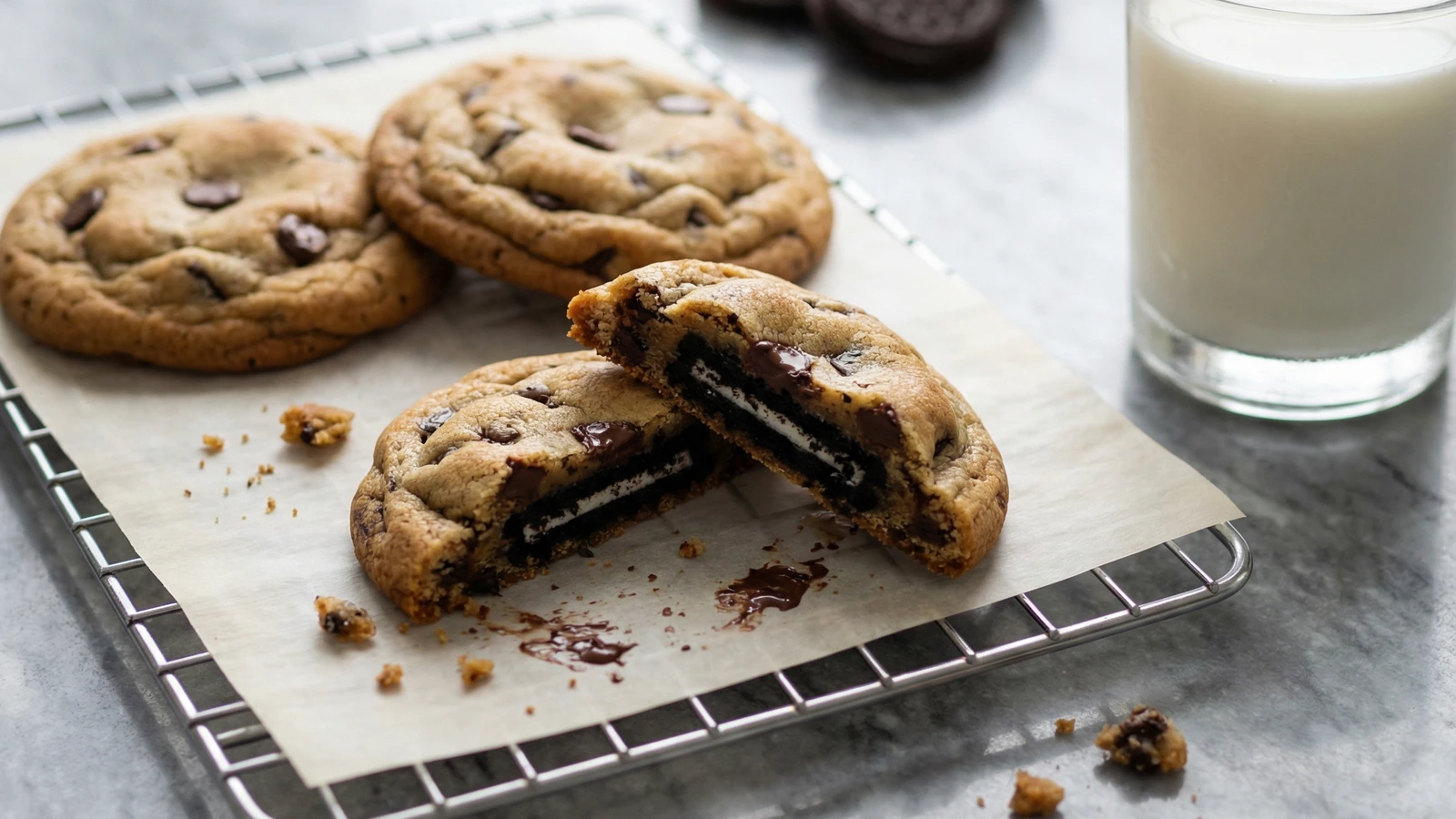
A frozen Oreo wrapped in brown-sugar-rich chocolate chip dough, baked until the outer shell turns golden and chewy while the sandwich cookie inside softens into cream-filled bliss.
This cookie represents everything I love about American baking: audacity, generosity, and the confidence to ask 'what if?' What if we took Ruth Wakefield's 1938 invention from the Toll House Inn and stuffed an entire Oreo inside? The internet answered that question around 2012, and the result spread like wildfire through food blogs and Pinterest boards. For good reason.
The technique is simpler than it appears. You're making a solid chocolate chip cookie dough, chilling it until workable, then wrapping portions around frozen Oreos. The freezing matters. A room-temperature Oreo will compress and melt into the surrounding dough. A frozen one holds its structure, softening gradually in the oven's heat while maintaining that distinctive layered texture.
What emerges after twelve minutes is a cookie that delivers on multiple levels. The exterior develops that honest golden crust with pools of melted chocolate. Inside, the Oreo has transformed: the chocolate wafers soften, the cream filling turns slightly molten, and the whole center becomes a textural surprise that makes people pause and smile.
These cookies are meant to be shared. They're oversized, theatrical, and absolutely irresistible at birthday parties, bake sales, or anywhere you want to make someone's day better. I've watched grown adults giggle when they bite into one. That's the point.
The technique, the tradition, and the story behind every dish.
Discover Culinary AdvisorIngredients
Oreo cookies
Quantity
12
frozen solid
all-purpose flour
Quantity
2 1/4 cups (280g)
baking soda
Quantity
1 teaspoon
fine sea salt
Quantity
1 teaspoon
unsalted butter
Quantity
1 cup (2 sticks/227g)
softened
dark brown sugar
Quantity
3/4 cup (150g)
packed
granulated sugar
Quantity
1/2 cup (100g)
large eggs
Quantity
2
at room temperature
pure vanilla extract
Quantity
2 teaspoons
semisweet chocolate chips
Quantity
2 cups (340g)
| Ingredient | Quantity |
|---|---|
| Oreo cookiesfrozen solid | 12 |
| all-purpose flour | 2 1/4 cups (280g) |
| baking soda | 1 teaspoon |
| fine sea salt | 1 teaspoon |
| unsalted buttersoftened | 1 cup (2 sticks/227g) |
| dark brown sugarpacked | 3/4 cup (150g) |
| granulated sugar | 1/2 cup (100g) |
| large eggsat room temperature | 2 |
| pure vanilla extract | 2 teaspoons |
| semisweet chocolate chips | 2 cups (340g) |
Equipment Needed
- •Stand mixer or hand mixer
- •Large cookie scoop (3 tablespoons capacity)
- •Two rimmed baking sheets
- •Parchment paper
- •Wire cooling rack
Instructions
- 1
Freeze the Oreos
Place the 12 Oreo cookies in a single layer on a plate and freeze for at least one hour, or overnight. This step is not negotiable. Frozen Oreos maintain their structure during baking and soften gradually instead of collapsing into the dough. Room-temperature Oreos will disappoint you.
Keep Oreos in the freezer until the moment you're ready to wrap them. They thaw faster than you'd expect. - 2
Whisk dry ingredients
In a medium bowl, whisk together the flour, baking soda, and salt until evenly combined. Set aside. This takes thirty seconds but ensures even leavening throughout your dough.
- 3
Cream butter and sugars
In a large bowl or stand mixer fitted with the paddle attachment, beat the softened butter with both sugars on medium speed for 3 to 4 minutes. The mixture should turn pale and fluffy, increasing noticeably in volume. Scrape down the bowl halfway through. This aeration creates the chewy texture you're after.
Butter should be soft enough to dent with a finger but not greasy or melted. About 65°F is ideal. - 4
Add eggs and vanilla
Add the eggs one at a time, beating well after each addition until fully incorporated. Add the vanilla extract and mix until combined. The mixture may look slightly curdled at this stage. That's normal and will smooth out when you add the flour.
- 5
Add flour mixture
Reduce mixer speed to low. Add the flour mixture in two additions, mixing just until the flour disappears each time. Stop the mixer the moment you no longer see dry patches. Overmixing develops gluten and produces tough cookies.
- 6
Fold in chocolate chips
Remove the bowl from the mixer. Using a sturdy spatula or wooden spoon, fold in the chocolate chips by hand until evenly distributed throughout the dough. You should see chips in every portion when you scoop.
- 7
Chill the dough
Cover the bowl tightly with plastic wrap and refrigerate for at least 30 minutes, or until the dough is firm enough to handle without sticking to your hands. Chilled dough is essential for wrapping around the Oreos without tearing or stretching thin.
If pressed for time, spread the dough on a sheet pan and freeze for 15 minutes instead. - 8
Prepare for assembly
Line two baking sheets with parchment paper. Preheat your oven to 350°F (175°C). Position racks in the upper and lower thirds of the oven.
- 9
Portion and wrap
Using a large cookie scoop or your hands, portion the dough into 12 equal balls (about 3 tablespoons each). Working with one frozen Oreo at a time, flatten a dough ball in your palm, place the Oreo in the center, and wrap the dough around it completely. Seal any cracks and roll gently between your palms to form a smooth ball. The Oreo should be entirely encased with an even layer of dough. Place on prepared baking sheets, spacing at least 3 inches apart.
- 10
Bake the cookies
Bake for 12 to 14 minutes, rotating the pans halfway through and swapping their positions on the racks. The cookies are done when the edges are set and golden brown, but the centers still look slightly underdone and puffy. They'll continue cooking on the hot pan. Don't overbake. These cookies firm as they cool.
If your oven runs hot, check at 11 minutes. A pale center is fine; a dark edge means you've gone too far. - 11
Cool before serving
Let the cookies cool on the baking sheets for 10 minutes. They're fragile when hot, and the molten chocolate will burn you. Transfer to a wire rack if desired, or eat them slightly warm right from the pan. The Oreo inside will be soft and yielding, the outer cookie chewy with crisp edges.
Chef Tips
- •Double Stuf Oreos work beautifully here if you want an even more decadent center. The extra cream filling becomes almost sauce-like when warm.
- •Golden Oreos, mint Oreos, or peanut butter Oreos all make excellent variations. Match your chocolate chips accordingly: white chocolate with Golden, dark chocolate with mint.
- •For perfectly round cookies, chill the assembled dough balls for 15 minutes before baking. They'll spread less and hold their shape better.
- •A kitchen scale removes all guesswork when portioning. Aim for 85 to 90 grams per cookie for consistent results.
- •These cookies are best eaten within two days. After that, the Oreo inside loses its textural contrast and the whole cookie becomes uniformly soft.
Advance Preparation
- •Dough can be made up to 3 days ahead and refrigerated. Let it soften at room temperature for 10 minutes before wrapping around Oreos.
- •Assembled unbaked cookie balls freeze beautifully for up to 2 months. Freeze on a sheet pan until solid, then transfer to a zip-top bag. Bake from frozen, adding 2 to 3 minutes to the baking time.
- •Baked cookies store in an airtight container at room temperature for up to 3 days. Rewarm briefly in a 300°F oven to restore that fresh-baked softness.
Frequently Asked Questions
Nutrition Information
1 large cookie (about 63g)
Where cooking meets culture.
Culinary mentorship, cultural storytelling, and the editorial depth that makes cooking meaningful.
Explore Culinary Advisor