Culinary Advisor
A cooking platform built around craft, culture, and the stories behind what we eat.
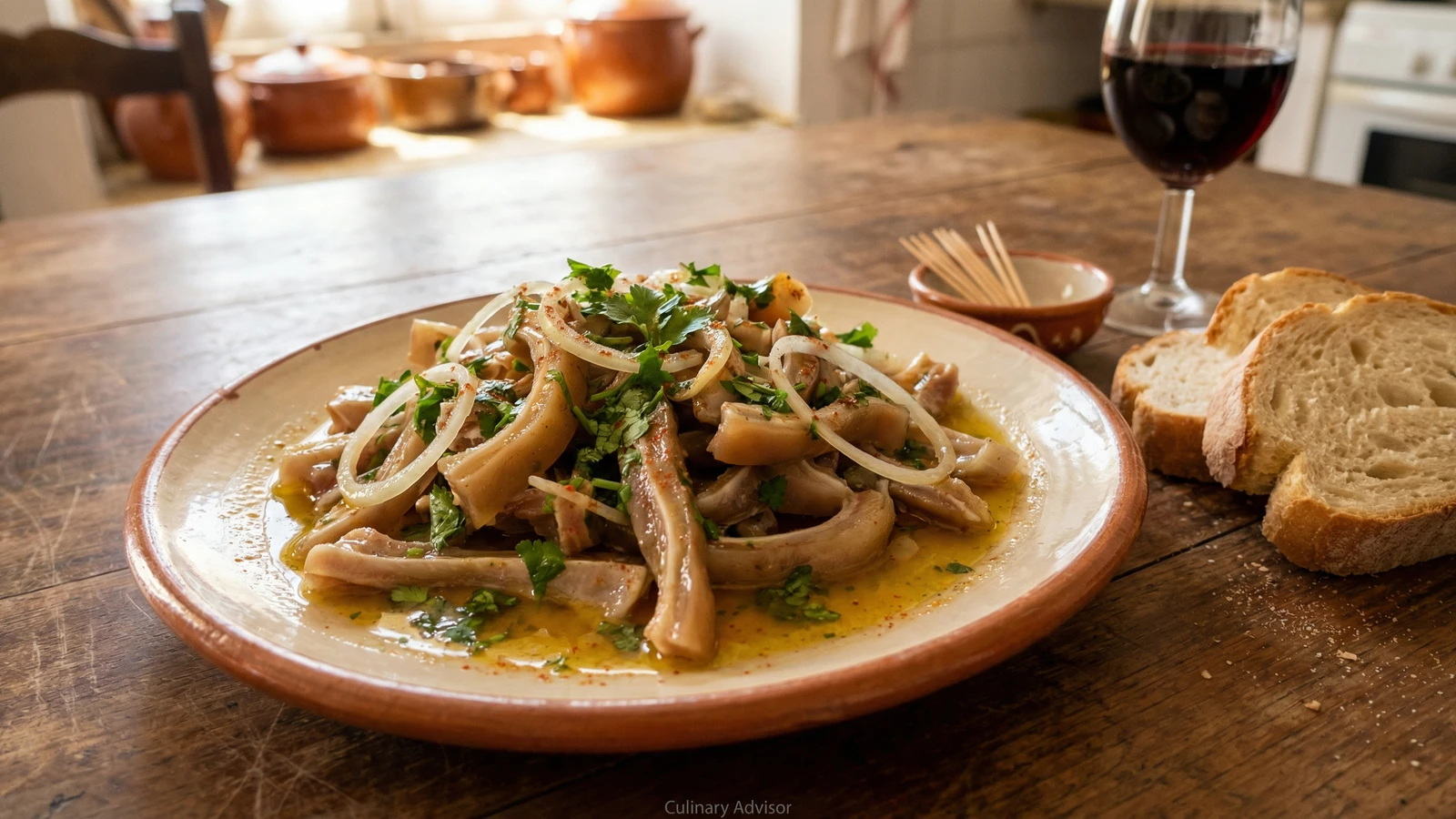
Orelhas de Porco de Coentrada
Created by
Pig's ears braised until silky, then dressed in garlic, vinegar, and bright handfuls of coentros. Alentejo's disappearing bar snack that deserves a place at your table.
This is one of the dishes I'm most afraid of losing. When I ask young people if they've tried orelhas, they wrinkle their noses. When I ask their grandmothers, their eyes light up. As avós sabem. The grandmothers know.
In every tasca in Alentejo, there used to be a bowl of these on the counter. Pig's ears, slow-cooked until the cartilage went from tough to tender to almost melting, then sliced and drowned in a garlicky dressing thick with coentros. You'd eat them with toothpicks, standing at the bar, with a glass of red wine that cost almost nothing.
Avó Leonor made these for my grandfather every time they slaughtered a pig. Nothing was wasted. The meat became chouriço, the blood became morcela, and the ears became this salad. She'd let them sit overnight in the dressing, the vinegar cutting through the richness, the coentros making everything bright and sharp.
I've been documenting this recipe from grandmothers across Alentejo, and every one of them says the same thing: their grandchildren won't eat it. Won't even try it. This breaks my heart. This is who we are. This is peasant genius, transforming what others throw away into something that makes you close your eyes when you eat it.
If you've never eaten pig's ear, start here. The texture is unlike anything else: silky, slightly chewy, rich without being heavy. The coentrada dressing is punchy enough to balance the richness. Give it a chance. The grandmothers knew what they were doing.
Orelhas de coentrada belongs to Portugal's tradition of aproveitamento, the art of using every part of the animal that sustained rural families for centuries. The dish flourished in Alentejo, where the matança do porco (pig slaughter) was a communal winter event and nothing, especially not the prized ears with their unique texture, was discarded. The coentrada dressing, heavy with the coentros that defines southern Portuguese cooking, likely evolved to cut the richness of the gelatinous meat.
The technique, the tradition, and the story behind every dish.
Discover Culinary AdvisorIngredients
pig's ears
Quantity
4 (about 800g total)
cleaned and singed
bay leaf
Quantity
1
onion
Quantity
1 medium
halved
black peppercorns
Quantity
4 whole
coarse salt
Quantity
1 tablespoon
white onion
Quantity
1 small
sliced paper-thin
garlic
Quantity
4 cloves
minced
fresh cilantro (coentros)
Quantity
1 large bunch
roughly chopped
extra virgin olive oil (azeite)
Quantity
1/2 cup
white wine vinegar
Quantity
3 tablespoons
sweet paprika (colorau)
Quantity
1 teaspoon
piri-piri or crushed red pepper flakes
Quantity
1/2 teaspoon
flaky sea salt
Quantity
to taste
black pepper
Quantity
to taste
freshly ground
| Ingredient | Quantity |
|---|---|
| pig's earscleaned and singed | 4 (about 800g total) |
| bay leaf | 1 |
| onionhalved | 1 medium |
| black peppercorns | 4 whole |
| coarse salt | 1 tablespoon |
| white onionsliced paper-thin | 1 small |
| garlicminced | 4 cloves |
| fresh cilantro (coentros)roughly chopped | 1 large bunch |
| extra virgin olive oil (azeite) | 1/2 cup |
| white wine vinegar | 3 tablespoons |
| sweet paprika (colorau) | 1 teaspoon |
| piri-piri or crushed red pepper flakes | 1/2 teaspoon |
| flaky sea salt | to taste |
| black pepperfreshly ground | to taste |
Equipment Needed
- •Large heavy pot
- •Sharp knife for slicing
- •Wide serving bowl or platter
Instructions
- 1
Clean the ears
If your butcher hasn't done it, scrape the ears clean of any remaining hair with a sharp knife, then singe over a gas flame to catch the fine hairs. Rinse thoroughly under cold water, scrubbing with coarse salt. Cut each ear in half lengthwise. This isn't squeamish work. If you're going to cook the whole animal, you honor every part of it.
- 2
Simmer until tender
Place the ears in a large pot and cover with cold water by two fingers. Add the bay leaf, halved onion, peppercorns, and salt. Bring to a boil, then reduce to a gentle simmer. Cook uncovered for 2.5 to 3 hours, until a knife slides through the thickest part with no resistance. The cartilage should be completely tender, almost gelatinous. Skim any foam that rises in the first half hour.
Don't rush this. Undercooked ears are chewy in the wrong way. You want that silky, giving texture that only comes from patience. Avó Leonor would say: deixa cozinhar. Let it cook. - 3
Cool and slice
Remove the ears from the cooking liquid and let them cool until you can handle them. Slice into strips about 5mm wide. Some people like them thinner, some thicker. I like strips thick enough to have presence on the plate but thin enough to pick up the dressing. Place the sliced ears in a wide bowl.
- 4
Make the coentrada dressing
In a small bowl, whisk together the olive oil, white wine vinegar, minced garlic, paprika, and piri-piri. The dressing should be punchy, bright, almost aggressive. Taste it. It should make your mouth water. Season with salt and pepper. Stir in most of the chopped coentros, saving a handful for garnish.
- 5
Dress and rest
Pour the dressing over the warm ear strips and add the thin-sliced white onion. Toss everything together with your hands. The ears should drink the dressing while still slightly warm. Cover and refrigerate for at least 1 hour, or overnight. The salad improves as it sits. The flavors marry. The onion softens. Everything becomes more itself.
Dressing the ears while warm is the secret. They absorb everything better. Cold ears just sit in the dressing; warm ears become one with it. - 6
Serve
Remove from the refrigerator 20 minutes before serving. Pile onto a platter, scatter with the reserved coentros, and drizzle with a little more fresh azeite. Serve with crusty bread for mopping up the dressing. This is tasca food. Bar food. The kind of dish that makes you order another glass of vinho.
Chef Tips
- •Ask your butcher to clean and singe the ears for you. A good butcher will do this. If they look at you strangely, find a Portuguese or Spanish butcher who understands.
- •The cooking liquid is liquid gold. Strain it, chill it, and use it for cooking beans or rice. It's pure collagen. Don't throw it away.
- •This salad is better the next day. Make it Saturday afternoon, eat it Sunday lunch. The wait is worth it.
- •Some old recipes add a boiled potato, sliced, to stretch the dish. Avó Leonor would have called this practical. I call it delicious.
Advance Preparation
- •The ears can be cooked up to 3 days ahead and refrigerated in their cooking liquid. Slice and dress when ready.
- •The dressed salad improves overnight. Make it a day ahead for best results. Keeps refrigerated for up to 4 days.
- •Remove from refrigerator 20 minutes before serving. Cold dulls the flavors; cool room temperature is ideal.
Frequently Asked Questions
Nutrition Information
1 serving (about 170g)
Where cooking meets culture.
Culinary mentorship, cultural storytelling, and the editorial depth that makes cooking meaningful.
Explore Culinary Advisor