Culinary Advisor
A cooking platform built around craft, culture, and the stories behind what we eat.
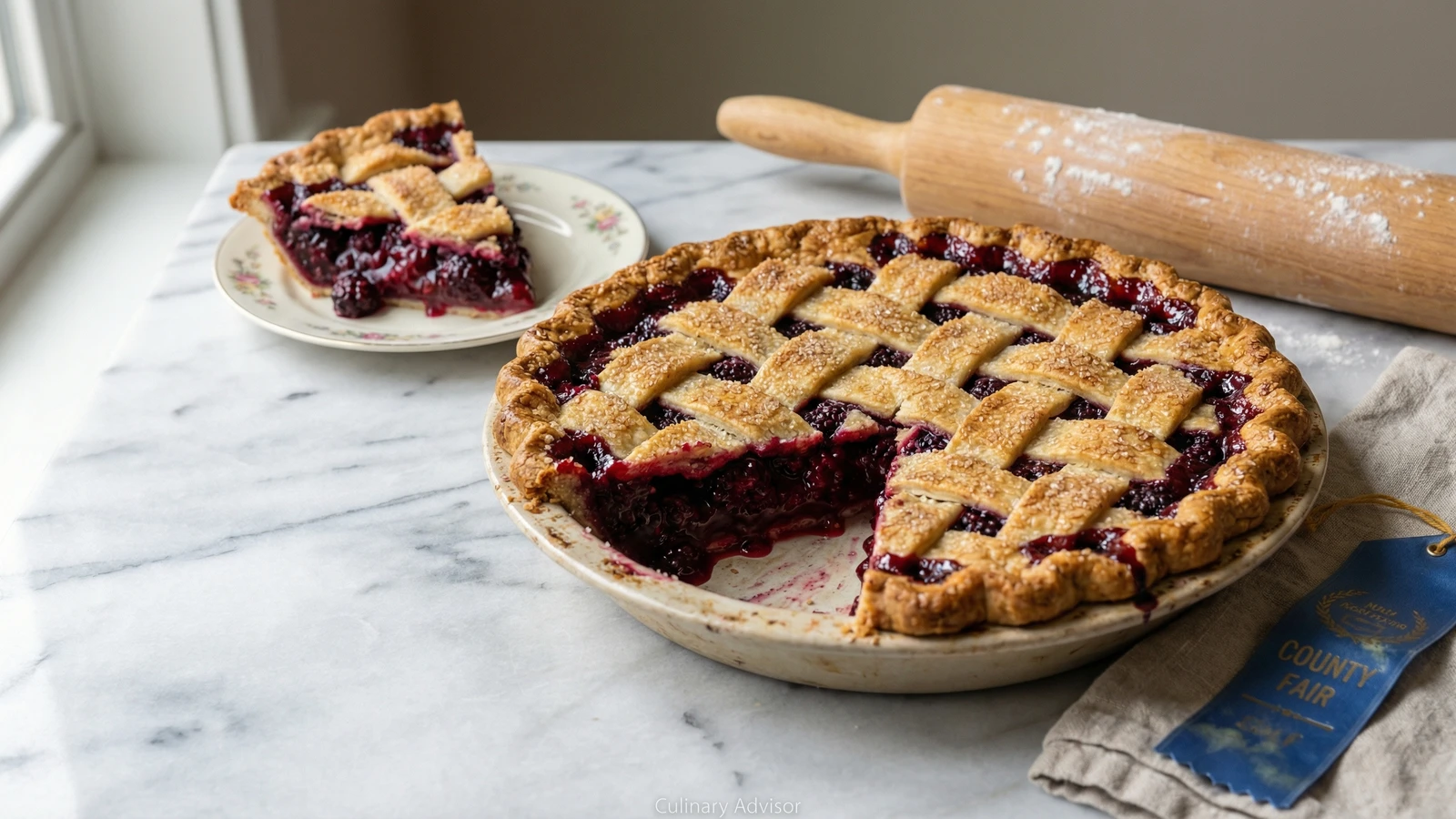
Oregon Marionberry Pie
A golden, flaky butter crust encasing Oregon's prized marionberries, their wine-dark juices bubbling through lattice slits, the filling concentrated and jammy with a brightness that makes you understand why locals guard their berry patches with territorial pride.
Oregon has given American cooking many gifts, but none more precious than the marionberry. Developed at Oregon State University in 1956, this cross between Chehalem and Olallieberry was named for Marion County, where it first proved its worth. The berry scientists who created it could not have predicted their agricultural experiment would become a point of state pride, fought over at farmers' markets and celebrated at county fairs from Pendleton to Portland.
Marionberries are sometimes called the cabernet of blackberries, and the comparison holds. They possess a complexity that common blackberries cannot match: deep sweetness balanced by bright acidity, a tannic backbone from those tiny seeds, and an aroma that fills your kitchen the moment they hit a warm pan. The season is brief. Fresh berries arrive in early July and vanish within weeks. Smart Oregonians buy flats and freeze them, ensuring pie through the dark winter months.
This is a double-crust butter pie in the Pacific Northwest tradition. The region never developed the lard-crust culture of the South or the shortening habits of the Midwest. Here, butter rules. Cold butter, cut into flour, creates layers that shatter when your fork breaks through. The filling requires restraint. Too much sugar and you lose the berry's personality. Too much thickener and you get glue. Get it right and the juices flow without flooding, the fruit holds its shape while yielding to gentle pressure.
I first tasted marionberry pie at a roadside stand outside Salem, the kind of place with hand-painted signs and a screen door that banged shut behind you. The woman who made it had been entering pies at the Oregon State Fair for forty years. She won more often than not. Her secret, she told me, was patience. Let the berries macerate. Let the crust rest. Let the pie cool before cutting. Patience is the hardest ingredient for any baker to master.
The technique, the tradition, and the story behind every dish.
Discover Culinary AdvisorIngredients
all-purpose flour
Quantity
2 1/2 cups (315g)
granulated sugar (for crust)
Quantity
1 tablespoon
fine sea salt (for crust)
Quantity
1 teaspoon
cold unsalted butter (for crust)
Quantity
1 cup (2 sticks/226g)
cut into 1/2-inch cubes
ice water
Quantity
6 to 8 tablespoons
apple cider vinegar
Quantity
1 teaspoon
marionberries
Quantity
6 cups (about 2 pounds)
fresh or frozen
granulated sugar (for filling)
Quantity
3/4 cup (150g)
cornstarch
Quantity
1/4 cup (30g)
fresh lemon juice
Quantity
1 tablespoon
fine sea salt (for filling)
Quantity
1/4 teaspoon
ground cinnamon
Quantity
1/4 teaspoon
cold unsalted butter (for filling)
Quantity
1 tablespoon
cut into small pieces
large egg
Quantity
1
heavy cream
Quantity
1 tablespoon
turbinado sugar
Quantity
2 tablespoons
for finishing
| Ingredient | Quantity |
|---|---|
| all-purpose flour | 2 1/2 cups (315g) |
| granulated sugar (for crust) | 1 tablespoon |
| fine sea salt (for crust) | 1 teaspoon |
| cold unsalted butter (for crust)cut into 1/2-inch cubes | 1 cup (2 sticks/226g) |
| ice water | 6 to 8 tablespoons |
| apple cider vinegar | 1 teaspoon |
| marionberriesfresh or frozen | 6 cups (about 2 pounds) |
| granulated sugar (for filling) | 3/4 cup (150g) |
| cornstarch | 1/4 cup (30g) |
| fresh lemon juice | 1 tablespoon |
| fine sea salt (for filling) | 1/4 teaspoon |
| ground cinnamon | 1/4 teaspoon |
| cold unsalted butter (for filling)cut into small pieces | 1 tablespoon |
| large egg | 1 |
| heavy cream | 1 tablespoon |
| turbinado sugarfor finishing | 2 tablespoons |
Equipment Needed
- •9-inch pie plate (glass or ceramic preferred)
- •Pastry blender or two knives
- •Rolling pin
- •Rimmed baking sheet
- •Wire cooling rack
- •Pastry brush
Instructions
- 1
Make the pie dough
Whisk the flour, one tablespoon sugar, and one teaspoon salt together in a large bowl. Add the cold butter cubes and toss to coat each piece with flour. Using a pastry blender or your fingertips, work the butter into the flour until you have a mix of pea-sized pieces and flattened shards. This uneven texture creates layers. Don't aim for uniformity.
Keep everything cold. If your hands run warm, rinse them in ice water and dry them before handling the butter. - 2
Bring the dough together
Combine six tablespoons ice water with the vinegar. Drizzle over the flour mixture and stir with a fork until the dough begins to clump. Add more water one tablespoon at a time if needed. The dough should hold together when squeezed but not feel wet or sticky. Turn out onto a lightly floured surface and gather into a shaggy mass.
- 3
Laminate for flakiness
Flatten the dough into a rough rectangle. Fold it in thirds like a letter, rotate ninety degrees, and flatten again. Repeat this fold twice more. You're building layers that will puff and separate during baking. Divide the dough into two pieces, one slightly larger than the other. Shape into disks, wrap tightly in plastic, and refrigerate at least one hour or overnight.
The larger disk becomes your bottom crust, the smaller your lattice top. Mark them if you need a reminder. - 4
Macerate the berries
Place the marionberries in a large bowl. Add three-quarters cup sugar, the cornstarch, lemon juice, one-quarter teaspoon salt, and cinnamon. Fold gently with a spatula until the berries are coated and the sugar begins to draw out their juices. Let sit at room temperature while you roll the crust, at least thirty minutes. The berries will soften slightly and release their wine-dark liquid.
If using frozen berries, do not thaw them first. The cornstarch will coat them as they release moisture in the pie. - 5
Roll the bottom crust
Remove the larger dough disk from the refrigerator. Let it rest five minutes if too firm to roll. On a floured surface, roll from center outward in all directions, rotating the dough quarter turns to maintain a round shape. Roll to about twelve inches in diameter and an eighth-inch thickness. Transfer to a nine-inch pie plate, easing it into the corners without stretching. Trim the overhang to one inch. Refrigerate while you prepare the top.
- 6
Create the lattice
Roll the smaller disk to an eleven-inch round. Using a sharp knife or pizza wheel, cut into strips three-quarters of an inch wide. You should get twelve to fourteen strips. Lay them on a parchment-lined sheet and refrigerate until firm, about fifteen minutes. Cold strips weave without tearing.
- 7
Fill the pie
Position your oven rack in the lower third. Place a rimmed baking sheet on it. Preheat to 425 degrees. Pour the macerated berries and all their accumulated juices into the chilled bottom crust. Mound them slightly higher in the center since they'll settle as they cook. Scatter the tablespoon of cold butter pieces over the fruit.
- 8
Weave the lattice
Lay half the strips across the pie in parallel lines, spacing them evenly. Fold back alternate strips and lay a perpendicular strip across the center. Unfold, then fold back the other strips and lay another perpendicular strip. Continue this over-under pattern until the lattice covers the pie. Press the strip ends into the bottom crust edge and trim to match.
If the dough gets soft and sticky, return everything to the refrigerator for ten minutes. Warm dough makes sloppy lattice work. - 9
Crimp and finish
Fold the bottom crust overhang up and over the lattice ends. Crimp decoratively by pressing with a fork or pinching with your fingers. Beat the egg with cream and brush the entire lattice and crimped edge. Sprinkle generously with turbinado sugar. The coarse crystals add crunch and sparkle.
- 10
Bake to bubbling perfection
Set the pie on the preheated baking sheet. Bake at 425 degrees for twenty minutes until the crust turns golden. Reduce heat to 375 degrees and continue baking thirty-five to forty-five minutes more. The pie is done when the filling bubbles thickly through the lattice openings and the crust is deep golden brown. If the edges darken too quickly, shield them with foil.
- 11
Cool completely
Transfer the pie to a wire rack and let it cool at least three hours before slicing. This is the hardest part. The filling needs time to set. Cut too soon and you'll have berry soup, delicious but impossible to serve. The pie can rest at room temperature overnight. In Oregon, it's often served the next day, the flavors mellowed and the juices perfectly gelled.
Serve with vanilla ice cream or unsweetened whipped cream. Sharp cheddar cheese is the old-timer's pairing, strange to newcomers but oddly right.
Chef Tips
- •If you cannot find marionberries, blackberries will work, though you'll miss some of that distinctive brightness. Add an extra teaspoon of lemon juice to compensate. Do not substitute raspberries. The texture is entirely wrong.
- •Frozen marionberries are available year-round from Oregon producers who ship nationwide. They make better pie than mediocre fresh blackberries from distant sources.
- •The baking sheet beneath your pie serves two purposes: it catches any drips and its preheated surface helps cook the bottom crust, preventing the dreaded soggy bottom that plagues fruit pies.
- •Leftover pie keeps at room temperature for two days, loosely covered. After that, refrigerate. Bring to room temperature before serving or warm briefly in a 350 degree oven.
Advance Preparation
- •Pie dough can be made three days ahead and refrigerated, or frozen for up to three months. Thaw overnight in the refrigerator before rolling.
- •The fully assembled, unbaked pie can be frozen for up to two months. Bake directly from frozen, adding fifteen to twenty minutes to the initial bake time.
- •Baked pie is best the day it's made but holds well for two days at room temperature.
Frequently Asked Questions
Nutrition Information
1 serving (about 170g)
Where cooking meets culture.
Culinary mentorship, cultural storytelling, and the editorial depth that makes cooking meaningful.
Explore Culinary Advisor