Culinary Advisor
A cooking platform built around craft, culture, and the stories behind what we eat.
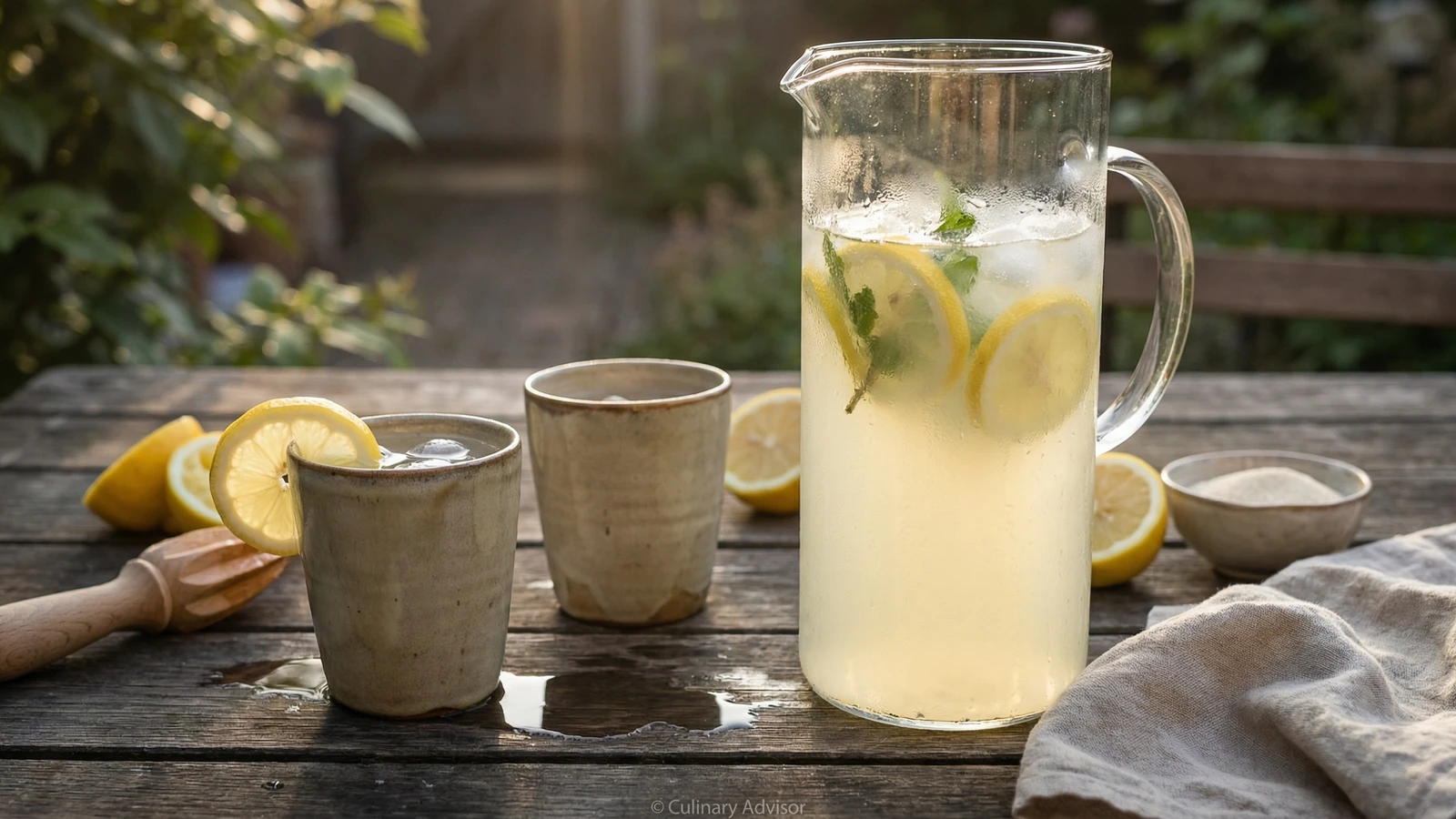
Old-Fashioned Lemonade
Created by Chef Thomas
Proper homemade lemonade built from real lemons, sugar, and cold water, the kind of drink that turns a warm afternoon into something you'll remember long after the glass is empty.
There's a particular kind of July afternoon when the garden has gone still and the heat has settled into the bricks of the house and nobody can quite be bothered to do anything useful. That's when this gets made. A jug of cold lemonade, sweating on the kitchen table, waiting for someone to pour it.
Real lemonade has almost nothing to do with the fluorescent stuff that comes in bottles. It's lemons, sugar, and water. That's it. The trick, if there is one, is in the zest: those wide ribbons of peel steeped briefly in hot water with the sugar, which pulls out the oils and gives the whole thing a perfume you simply can't get from juice alone. Skip that step and you've made lemon squash. Do it properly and you've made something worth writing down.
I wrote it down in the notebook years ago, after a picnic where a jug of this disappeared faster than anything else on the blanket. The note just said: lemons, sugar, cold water, shade. That's still most of what you need to know.
Taste as you go. Lemons are not uniform things. Some are bracing, some are gentle, and the sweetness has to meet them where they are. A recipe is a conversation, not a contract. Your jug, your rules.
The technique, the tradition, and the story behind every dish.
Discover Culinary AdvisorIngredients
unwaxed lemons
Quantity
8
caster sugar
Quantity
150g
or more to taste
just-boiled water
Quantity
200ml
cold water
Quantity
1 litre
ice
Quantity
to serve
mint sprigs (optional)
Quantity
a few
| Ingredient | Quantity |
|---|---|
| unwaxed lemons | 8 |
| caster sugaror more to taste | 150g |
| just-boiled water | 200ml |
| cold water | 1 litre |
| ice | to serve |
| mint sprigs (optional) | a few |
Equipment Needed
- •Vegetable peeler
- •Large heatproof jug
- •Citrus juicer or reamer
- •Fine sieve
Instructions
- 1
Pare the zest
Take three of the lemons and strip the zest off in wide ribbons with a vegetable peeler. You want the yellow, not the white pith underneath, which will turn the whole thing bitter. The ribbons should look like small yellow sails. Drop them into a heatproof jug with the sugar.
Unwaxed lemons matter here. The zest is doing half the work, and you don't want a mouthful of food-grade wax for your trouble. If you can only find waxed, give them a scrub under hot water first. - 2
Make a quick syrup
Pour the just-boiled water over the zest and sugar. Stir until the sugar dissolves completely. Leave it to sit for ten minutes or so. The water will turn a pale, perfumed yellow and the kitchen will smell like the inside of a lemon grove. This short infusion is the whole secret. Skip it and you've got lemon water. Do it and you've got lemonade.
- 3
Juice the lemons
Juice all eight lemons. Roll them firmly on the counter under the heel of your hand first, which breaks down the cells inside and gets twice the juice out. You're after about 250ml of juice, give or take. Don't fuss if there's a pip or two, you'll strain it later.
- 4
Combine and taste
Strain the warm syrup through a sieve into a large jug, pressing gently on the zest to get every drop. Add the lemon juice. Add the cold water. Stir. Now taste it. This is the part most recipes skip. Lemons vary wildly, some are sharp as knives, others are mellow. If it's puckering your face, add another spoonful of sugar. If it tastes flat, squeeze in another half lemon. Season and taste. Then taste again.
- 5
Chill and serve
Put the jug in the fridge for at least an hour, longer if you can manage it. Serve in tall glasses over plenty of ice, with a sprig of mint bruised gently between your fingers and dropped into each glass. The mint is optional but worth it on a hot day.
Don't add the ice to the jug itself. It melts and waters down everything you just bothered to make. Ice goes in the glass, lemonade goes over the ice.
Chef Tips
- •The ratio of sugar to lemon is personal. I've given you a starting point, but taste and adjust. Children usually want it sweeter, grown-ups usually want it sharper. A good lemonade sits just on the edge of too tart, so that the sweetness catches up a second later.
- •If you want to make it feel like a proper summer drink, top each glass with a splash of cold sparkling water just before serving. It lifts everything and makes the lemonade feel lighter on a hot day. Or don't. Still lemonade has its own quiet dignity.
- •A tablespoon of runny honey in place of some of the sugar gives a softer, more rounded sweetness that works well with late-summer lemons. Not essential, but worth trying once.
- •This keeps in the fridge for three days, though the flavour dulls slightly after the first. Make it the morning you want to drink it if you can.
Advance Preparation
- •The lemonade can be made the morning of a picnic or lunch and kept in the fridge until you're ready to pour. A few hours of chilling actually helps the flavours settle.
- •For a stronger concentrate, make the syrup and juice mixture without the cold water and store in a bottle in the fridge for up to four days. Dilute to taste with cold water or sparkling water when serving.
Frequently Asked Questions
Nutrition Information
1 serving (about 250g)
Where cooking meets culture.
Culinary mentorship, cultural storytelling, and the editorial depth that makes cooking meaningful.
Explore Culinary Advisor