Culinary Advisor
A cooking platform built around craft, culture, and the stories behind what we eat.
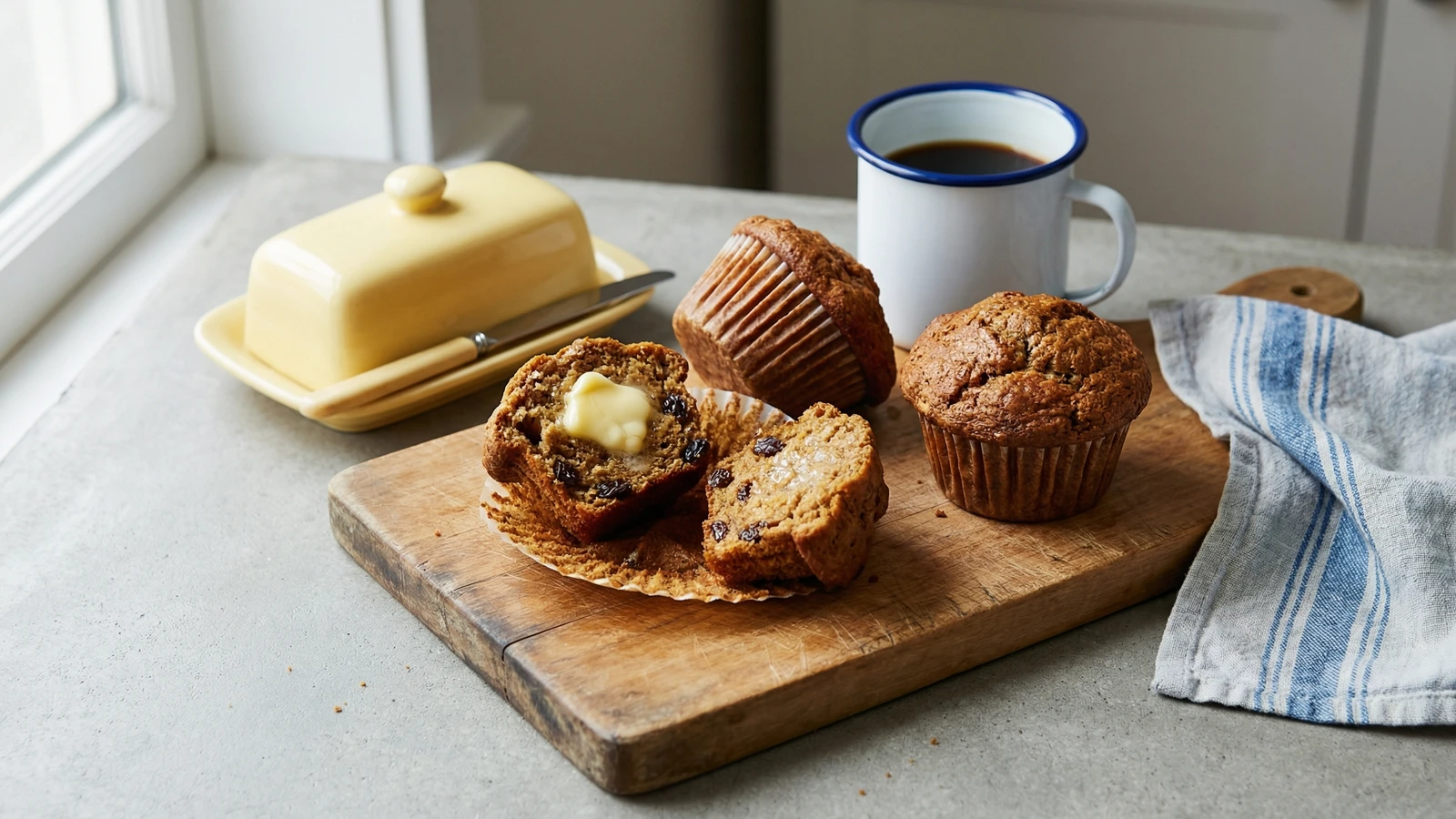
Old-Fashioned Bran Muffins
Created by
Dense, tender muffins packed with wheat bran and studded with plump raisins, sweetened with dark molasses that speaks of another era. This is the recipe your grandmother kept in a coffee-stained index card box, the one she made every Sunday without measuring.
There was a time in this country when bran muffins appeared on every breakfast table worth sitting at. They weren't health food in the modern, joyless sense. They were simply good food made from honest ingredients: wheat bran that farmers' wives bought in bulk, dark molasses from the general store, buttermilk from the crock in the icebox. These muffins sustained people through long mornings of actual work.
The magic of bran muffins lives in their contradiction. They're dense but tender, wholesome but deeply satisfying, humble but worthy of your best butter. The bran absorbs liquid overnight, softening into something almost velvety while the molasses and brown sugar develop a complexity that fresh batter simply cannot achieve. This is why your grandmother's recipe card probably said to let the batter rest. She knew.
I've taught this recipe to students who arrived skeptical. Bran muffins, they thought, meant cardboard disguised as breakfast. By the time they pulled that first batch from the oven, filling the kitchen with the smell of warm molasses and toasted wheat, they understood. Good food doesn't require expensive ingredients. It requires respect for the ingredients you have.
The technique, the tradition, and the story behind every dish.
Discover Culinary AdvisorIngredients
wheat bran
Quantity
1 1/2 cups (65g)
buttermilk
Quantity
1 cup (240ml)
at room temperature
vegetable oil
Quantity
1/3 cup (80ml)
large egg
Quantity
1
at room temperature
dark brown sugar
Quantity
2/3 cup (145g)
packed
unsulphured molasses
Quantity
1/4 cup (60ml)
pure vanilla extract
Quantity
1 teaspoon
all-purpose flour
Quantity
1 cup (125g)
baking soda
Quantity
1 teaspoon
baking powder
Quantity
1 teaspoon
fine sea salt
Quantity
1/2 teaspoon
ground cinnamon
Quantity
1/2 teaspoon
raisins
Quantity
3/4 cup (110g)
| Ingredient | Quantity |
|---|---|
| wheat bran | 1 1/2 cups (65g) |
| buttermilkat room temperature | 1 cup (240ml) |
| vegetable oil | 1/3 cup (80ml) |
| large eggat room temperature | 1 |
| dark brown sugarpacked | 2/3 cup (145g) |
| unsulphured molasses | 1/4 cup (60ml) |
| pure vanilla extract | 1 teaspoon |
| all-purpose flour | 1 cup (125g) |
| baking soda | 1 teaspoon |
| baking powder | 1 teaspoon |
| fine sea salt | 1/2 teaspoon |
| ground cinnamon | 1/2 teaspoon |
| raisins | 3/4 cup (110g) |
Equipment Needed
- •Standard 12-cup muffin tin
- •Paper muffin liners
- •Wire cooling rack
- •Wooden spoon or sturdy spatula
Instructions
- 1
Soak the bran
Pour the wheat bran into a large mixing bowl and add the buttermilk. Stir until the bran is thoroughly moistened, with no dry pockets remaining. The mixture will look shaggy and unpromising. Let it sit for at least ten minutes while you prepare everything else. This soaking is essential. Dry bran produces muffins with the texture of sawdust.
For the most tender muffins, make the batter the night before and refrigerate. The bran softens completely, and the flavors deepen beautifully. The batter keeps for up to five days. - 2
Prepare wet ingredients
To the soaked bran, add the oil, egg, brown sugar, molasses, and vanilla. Whisk vigorously until the mixture is uniform and the brown sugar has dissolved into the liquid. The batter will turn a deep, almost mahogany brown. This is the color of proper bran muffins. Pale batter means weak molasses flavor.
- 3
Combine dry ingredients
In a separate bowl, whisk together the flour, baking soda, baking powder, salt, and cinnamon. Breaking up any lumps now prevents streaks of raw flour in your finished muffins. The double leavening of soda and powder gives these dense muffins their necessary lift.
- 4
Mix and fold
Add the dry ingredients to the wet mixture all at once. Stir with a wooden spoon or sturdy spatula using broad strokes, folding from the bottom of the bowl. Stop the moment the flour disappears. A few small lumps are acceptable and preferable to overmixed, tough muffins. Fold in the raisins with the last few strokes.
Plump your raisins in hot water for ten minutes if they seem dry, then drain thoroughly before adding. This prevents them from stealing moisture from your batter. - 5
Fill the tins
Preheat your oven to 400°F. Line a standard twelve-cup muffin tin with paper liners, or grease the cups generously with butter. Divide the batter evenly among the cups, filling each about three-quarters full. The batter is thick enough to mound slightly. Don't smooth the tops. Those irregular peaks will bake into honest, craggy domes.
- 6
Bake until risen
Bake for twenty to twenty-two minutes, until the muffins have risen proudly and the tops spring back when pressed gently. A toothpick inserted in the center should emerge with just a few moist crumbs clinging to it. The kitchen will smell of warm molasses and toasted wheat. This is the smell of a proper morning.
- 7
Cool and serve
Let the muffins rest in the tin for five minutes. They need this time to set their structure. Transfer to a wire rack if you want them to cool completely, or serve warm with a pat of good butter that melts into the craggy top. These muffins are best within two days, though they freeze beautifully.
Chef Tips
- •Seek out wheat bran at a natural foods store or the bulk section of a good grocery. Bran cereals are not the same thing. You want pure, unprocessed wheat bran that smells faintly nutty and feels soft between your fingers.
- •Unsulphured molasses has a cleaner, less bitter flavor than blackstrap. Look for brands labeled 'mild' or 'original.' If you can only find blackstrap, reduce the amount by half and make up the difference with honey.
- •Cold batter from the refrigerator can go directly into a hot oven. The muffins will take two to three minutes longer, but they'll rise even higher because the cold batter meets the hot air more dramatically.
- •These muffins pair beautifully with sharp cheddar cheese, an old American breakfast combination that deserves revival. The savory richness cuts the sweetness perfectly.
Advance Preparation
- •Batter can be made up to five days ahead and stored in an airtight container in the refrigerator. The texture improves with resting. Portion directly from cold into muffin cups.
- •Baked muffins freeze for up to three months in an airtight container. Thaw at room temperature or warm briefly in a 300°F oven.
- •For fresh muffins on busy mornings, fill the muffin tin the night before and refrigerate. Bake directly from cold, adding three minutes to the baking time.
Frequently Asked Questions
Nutrition Information
1 muffin (about 65g)
Where cooking meets culture.
Culinary mentorship, cultural storytelling, and the editorial depth that makes cooking meaningful.
Explore Culinary Advisor