Culinary Advisor
A cooking platform built around craft, culture, and the stories behind what we eat.
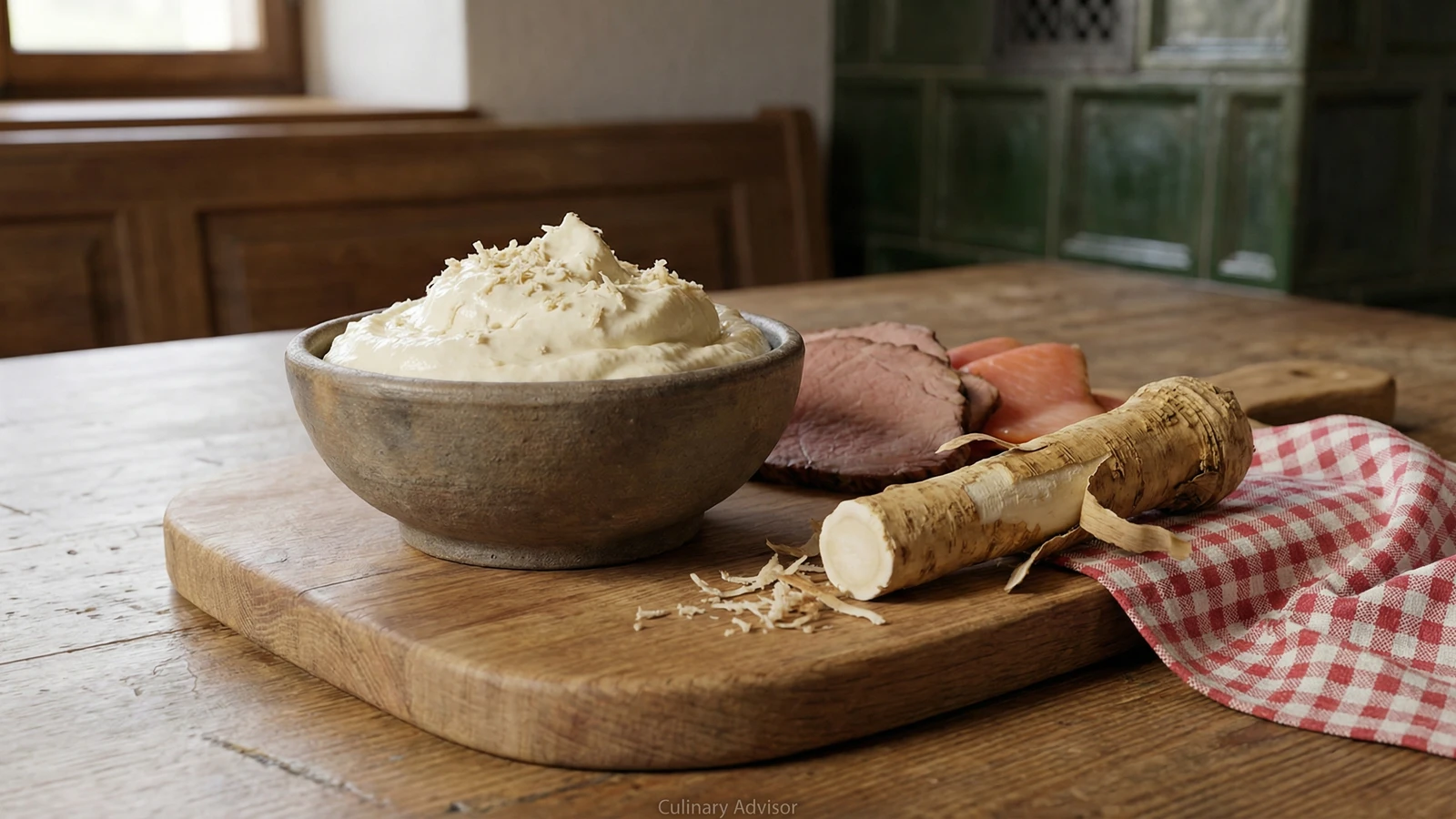
Oberskren (Cream-Horseradish)
Created by Chef Elsa
Freshly grated Kren folded into cold whipped cream with nothing but salt, sugar, and a drop of vinegar. Two ingredients. No cooking. The condiment every Austrian table sets beside the Tafelspitz.
In my grandmother Eva's kitchen in Kent, there was a knobby root that lived in the vegetable drawer wrapped in damp newspaper. It looked like something you'd pull out of the garden by accident. But when Gretel unwrapped it and took a grater to it, the whole kitchen changed. Your eyes stung, your nose ran, and Gretel would laugh and say that's how you know it's good Kren.
Oberskren is what you get when you fold that freshly grated horseradish into cold whipped cream. That's the whole recipe. Two ingredients, a pinch of salt, a pinch of sugar, and a few drops of vinegar to hold the fire steady. It sounds like nothing, and it tastes like everything. The cream doesn't mask the horseradish, it carries it. The heat comes through clean and bright, but the cream rounds it into something you want more of instead of something that makes you flinch. This is the condiment Austrians set beside Tafelspitz, beside cold roast beef, beside smoked fish. It belongs wherever good meat meets a cold plate.
The only real technique here is restraint. Don't over-whip the cream. Don't grate the horseradish an hour early. Don't add anything clever. Gretel always said that Austrian cooking succeeds when you trust good ingredients to be enough. Oberskren is the purest proof of that.
Kren, the Austrian word for horseradish, comes from the Slavic 'křen,' reflecting centuries of cultural exchange across the Habsburg lands. Styria, in southeastern Austria, has been the country's horseradish heartland since at least the 17th century, and Steirischer Kren holds a protected geographical indication in the EU. Oberskren, the cream-based preparation, became a fixture of Viennese Bürgerlich cooking in the 19th century as the refined accompaniment to boiled beef dishes like Tafelspitz, distinguishing it from the sharper, vinegar-based Semmelkren and Apfelkren served in simpler country kitchens.
The technique, the tradition, and the story behind every dish.
Discover Culinary AdvisorIngredients
fresh horseradish root (Kren)
Quantity
80-100g
peeled and finely grated
heavy cream (Schlagobers)
Quantity
200ml
very cold
fine salt
Quantity
1/2 teaspoon
sugar
Quantity
1/2 teaspoon
white wine vinegar or lemon juice
Quantity
1 teaspoon
| Ingredient | Quantity |
|---|---|
| fresh horseradish root (Kren)peeled and finely grated | 80-100g |
| heavy cream (Schlagobers)very cold | 200ml |
| fine salt | 1/2 teaspoon |
| sugar | 1/2 teaspoon |
| white wine vinegar or lemon juice | 1 teaspoon |
Equipment Needed
- •Fine box grater or Microplane
- •Chilled mixing bowl
- •Whisk or hand mixer
- •Rubber spatula for folding
Instructions
- 1
Grate the horseradish
Peel the horseradish root and grate it on the finest holes of a box grater or a Microplane. Work quickly. Fresh Kren loses its fire the longer it sits exposed to air, so you want to grate it just before you fold it into the cream. Your eyes will sting. That's how you know it's fresh. If you grate horseradish and nothing happens to your eyes, it's too old and the Oberskren will taste like nothing.
Open a window or work near ventilation. Fresh horseradish releases volatile compounds that hit harder than onions. The sting passes quickly, but it will catch you off guard the first time. - 2
Whip the cream softly
Pour the very cold cream into a chilled bowl and whip it until it holds soft, drooping peaks. Stop well before stiff peaks. You want the cream to flow gently when you tilt the bowl, not stand at attention. Oberskren should have the consistency of a loose, spoonable sauce, not a mousse. Over-whipped cream turns grainy when you fold in the horseradish, and then you've lost the whole silky texture that makes this condiment what it is.
Chill your bowl and whisk in the freezer for ten minutes before you start. Cold equipment means the cream whips more evenly and holds its structure better. - 3
Season and fold
Sprinkle the salt, sugar, and vinegar over the grated horseradish and toss gently. The salt draws out moisture and tempers the raw bite just slightly. The sugar rounds the heat without making it sweet. The vinegar stabilizes the pungency so it doesn't fade on the plate. Now fold the seasoned horseradish into the whipped cream with a spatula, using gentle strokes. You're not stirring. You're folding, turning the bowl a quarter turn between each stroke, keeping the cream light. The horseradish should be evenly distributed but the cream should still look airy and pale, flecked with tiny shreds of Kren.
- 4
Taste and adjust
Taste it. The heat should come through clearly but not burn your sinuses. If it's too mild, fold in a little more freshly grated horseradish. If it's too fierce, add another tablespoon of cream. The salt and sugar should be invisible as individual flavors. They're there to support the Kren, not announce themselves. If you can taste sweetness, you've added too much sugar.
- 5
Serve cold
Transfer the Oberskren to a small serving bowl and bring it to the table cool. Set it alongside sliced Tafelspitz, cold roast beef, smoked trout, or a platter of Aufschnitt. Let your guests spoon it on themselves. A proper dollop, not a timid smear. This is good Austrian home cooking at its simplest: two ingredients, no heat, all about quality. Mahlzeit!
Chef Tips
- •Buy the horseradish root whole and unpeeled. The pre-grated jars have already lost most of their heat and all of their personality. A fresh root should feel firm and heavy in your hand, with no soft spots or dried-out ends. It keeps well in the fridge for two to three weeks wrapped in damp paper.
- •Grate the Kren at the last possible moment. The volatile compounds that give horseradish its fire begin to break down the second they hit the air. If you grate it twenty minutes early and leave it sitting on the counter, you'll fold a ghost into your cream.
- •If you're serving this with Tafelspitz, make the Oberskren while the beef rests after slicing. It takes five minutes and it should be fresh. Don't make it the night before and expect the same punch.
Advance Preparation
- •Oberskren is best made just before serving. The horseradish loses potency within an hour or two, even folded into cream.
- •If you must prepare ahead, make it no more than two hours in advance, cover tightly with cling film pressed directly against the surface, and refrigerate. Taste before serving and fold in a little freshly grated Kren if the heat has faded.
Frequently Asked Questions
Nutrition Information
1 serving (about 40g)
Where cooking meets culture.
Culinary mentorship, cultural storytelling, and the editorial depth that makes cooking meaningful.
Explore Culinary Advisor