Culinary Advisor
A cooking platform built around craft, culture, and the stories behind what we eat.
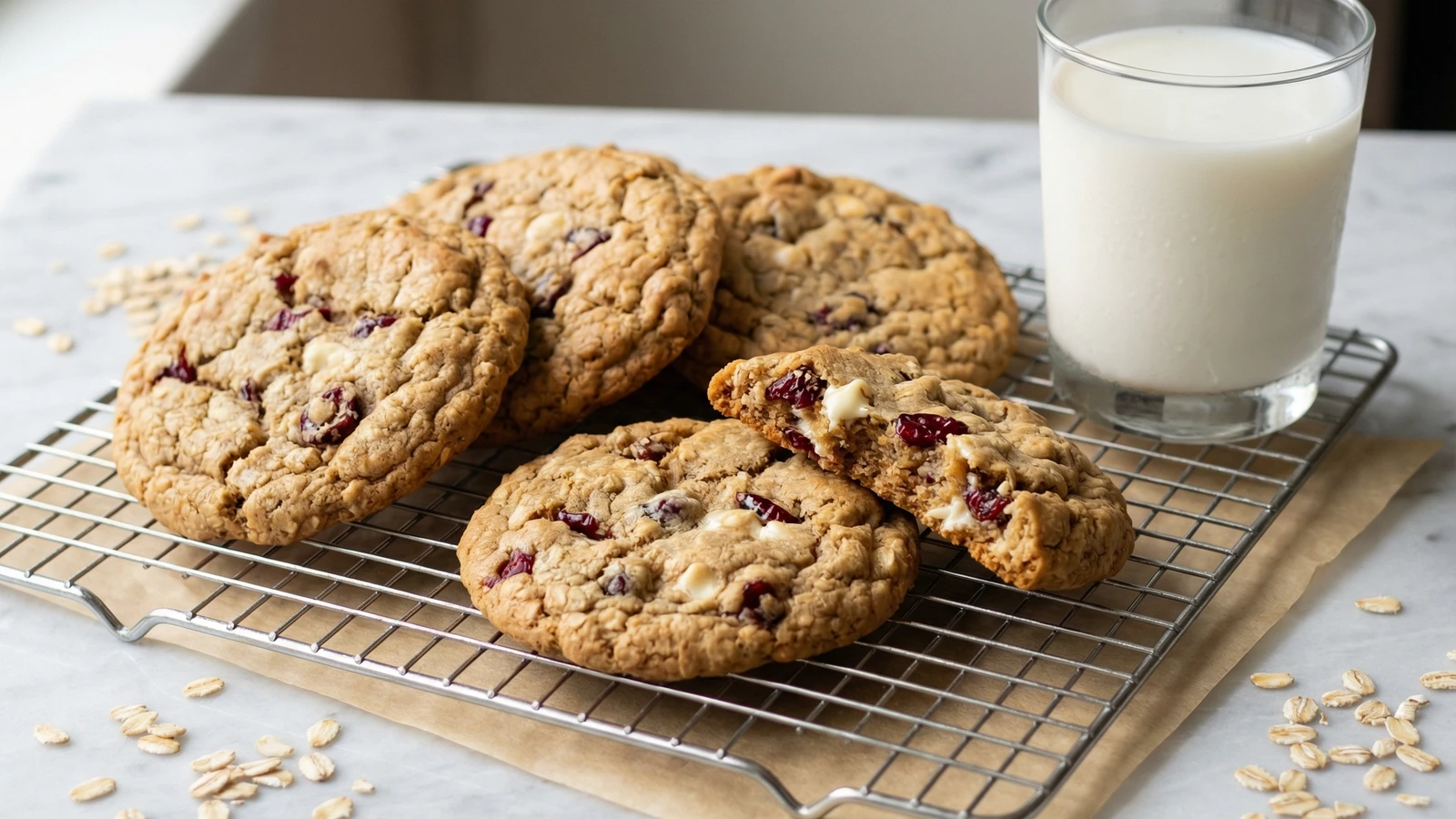
Oatmeal Cranberry White Chocolate Cookies
Created by
Chewy oatmeal cookies with ruby-red cranberries and pools of melted white chocolate, striking that perfect balance between tart and sweet that makes you reach for just one more.
The oatmeal cookie has been a fixture in American baking since the late 1800s, when Quaker Oats started printing recipes on their cylindrical cardboard containers. Generations of home bakers have tinkered with the formula ever since. This version represents the best of that tinkering: tart dried cranberries that burst with flavor, white chocolate that melts into creamy pockets, and a chewy interior that stays soft for days.
The combination isn't accidental. Dried cranberries need something sweet to temper their natural pucker. White chocolate provides that counterbalance while adding richness the original oatmeal cookie lacks. The festive red and white colors make these naturals for holiday cookie platters, but I've watched students bake them year-round. Good cookies don't need a calendar.
The texture here leans chewy rather than crisp. Brown sugar does the heavy lifting, its molasses content keeping the centers soft long after cooling. If you prefer a crisper cookie, swap half the brown sugar for granulated and add two minutes to your baking time. But try them chewy first. You'll understand why I teach them this way.
The technique, the tradition, and the story behind every dish.
Discover Culinary AdvisorIngredients
old-fashioned rolled oats
Quantity
2 1/4 cups
all-purpose flour
Quantity
1 1/2 cups
baking soda
Quantity
1 teaspoon
ground cinnamon
Quantity
1 teaspoon
fine sea salt
Quantity
3/4 teaspoon
unsalted butter
Quantity
1 cup (2 sticks)
softened
light brown sugar
Quantity
1 cup
packed
granulated sugar
Quantity
1/2 cup
large eggs
Quantity
2
room temperature
pure vanilla extract
Quantity
2 teaspoons
dried cranberries
Quantity
1 1/2 cups
white chocolate chips
Quantity
1 1/2 cups
| Ingredient | Quantity |
|---|---|
| old-fashioned rolled oats | 2 1/4 cups |
| all-purpose flour | 1 1/2 cups |
| baking soda | 1 teaspoon |
| ground cinnamon | 1 teaspoon |
| fine sea salt | 3/4 teaspoon |
| unsalted buttersoftened | 1 cup (2 sticks) |
| light brown sugarpacked | 1 cup |
| granulated sugar | 1/2 cup |
| large eggsroom temperature | 2 |
| pure vanilla extract | 2 teaspoons |
| dried cranberries | 1 1/2 cups |
| white chocolate chips | 1 1/2 cups |
Equipment Needed
- •Electric hand mixer or stand mixer
- •Two large baking sheets
- •Parchment paper
- •Wire cooling rack
- •Cookie scoop or tablespoon measure
Instructions
- 1
Prepare dry ingredients
Whisk together the oats, flour, baking soda, cinnamon, and salt in a medium bowl. Set aside. The oats will absorb moisture from the dough as it rests, contributing to that characteristic chew. Use old-fashioned rolled oats, not quick oats. Quick oats dissolve into the dough and you lose the texture that makes an oatmeal cookie worth eating.
Measure flour by spooning it into your measuring cup and leveling with a knife. Scooping directly from the bag compacts the flour and can add up to 30% more than intended. - 2
Cream butter and sugars
Beat the softened butter with both sugars in a large bowl using an electric mixer on medium speed. Continue for 3 to 4 minutes until the mixture turns pale and fluffy, scraping down the sides halfway through. This step matters more than most home bakers realize. You're incorporating air that will expand in the oven, creating lift. Undermix and your cookies spread flat. The mixture should look like pale caramel frosting.
Butter is properly softened when it yields to gentle pressure but still holds its shape. If you can push your finger in easily but the stick doesn't slump, you're there. - 3
Add eggs and vanilla
Add the eggs one at a time, beating well after each addition. The mixture may look slightly curdled after the first egg. Don't worry. The second egg and continued beating will bring it back together. Add the vanilla and beat until combined. The batter should be smooth and homogeneous.
- 4
Combine wet and dry
Add the dry ingredients to the butter mixture in two additions, mixing on low speed just until the flour disappears. Stop the moment you see no more white streaks. Overmixing develops gluten, which makes cookies tough rather than tender. The dough will be thick and somewhat sticky.
- 5
Fold in cranberries and chocolate
Fold in the dried cranberries and white chocolate chips with a sturdy wooden spoon or rubber spatula. Distribute them evenly throughout the dough. You want every cookie to have its share of both. If the chips seem to be sinking to the bottom, the dough is too warm. Refrigerate for 15 minutes and try again.
- 6
Chill the dough
Cover the bowl with plastic wrap and refrigerate for at least 30 minutes, or up to 3 days. Chilling firms the butter, which prevents excessive spreading in the oven. It also allows the oats to hydrate fully and the flavors to meld. Cookies from chilled dough bake up thicker with better texture. This is not optional.
For even better results, chill overnight. The flour continues to hydrate, producing cookies with deeper flavor and chewier texture. Professional bakeries know this secret. - 7
Preheat and prepare pans
Position racks in the upper and lower thirds of your oven and preheat to 350°F. Line two baking sheets with parchment paper. The parchment prevents sticking and promotes even browning on the bottom. Silicone mats work too, though cookies spread slightly more on silicone.
- 8
Portion the dough
Scoop rounded tablespoons of dough and roll them between your palms into balls roughly 1 1/2 inches in diameter. Place them 2 inches apart on the prepared sheets. These cookies spread as they bake. Give them room or they'll merge into one giant cookie. That's not necessarily a disaster, but it's not what we're after.
- 9
Bake the cookies
Bake for 10 to 12 minutes, rotating the pans from top to bottom and front to back at the halfway point. The cookies are done when the edges turn golden brown but the centers still look slightly underdone and puffy. They'll firm up as they cool. Pull them when you think they need another minute. Trust me on this. Overbaked oatmeal cookies turn hard and crumbly.
- 10
Cool properly
Let cookies rest on the baking sheets for 5 minutes. They're too fragile to move immediately. Transfer to a wire rack to cool completely. The white chocolate needs time to set back up, and the texture improves as the cookies reach room temperature. Resist the urge to eat them straight from the oven. Or don't. I understand the temptation.
Chef Tips
- •Buy quality white chocolate chips or chop a bar yourself. Cheap white chips contain more sugar and palm oil than actual cocoa butter, and you'll taste the difference. Ghirardelli and Guittard make reliable options available in most supermarkets.
- •Dried cranberries can vary wildly in moisture content. Ocean Spray and similar brands work fine, but if you find yourself near a specialty store, look for cranberries sweetened with apple juice rather than sugar. The flavor is cleaner.
- •These cookies freeze beautifully. Arrange baked and cooled cookies in a single layer on a sheet pan, freeze until solid, then transfer to a freezer bag. They'll keep for 3 months. Thaw at room temperature for 20 minutes, or warm briefly in a 300°F oven.
- •For gift giving, bake cookies just until set and slightly underdone. They'll continue to firm up during shipping and arrive at their destination perfectly chewy rather than brick-hard.
- •The dough balls can be frozen before baking. Scoop, freeze on a sheet pan, then bag. Bake directly from frozen, adding 2 to 3 minutes to the baking time. This is how professionals always have fresh cookies ready.
Advance Preparation
- •Dough can be refrigerated for up to 3 days before baking. The flavor actually improves with time.
- •Portioned dough balls freeze for up to 3 months. Bake from frozen, adding 2 to 3 minutes to the bake time.
- •Baked cookies keep in an airtight container at room temperature for up to 1 week.
- •Add a slice of bread to the cookie container to keep them soft. The cookies absorb moisture from the bread.
Frequently Asked Questions
Nutrition Information
1 serving (about 35g)
Where cooking meets culture.
Culinary mentorship, cultural storytelling, and the editorial depth that makes cooking meaningful.
Explore Culinary Advisor