Culinary Advisor
A cooking platform built around craft, culture, and the stories behind what we eat.
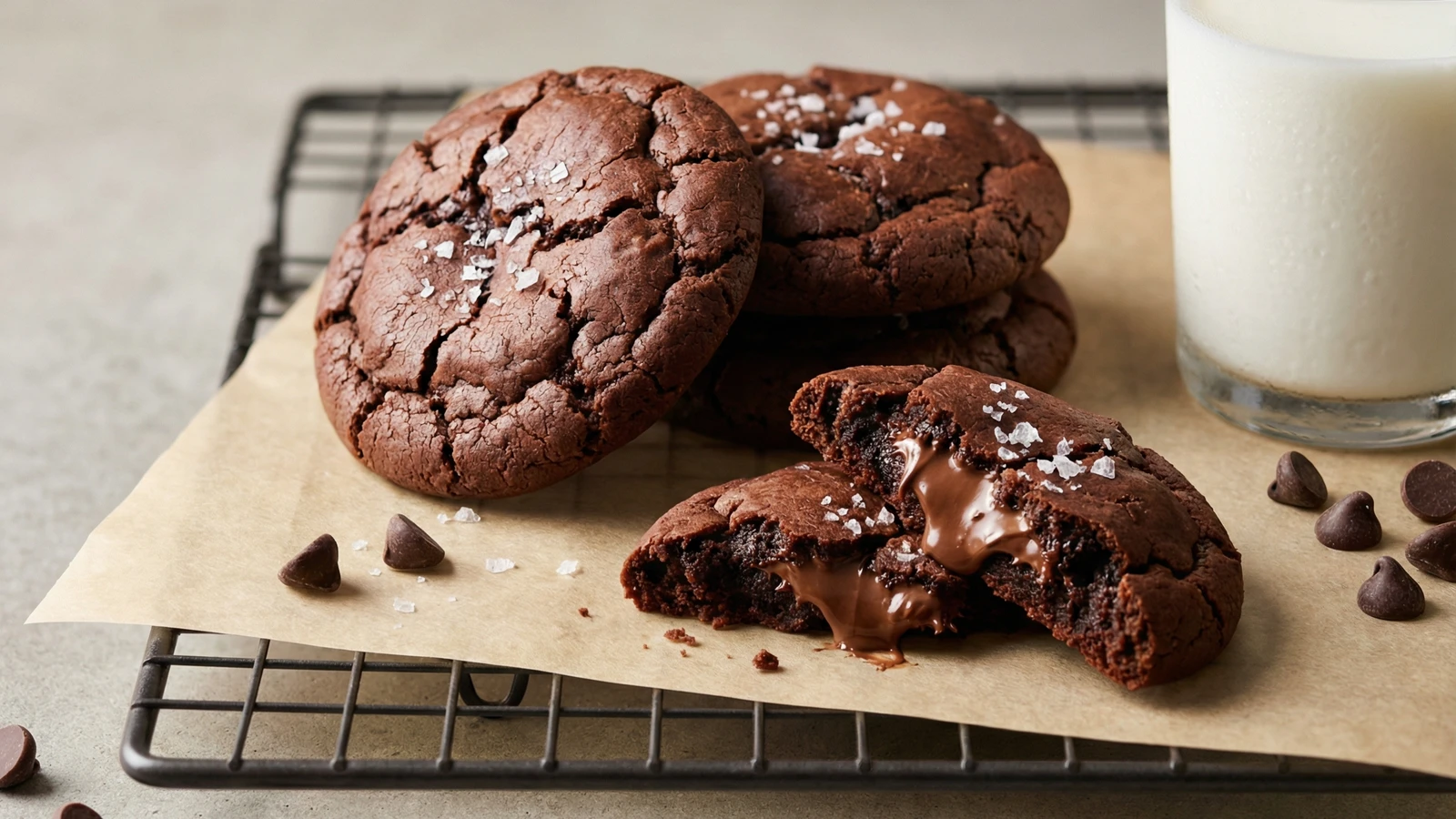
Nutella-Stuffed Chocolate Cookies
Created by
Intensely fudgy chocolate cookies concealing molten hazelnut centers that break open with each bite. The frozen Nutella trick creates the kind of lava-cookie magic that made these an internet sensation.
The stuffed cookie belongs to a distinctly American tradition of taking something already perfect and asking what happens if we hide treasure inside. This particular specimen emerged from the same creative impulse that gave us molten chocolate cake and lava brownies. Home bakers discovered that freezing Nutella into small discs creates a thermal buffer. The exterior bakes while the center stays protected, emerging from the oven in that brief, glorious window between raw and set.
I've watched this cookie travel from food blogs to bakery cases to viral fame. What makes it work isn't just the novelty of a molten center. The chocolate dough itself must carry its weight. Too cakey and it disappears. Too crisp and the contrast fails. You want something dense and fudgy, almost brownie-like, with enough structure to hold the filling without leaking.
The technique here isn't complicated, but timing matters. You'll freeze the Nutella portions solid. You'll chill the dough until it's workable. And you'll pull these cookies from the oven when they look underdone, trusting that carryover heat will finish the job. The first time you break one open and watch that hazelnut chocolate flow, you'll understand why these became famous.
The technique, the tradition, and the story behind every dish.
Discover Culinary AdvisorIngredients
Nutella
Quantity
3/4 cup
frozen into 12 portions
unsalted butter
Quantity
10 tablespoons
at room temperature
granulated sugar
Quantity
3/4 cup
dark brown sugar
Quantity
1/2 cup
packed
large egg
Quantity
1
egg yolk
Quantity
1
pure vanilla extract
Quantity
2 teaspoons
all-purpose flour
Quantity
1 1/4 cups
Dutch-process cocoa powder
Quantity
1/2 cup
baking soda
Quantity
1 teaspoon
fine sea salt
Quantity
1/2 teaspoon
semisweet chocolate chips
Quantity
1 cup
flaky sea salt (optional)
Quantity
for finishing
| Ingredient | Quantity |
|---|---|
| Nutellafrozen into 12 portions | 3/4 cup |
| unsalted butterat room temperature | 10 tablespoons |
| granulated sugar | 3/4 cup |
| dark brown sugarpacked | 1/2 cup |
| large egg | 1 |
| egg yolk | 1 |
| pure vanilla extract | 2 teaspoons |
| all-purpose flour | 1 1/4 cups |
| Dutch-process cocoa powder | 1/2 cup |
| baking soda | 1 teaspoon |
| fine sea salt | 1/2 teaspoon |
| semisweet chocolate chips | 1 cup |
| flaky sea salt (optional) | for finishing |
Equipment Needed
- •Stand mixer or hand mixer
- •Cookie scoop (#40 or #16)
- •Rimmed baking sheets
- •Parchment paper or silicone baking mats
- •Wire cooling rack
Instructions
- 1
Freeze the Nutella
Line a small baking sheet or plate with parchment paper. Using a tablespoon measure, scoop 12 rounded portions of Nutella onto the parchment, spacing them apart. Freeze until completely solid, at least 1 hour or up to 1 week. This step is non-negotiable. Soft Nutella will melt into the dough during baking instead of staying molten in the center.
A #40 cookie scoop (about 1.5 tablespoons) produces perfectly sized Nutella portions. Slightly flatten each mound for easier wrapping later. - 2
Cream the butter and sugars
In a large bowl or stand mixer fitted with the paddle attachment, beat the butter, granulated sugar, and brown sugar on medium speed until light and fluffy, about 3 minutes. The mixture should look pale and hold soft peaks when you lift the beater. This aeration creates the fudgy yet tender texture that distinguishes these from dense, hard chocolate cookies.
- 3
Add eggs and vanilla
Add the whole egg, egg yolk, and vanilla extract. Beat on medium until fully incorporated, about 1 minute. Scrape down the sides of the bowl. The batter may look slightly curdled at first but will smooth out as you continue mixing. That extra yolk adds richness and helps keep the interior moist.
- 4
Mix the dry ingredients
In a separate bowl, whisk together the flour, cocoa powder, baking soda, and fine sea salt until no streaks of cocoa remain. Dutch-process cocoa is essential here. Its neutral pH produces a darker color and more intense chocolate flavor than natural cocoa, which would also react differently with the baking soda.
- 5
Combine wet and dry
Add the dry ingredients to the butter mixture all at once. Mix on low speed just until the flour disappears and no dry pockets remain, about 30 seconds. Fold in the chocolate chips by hand using a rubber spatula. The dough will be thick and slightly sticky. This is correct.
- 6
Chill the dough
Cover the bowl tightly with plastic wrap and refrigerate for at least 30 minutes or up to 48 hours. Chilled dough is easier to work with and produces cookies that spread less, maintaining that thick, substantial profile. If chilling longer than 2 hours, let the dough sit at room temperature for 10 minutes before shaping.
Extended chilling (24-48 hours) develops deeper, more complex flavor as the sugars hydrate and the starches absorb moisture. Plan ahead if you can. - 7
Assemble the cookies
Divide the dough into 12 equal portions (about 3 tablespoons each). Working quickly, flatten one portion into a disc in your palm. Place a frozen Nutella portion in the center. Wrap the dough around the Nutella, pinching the seams closed and rolling between your palms to form a smooth ball. The Nutella must be completely enclosed with no thin spots. Place on a parchment-lined baking sheet, leaving 3 inches between cookies. Return to the freezer for 15 minutes while the oven heats.
Work with cold hands. If your palms run warm, rinse them in cold water between cookies to prevent the dough from becoming sticky and unmanageable. - 8
Preheat and prepare
Position a rack in the center of your oven and preheat to 350°F. Line two baking sheets with parchment paper or silicone mats. These cookies spread moderately, so you'll bake 6 per sheet maximum. Do not crowd them or they'll merge into one another.
- 9
Bake the cookies
Bake one sheet at a time for 12 to 14 minutes. The cookies are done when the edges look set and slightly cracked but the centers still appear soft and underdone. They will puff during baking, then deflate and crack dramatically as they cool. This is exactly what you want. The cracks signal a fudgy interior. Remove from oven when you think they need 2 more minutes. They don't.
- 10
Finish and cool
Immediately sprinkle each cookie with a few flakes of sea salt while still hot. Let cool on the baking sheet for 5 minutes (the centers continue cooking during this rest), then transfer to a wire rack. The Nutella center remains molten for about 10 minutes after baking. Serve warm if that gooey center is your goal, or allow to cool completely for a truffle-like filling that's still distinct from the surrounding cookie.
Chef Tips
- •Store baked cookies in an airtight container at room temperature for up to 4 days. To restore the molten center, microwave individual cookies for 10-15 seconds or warm in a 300°F oven for 5 minutes.
- •The assembled, unbaked cookie balls freeze beautifully for up to 2 months. Bake directly from frozen, adding 2-3 minutes to the baking time. Keep a stash for emergency dessert situations.
- •For an even more intense chocolate experience, substitute bittersweet chocolate chunks for the chips. The irregular shapes create pockets of melted chocolate throughout.
- •This dough also works without the Nutella filling for an exceptional plain chocolate cookie. Reduce baking time by 2 minutes.
- •If your Nutella portions soften while you're assembling, return everything to the freezer for 10 minutes. Working with soft filling leads to blowouts during baking.
Advance Preparation
- •Nutella portions can be frozen up to 1 week ahead. Keep them frozen until ready to use.
- •Cookie dough can be refrigerated for up to 48 hours before shaping. The flavor improves with time.
- •Assembled unbaked cookie balls can be frozen for up to 2 months. Arrange on a baking sheet to freeze solid, then transfer to a freezer bag.
- •Baked cookies keep at room temperature for 4 days or frozen for 2 months. Thaw at room temperature or rewarm gently.
Frequently Asked Questions
Nutrition Information
1 serving (about 70g)
Where cooking meets culture.
Culinary mentorship, cultural storytelling, and the editorial depth that makes cooking meaningful.
Explore Culinary Advisor