Culinary Advisor
A cooking platform built around craft, culture, and the stories behind what we eat.
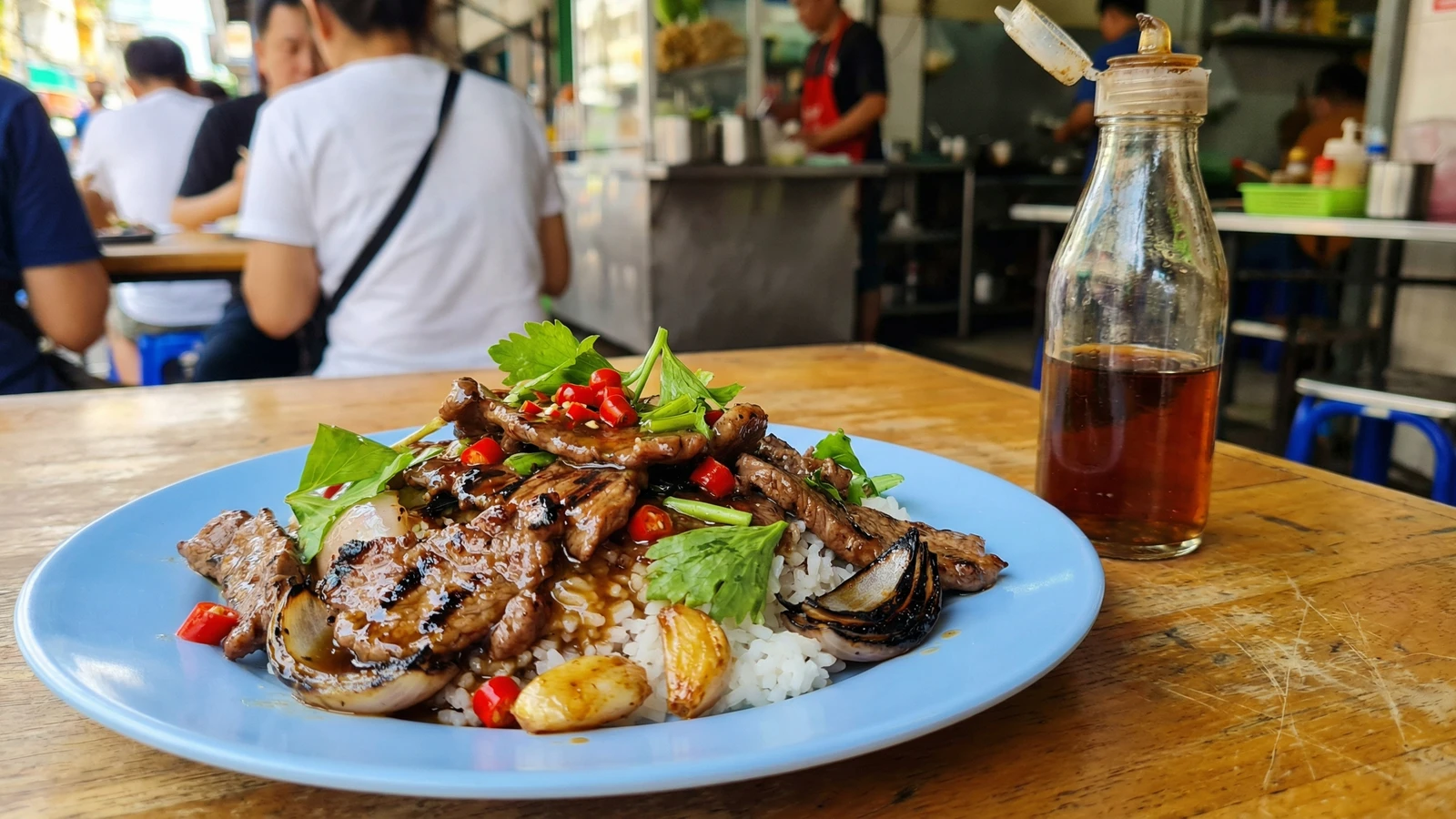
Beef in Oyster Sauce (Nua Pad Nam Man Hoy)
Created by
Garlic hits oil first. Beef sears before sauce enters. Fish sauce underneath the oyster sauce for depth. Three rules. Follow them and the wok does the rest.
This is Thai-Chinese wok cooking at its purest. No paste. No mortar. Just a blazing wok, good beef, and the discipline to follow three rules that Ajarn drilled into me until they became reflex.
Rule one: garlic hits the oil first. Always. In every stir-fry. The garlic blooms in hot oil and creates an aromatic base in two seconds flat. Rule two: protein sears before sauce enters. You want wok hei on that beef, the smoky char that only comes from meat pressed against screaming-hot steel. Sauce in too early and you're braising, not stir-frying. Rule three: fish sauce is the salt. Not soy sauce. Oyster sauce gives this dish its body and gloss, that thick, glossy coat that clings to every strip of beef. But underneath, fish sauce (nam pla) provides the salinity and the umami depth that makes it Thai.
Ajarn always said that the Chinese gave us the wok and oyster sauce. Thai cooks took both and ran them through the four pillars. That's why a Thai beef stir-fry doesn't taste like a Cantonese one. The fish sauce changes everything. It adds a fermented protein depth that soy sauce can't replicate. The palm sugar rounds the oyster sauce's sweetness into something less sharp, more caramelized. The chilies are sliced, not decorative. You bite into one and you know this isn't a Chinese restaurant in Yaowarat anymore. It's Thai.
This dish lives and dies by your wok temperature. Every second counts. From the moment oil hits metal to the moment beef hits the plate, you're looking at three minutes of actual cooking. The prep takes longer than the cook. That's how all good wok food works. You do the thinking before the fire. Once the fire starts, you move on instinct.
Nua pad nam man hoy belongs to the Thai-Chinese stir-fry tradition (ahaan pad) that emerged from the integration of Teochew and Cantonese cooking techniques into Central Thai kitchens during the 19th and 20th centuries. Oyster sauce itself was a Cantonese invention from the 1880s, but Thai cooks adapted it by pairing it with nam pla (fish sauce) instead of using soy sauce as the primary salt, creating a distinctly Thai flavor profile. The dish is a staple of the made-to-order stalls (ร้านตามสั่ง) found on virtually every street corner in Bangkok.
The technique, the tradition, and the story behind every dish.
Discover Culinary AdvisorIngredients
beef sirloin or flank steak
Quantity
300g
sliced against the grain into 1/4-inch strips
oyster sauce (nam man hoy)
Quantity
3 tablespoons total
1 tablespoon for marinade, 2 tablespoons for wok
fish sauce (nam pla)
Quantity
1 tablespoon
dark soy sauce (si ew dam)
Quantity
1 teaspoon
palm sugar (nam tan pip)
Quantity
1 teaspoon
garlic
Quantity
6 cloves
roughly smashed
bird's eye chilies (prik khi nu)
Quantity
3
sliced on a bias
onion
Quantity
1 small
cut into thick wedges
Thai celery (kheun chai)
Quantity
1 stalk
cut into 2-inch pieces
cornstarch
Quantity
1 tablespoon
vegetable oil
Quantity
2 tablespoons
white pepper
Quantity
pinch
steamed jasmine rice
Quantity
for serving
| Ingredient | Quantity |
|---|---|
| beef sirloin or flank steaksliced against the grain into 1/4-inch strips | 300g |
| oyster sauce (nam man hoy)1 tablespoon for marinade, 2 tablespoons for wok | 3 tablespoons total |
| fish sauce (nam pla) | 1 tablespoon |
| dark soy sauce (si ew dam) | 1 teaspoon |
| palm sugar (nam tan pip) | 1 teaspoon |
| garlicroughly smashed | 6 cloves |
| bird's eye chilies (prik khi nu)sliced on a bias | 3 |
| onioncut into thick wedges | 1 small |
| Thai celery (kheun chai)cut into 2-inch pieces | 1 stalk |
| cornstarch | 1 tablespoon |
| vegetable oil | 2 tablespoons |
| white pepper | pinch |
| steamed jasmine rice | for serving |
Equipment Needed
- •Wok (carbon steel, well-seasoned)
- •Wok spatula
Instructions
- 1
Marinate the beef
Toss the beef strips with 1 tablespoon oyster sauce, the cornstarch, and a pinch of white pepper. Use your hands. Work it into the meat. The cornstarch does two things: it creates a thin barrier that lets the outside sear while the inside stays tender, and it gives the sauce something to cling to. Let it sit for 10 minutes while you prep everything else. Not longer than 20 or the salt in the oyster sauce starts drawing out moisture.
Slice the beef against the grain. Run your finger across the surface of the steak. Feel the lines? Cut perpendicular to those. With the grain, you get chewy strips. Against the grain, every bite is tender. This matters more than the cut of beef you buy. - 2
Heat the wok
Get your wok screaming hot over high heat. Not warm. Not medium. Screaming. The oil should shimmer and smoke within two seconds of hitting the surface. If it takes longer, walk away and come back when the wok is ready. Everything in this dish happens fast. You need the heat to be there before you start, because once you start, you don't stop.
- 3
Sear the beef
Add the oil, swirl it once, then lay the beef strips into the wok in a single layer. Don't touch them. Let them sit on the hot metal for 30 seconds until the edges char and the bottom side gets a hard sear. Then flip and sear the other side for another 20 seconds. The beef should be brown on the outside, pink on the inside. Pull it out immediately and set it on a plate. The beef will finish cooking when it goes back in. If you leave it now, you'll have shoe leather in two minutes.
If your wok isn't big enough to lay all the beef in a single layer, do it in two batches. Crowding drops the temperature and you get gray, steamed beef instead of seared beef. Wok hei only happens with violent heat and space. - 4
Bloom the garlic
The wok should still be screaming. Add a splash more oil if it's dry. Slam the smashed garlic into the wok. Two seconds of contact, the edges turn golden, the aroma fills the kitchen. That's your window. If the garlic burns, it goes bitter and the whole dish tastes acrid. Golden, not brown. Golden.
- 5
Build the sauce in the wok
Add the onion wedges and sliced chilies. Toss for 15 seconds until the onion edges char slightly. Now the remaining 2 tablespoons oyster sauce, the fish sauce, dark soy sauce, and palm sugar go in all at once. The sauces will hit the hot wok and sizzle violently. Good. That's concentration happening. Toss everything once to coat. The sauce should reduce into a glossy, dark glaze within 10 seconds. If it's pooling like a puddle, your wok isn't hot enough.
- 6
Return beef and finish
Return the beef and any juices from the plate back to the wok. Add the Thai celery. Toss two, three times. The celery goes in raw and stays nearly raw. It should still snap when you bite it. Total time back in the wok: 15 seconds. The beef is already cooked. You're just reuniting it with the sauce. Pull it off the heat. Plate it over jasmine rice. The sauce should glaze the meat, not drown it. If there's a pool of liquid on the plate, you added too much sauce or the wok was too cold.
Chef Tips
- •Oyster sauce quality varies wildly. The cheap ones are mostly corn syrup and caramel coloring. Look for a brand where oyster extract is the first or second ingredient, not the fifth. Megachef and Maekrua are solid Thai brands. The sauce should taste briny and rich, not just sweet. This is the backbone of the dish. Don't cheap out here.
- •Beef cut matters less than how you slice it. Sirloin, flank, even top round will work if you slice thin and against the grain. The cornstarch marinade does the heavy lifting on tenderness. What ruins this dish isn't the cut. It's overcooking. Sear hard, pull early, return briefly. That's the sequence.
- •Thai celery (kheun chai) is thinner-stemmed and more pungent than Western celery. If you can't find it, use regular celery leaves (not the stalks) or skip it entirely. Don't substitute broccoli, bell peppers, or whatever your fridge has lying around. This dish is about beef and sauce. The celery and onion are there for texture and bite, not to make it into a vegetable stir-fry.
- •If you see the dish called 'nua pad nam man hoy' and 'neua pad sauce hoy' interchangeably at Thai stalls, it's the same thing. Some vendors add a splash of Shaoxing wine from the Chinese tradition. It's not wrong, but it's not essential. The fish sauce and oyster sauce combination is what defines the Thai version.
Advance Preparation
- •Slice and marinate the beef up to 2 hours ahead. Keep it covered and refrigerated. Bring it to room temperature 10 minutes before cooking so the cold meat doesn't drop your wok temperature.
- •Pre-measure all sauces into a single small bowl (oyster sauce, fish sauce, dark soy, palm sugar) so you can dump them in one motion. Once the garlic hits the oil, you don't have time to measure.
- •This dish does not reheat well. The beef tightens and the sauce congeals. Cook it, plate it, eat it. That's the order.
Frequently Asked Questions
Nutrition Information
1 serving (about 370g)
Where cooking meets culture.
Culinary mentorship, cultural storytelling, and the editorial depth that makes cooking meaningful.
Explore Culinary Advisor