Culinary Advisor
A cooking platform built around craft, culture, and the stories behind what we eat.
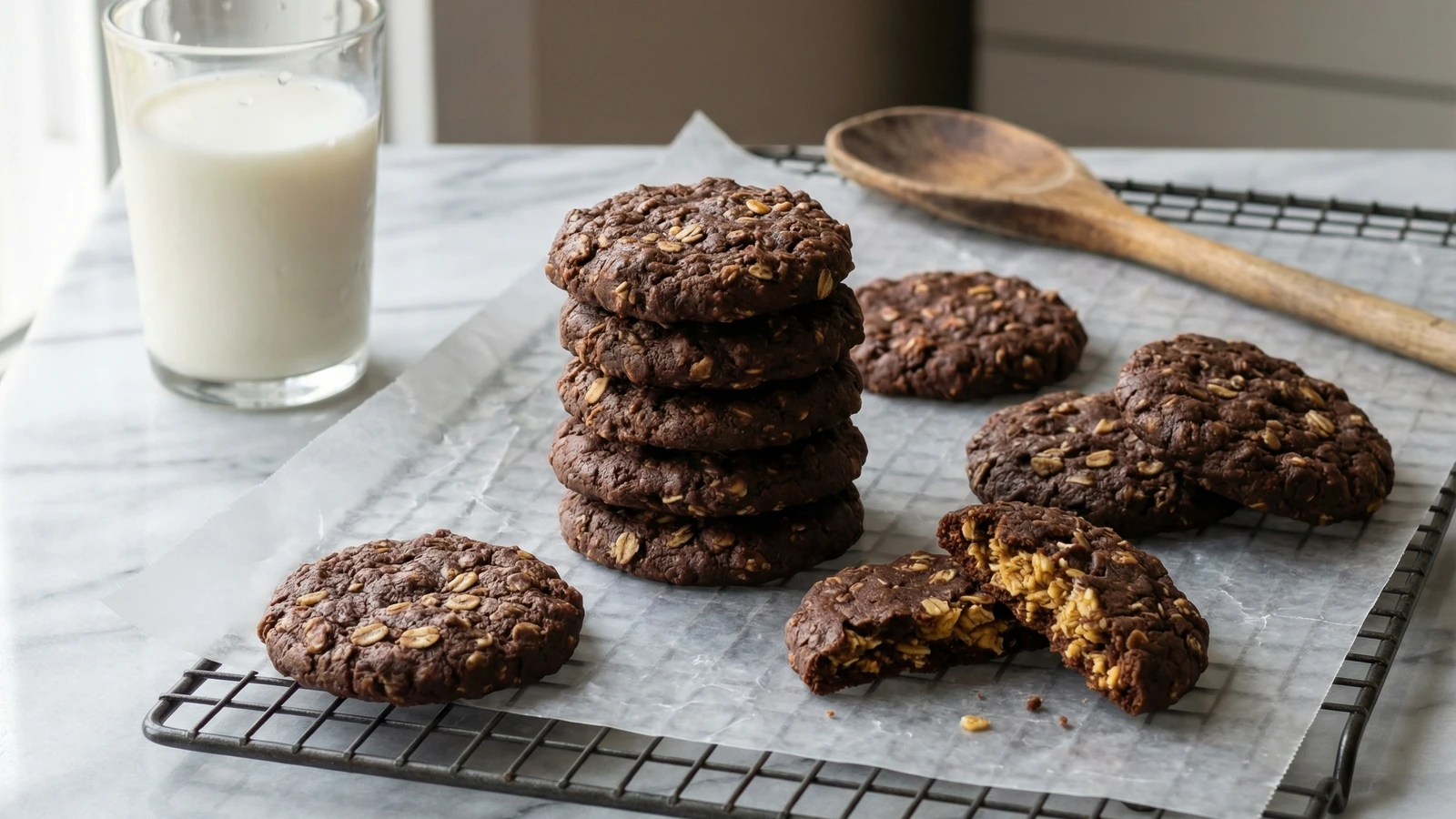
No-Bake Chocolate Peanut Butter Cookies
Created by
Fudgy, chewy stovetop cookies loaded with oats and peanut butter, ready in fifteen minutes without ever touching the oven. The summer cookie your grandmother made when company showed up unannounced.
These humble cookies go by a dozen names across America. Preacher cookies in the South, because you could whip them up in the time between spotting the minister's car and his knock at the door. No-bakes in the Midwest. Boiled cookies in New England. Whatever you call them, they solve the eternal summer problem: wanting homemade cookies without turning your kitchen into a furnace.
The technique comes from candy-making, not baking. You're creating a sugar syrup with cocoa, then binding it with peanut butter and oats. The boiling time matters enormously. One minute at a true rolling boil gives you cookies that set firm but stay fudgy. Thirty seconds short and they'll never harden. Thirty seconds long and they turn dry and crumbly. Keep a timer handy.
I've watched generations of home cooks make these cookies, and the failures always trace back to the same mistake: impatience with the boil. Let it bubble properly. Don't stir during that crucial minute. Trust the process. The reward is a cookie that tastes like a peanut butter cup married a bowl of oatmeal, and they had very attractive children.
The technique, the tradition, and the story behind every dish.
Discover Culinary AdvisorIngredients
granulated sugar
Quantity
2 cups
whole milk
Quantity
1/2 cup
unsalted butter
Quantity
8 tablespoons (1 stick)
unsweetened cocoa powder
Quantity
1/4 cup
creamy peanut butter
Quantity
1/2 cup
pure vanilla extract
Quantity
1 teaspoon
fine sea salt
Quantity
1/4 teaspoon
quick-cooking oats
Quantity
3 cups
| Ingredient | Quantity |
|---|---|
| granulated sugar | 2 cups |
| whole milk | 1/2 cup |
| unsalted butter | 8 tablespoons (1 stick) |
| unsweetened cocoa powder | 1/4 cup |
| creamy peanut butter | 1/2 cup |
| pure vanilla extract | 1 teaspoon |
| fine sea salt | 1/4 teaspoon |
| quick-cooking oats | 3 cups |
Equipment Needed
- •Medium heavy-bottomed saucepan (3-quart)
- •Wooden spoon or heatproof spatula
- •Two rimmed baking sheets
- •Wax paper or parchment paper
- •Kitchen timer
Instructions
- 1
Prepare your workspace
Line two baking sheets with wax paper or parchment. Measure the peanut butter, vanilla, salt, and oats into a large bowl. Have everything within arm's reach. Once the sugar mixture is ready, you'll have about two minutes to work before it begins to set.
Measure all your add-ins before you start cooking. This recipe moves fast once the boiling begins. - 2
Combine wet ingredients
In a medium heavy-bottomed saucepan, combine the sugar, milk, butter, and cocoa powder. Set over medium heat and stir frequently with a wooden spoon or heatproof spatula as the butter melts. The mixture will look grainy at first, then become glossy as everything incorporates.
- 3
Bring to a rolling boil
Increase heat to medium-high and bring the mixture to a full rolling boil. You'll know you're there when large bubbles break the surface across the entire pan, not just at the edges. This isn't a gentle simmer. The whole pot should be churning.
A rolling boil means bubbles that don't stop when you stir. If stirring calms the surface, you're not there yet. - 4
Boil for one minute
Once you've reached that rolling boil, set a timer for exactly one minute. Do not stir during this time. Let the mixture bubble vigorously. This is when the sugar reaches the soft-ball stage that allows the cookies to set properly. When the timer sounds, remove the pan from heat immediately.
- 5
Add peanut butter and flavorings
Working quickly, add the peanut butter, vanilla, and salt to the hot mixture. Stir vigorously until the peanut butter melts completely and everything combines into a smooth, glossy chocolate mass. The mixture will smell intensely of chocolate and roasted peanuts. That's exactly right.
- 6
Fold in the oats
Pour in the oats all at once. Fold them in with broad strokes until every flake is coated with the chocolate peanut butter mixture. Work steadily but don't panic. You have about ninety seconds before the mixture starts to stiffen.
- 7
Drop the cookies
Using two spoons or a small cookie scoop, drop rounded tablespoons of the mixture onto your prepared baking sheets. Space them about an inch apart. They won't spread, but they need air circulation to set properly. Work quickly. The last few cookies may require some persuasion as the mixture cools and thickens.
If the mixture becomes too stiff to drop, add a teaspoon of milk and stir vigorously. This buys you another minute of working time. - 8
Let cookies set
Leave the cookies at room temperature until completely firm, about 30 to 45 minutes depending on your kitchen's humidity. They're ready when they release cleanly from the paper and hold their shape when lifted. The surface should be matte, not shiny.
Chef Tips
- •Quick-cooking oats work better than old-fashioned here. The smaller flakes absorb the chocolate mixture more evenly and create a smoother texture. Save your steel-cut oats for porridge.
- •Natural peanut butter with oil separation doesn't work well in this recipe. The commercial stuff with stabilizers actually performs better because it incorporates smoothly without adding extra liquid.
- •If your cookies refuse to set after an hour, the boil was too short. They're still delicious. Call them pudding and serve with a spoon.
- •Humidity affects setting time dramatically. On muggy summer days, pop the baking sheets in the refrigerator for 20 minutes to help them firm up.
- •These cookies freeze beautifully. Stack them between layers of wax paper in an airtight container. They thaw in about ten minutes at room temperature.
Advance Preparation
- •Cookies can be made up to 5 days ahead and stored in an airtight container at room temperature.
- •For longer storage, freeze in a single layer until solid, then stack between wax paper in a freezer container. Keeps for 2 months.
- •In humid weather, store in the refrigerator to maintain firm texture.
Frequently Asked Questions
Nutrition Information
1 cookie (about 47g)
Where cooking meets culture.
Culinary mentorship, cultural storytelling, and the editorial depth that makes cooking meaningful.
Explore Culinary Advisor