Culinary Advisor
A cooking platform built around craft, culture, and the stories behind what we eat.
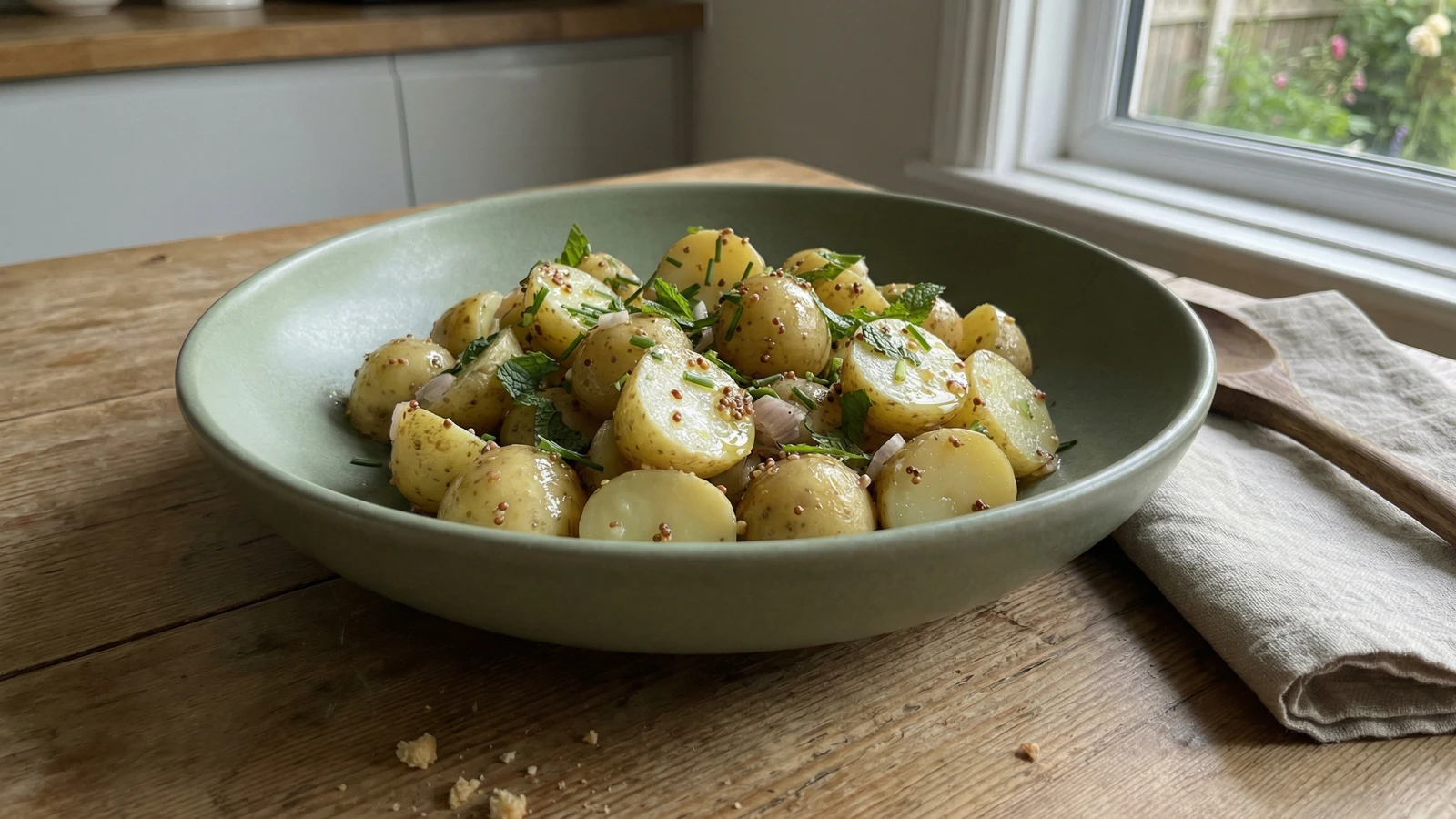
New Potato Salad with Mint and Wholegrain Mustard
Created by Chef Thomas
Small waxy potatoes dressed while still warm in wholegrain mustard and good olive oil, scattered with torn mint and served at the temperature of a June afternoon. The salad that belongs on every summer table.
The new potatoes arrive at the market in early June, still wearing their papery skins, small enough to hold two in your palm. They smell of earth and rain. This is when the year's best potato salad begins, and it would be a waste to do anything complicated with them.
The whole trick is dressing them while they're still warm from the pan. A hot potato is porous, open, ready to absorb whatever you put on it. A cold potato is closed for business. So you make the dressing first, get it sitting in the bowl, and tip the potatoes in straight from the colander. The mustard and vinegar soak in. The oil coats each one. By the time the mint goes on and the bowl reaches the table, every potato tastes like the dressing was cooked into it rather than poured over the top.
I make this salad all through June and July, when we eat outside more evenings than not. It sits on the table next to whatever is coming off the barbecue, or beside a piece of cold ham, or honestly just on its own with some bread and butter. It doesn't need company, though it's generous with it. Right food, right evening.
I wrote it down in the notebook years ago: new potatoes, mustard, mint, Saturday. It hasn't changed since, because it doesn't need to.
The technique, the tradition, and the story behind every dish.
Discover Culinary AdvisorIngredients
small waxy new potatoes
Quantity
750g
scrubbed but unpeeled
wholegrain mustard
Quantity
2 tablespoons
white wine vinegar
Quantity
1 tablespoon
good olive oil
Quantity
4 tablespoons
shallot
Quantity
1 small
very finely chopped
fresh mint leaves
Quantity
generous handful
torn
fine sea salt
Quantity
to taste
black pepper
Quantity
to taste
chives (optional)
Quantity
a few
snipped
| Ingredient | Quantity |
|---|---|
| small waxy new potatoesscrubbed but unpeeled | 750g |
| wholegrain mustard | 2 tablespoons |
| white wine vinegar | 1 tablespoon |
| good olive oil | 4 tablespoons |
| shallotvery finely chopped | 1 small |
| fresh mint leavestorn | generous handful |
| fine sea salt | to taste |
| black pepper | to taste |
| chives (optional)snipped | a few |
Equipment Needed
- •Large saucepan
- •Colander
- •Large mixing or serving bowl
Instructions
- 1
Boil the potatoes
Put the potatoes in a large pan of well-salted cold water. Bring to a steady boil and cook until a knife slides through the centre without resistance. Depending on size, this takes twelve to fifteen minutes. Don't overcook them. You want them tender, not collapsing. A potato that falls apart in a salad is a sad thing.
Start in cold water, always. Potatoes dropped into boiling water cook unevenly: soft outside, chalky inside. Cold water lets the heat travel through gently. - 2
Make the dressing
While the potatoes cook, whisk the mustard and vinegar together in a bowl large enough to hold the finished salad. Add the olive oil in a steady stream, whisking until it comes together into something thick and slightly emulsified. Stir in the chopped shallot. The raw shallot will soften in the vinegar and lose its bite. Taste it. If it needs more acidity, add a splash more vinegar. If it feels sharp, a little more oil.
- 3
Dress while warm
Drain the potatoes and let them steam dry in the colander for a minute or two. If they're small, leave them whole. If they're larger, cut them in half while still warm, handling them with a cloth if you need to. Tip them into the bowl of dressing while they're still hot. This is the important part. Warm potatoes absorb a dressing in a way that cold potatoes never will. Turn them gently. Don't mash them about. Let them sit for ten minutes.
Resist the urge to refrigerate immediately. The salad needs that resting time at room temperature for the flavours to settle into the potatoes. Cold stops the absorption. - 4
Add the mint and serve
Tear the mint leaves and scatter them through the salad just before serving. Don't chop them: tearing releases more fragrance and looks right. Add the chives if you have them. Season again with salt and pepper. Taste it. The potatoes will have absorbed some of the seasoning, so it will need more than you think. Serve at room temperature, not fridge-cold. This is a salad that wants to be the temperature of a warm afternoon.
Chef Tips
- •Seek out a proper waxy variety. Jersey Royals if you can get them, or Charlottes, or anything the stallholder calls 'salad potatoes.' Floury potatoes will crumble into the dressing and you'll have a bowl of mush rather than a salad. The variety matters more here than in almost any other potato dish.
- •Wholegrain mustard, not smooth. You want those little seeds in every bite, popping between your teeth, adding texture as well as heat. A good English or French wholegrain, nothing fancy, just one where the mustard seeds are visible and the list of ingredients is short.
- •Don't be precious about quantities. A recipe is a conversation, not a contract. More mustard if you like it punchy. More mint if the bunch is generous. A squeeze of lemon instead of vinegar if that's what you have. Your kitchen, your rules.
- •This keeps well for a day in the fridge but take it out thirty minutes before serving. Cold dulls everything: the mustard, the mint, the olive oil. Room temperature is where the flavours open up.
Advance Preparation
- •The potatoes can be boiled and dressed up to a day ahead. Keep them covered at room temperature for a few hours, or refrigerate if longer. Add the mint just before serving so it stays bright and fragrant.
- •If making for a picnic, dress the potatoes and pack them in a container. Carry the torn mint separately and scatter it on when you arrive.
Frequently Asked Questions
Nutrition Information
1 serving (about 220g)
Where cooking meets culture.
Culinary mentorship, cultural storytelling, and the editorial depth that makes cooking meaningful.
Explore Culinary Advisor