Culinary Advisor
A cooking platform built around craft, culture, and the stories behind what we eat.
New Orleans Turtle Soup
Created by Chef Remy
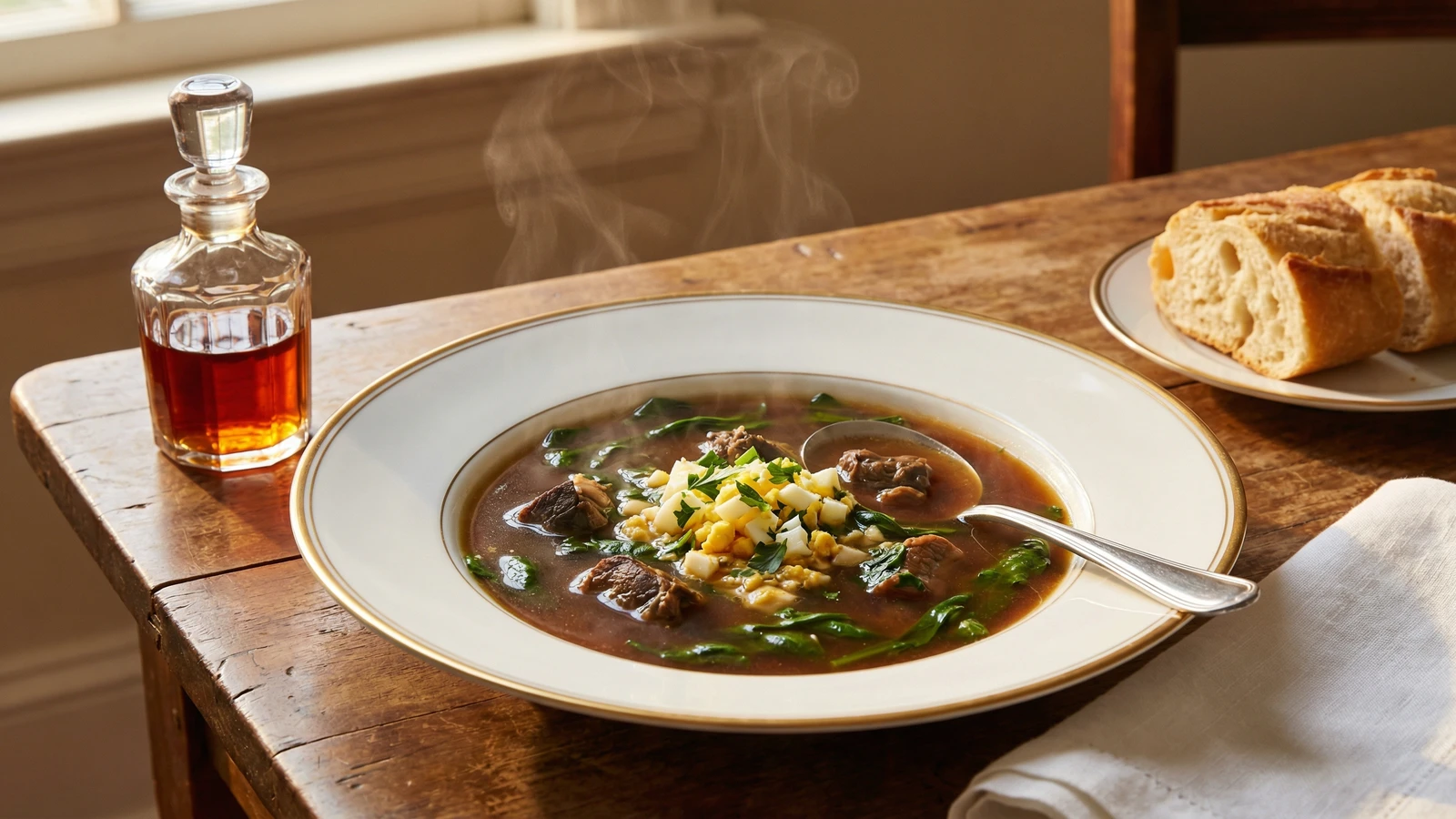
A legendary Creole showpiece where tender turtle meat surrenders to a dark roux broth laced with dry sherry, finished with ribbons of fresh spinach and chopped hard-boiled egg, the kind of dish that built New Orleans restaurant culture.
This soup tells the story of New Orleans fine dining. Commander's Palace, Antoine's, Galatoire's: they all built reputations on their turtle soup. For over two hundred years, this dish has graced the tables of celebration dinners, business lunches where deals got sealed with a handshake, and anniversary meals where couples returned to the same corner booth year after year. At Lagniappe, we serve it on special occasions, and I watch diners close their eyes at the first spoonful. That's when you know you've done something right.
The secret lives in the roux and the sherry. You need a dark roux, the color of milk chocolate, built slow and patient. That's where the deep, nutty flavor comes from. The sherry goes in twice: once during cooking to marry with the broth, and again at the table where each diner can add their own splash. My grandmother Evangeline taught me that good food respects tradition while welcoming individual taste. The sherry at the table honors that philosophy.
Now, turtle meat can be hard to find outside Louisiana. I've listed alligator and veal as substitutes because they're honest alternatives that respect the dish's character. Alligator gives you that same tender, slightly sweet quality. Veal offers the traditional body that old Creole cooks relied on when turtle was scarce. Use what you can find, but if you can get real snapping turtle meat, that's the authentic path. Ask your butcher or search specialty suppliers online. Some things are worth hunting down.
The technique, the tradition, and the story behind every dish.
Discover Culinary AdvisorIngredients
turtle meat
Quantity
2 pounds
cut into 1/2-inch cubes (or substitute alligator or veal stew meat)
Creole seasoning
Quantity
1 tablespoon
divided
unsalted butter
Quantity
1/2 cup
all-purpose flour
Quantity
1/2 cup
yellow onions
Quantity
2 medium
diced
celery stalks
Quantity
4
diced
green bell pepper
Quantity
1 large
diced
garlic
Quantity
6 cloves
minced
diced tomatoes
Quantity
1 can (14.5 ounces)
with juice
tomato paste
Quantity
2 tablespoons
rich beef stock
Quantity
8 cups
dry sherry
Quantity
1 cup, plus more for serving
Worcestershire sauce
Quantity
2 tablespoons
fresh thyme
Quantity
4 sprigs
bay leaves
Quantity
3
black pepper
Quantity
1 teaspoon
freshly ground
cayenne pepper
Quantity
1/2 teaspoon, or to taste
kosher salt
Quantity
1 teaspoon, plus more to taste
fresh lemon juice
Quantity
1 tablespoon
fresh spinach
Quantity
4 cups
roughly chopped
hard-boiled eggs
Quantity
4
finely chopped
fresh parsley
Quantity
1/4 cup
chopped
| Ingredient | Quantity |
|---|---|
| turtle meatcut into 1/2-inch cubes (or substitute alligator or veal stew meat) | 2 pounds |
| Creole seasoningdivided | 1 tablespoon |
| unsalted butter | 1/2 cup |
| all-purpose flour | 1/2 cup |
| yellow onionsdiced | 2 medium |
| celery stalksdiced | 4 |
| green bell pepperdiced | 1 large |
| garlicminced | 6 cloves |
| diced tomatoeswith juice | 1 can (14.5 ounces) |
| tomato paste | 2 tablespoons |
| rich beef stock | 8 cups |
| dry sherry | 1 cup, plus more for serving |
| Worcestershire sauce | 2 tablespoons |
| fresh thyme | 4 sprigs |
| bay leaves | 3 |
| black pepperfreshly ground | 1 teaspoon |
| cayenne pepper | 1/2 teaspoon, or to taste |
| kosher salt | 1 teaspoon, plus more to taste |
| fresh lemon juice | 1 tablespoon |
| fresh spinachroughly chopped | 4 cups |
| hard-boiled eggsfinely chopped | 4 |
| fresh parsleychopped | 1/4 cup |
Equipment Needed
- •Large Dutch oven or heavy-bottomed pot (6-quart minimum)
- •Wooden spoon or flat-edged spatula for roux
- •Fine-mesh strainer (optional, for smoother soup)
- •Ladle for serving
Instructions
- 1
Season the meat
Pat the turtle meat dry with paper towels and season generously with half the Creole seasoning. Toss to coat evenly and set aside at room temperature while you build the roux. This head start on seasoning means flavor penetrates the meat before it ever hits the pot. That's the bayou way: build flavor at every step.
If using frozen turtle meat, thaw it completely in the refrigerator overnight. Excess moisture will spatter dangerously when it hits hot fat. - 2
Build the dark roux
Melt the butter in a large Dutch oven or heavy-bottomed pot over medium heat. When it foams and the foam subsides, whisk in the flour all at once. Now you stir. Constantly. Use a wooden spoon or flat-edged spatula and scrape the entire bottom of the pot with every stroke. The roux will bubble and pop. It will go from white to blond to peanut butter to the color of milk chocolate. This takes twenty to twenty-five minutes. Your arm will ache. That ache is the price of admission to real Creole cooking.
If you see black specks, you've burned it. Burned roux is bitter and cannot be saved. Start over. I've thrown out more rouxs than I can count, and every time it taught me patience. - 3
Cook the holy trinity
The moment your roux reaches that chocolate color, add the onions, celery, and bell pepper all at once. The roux will seize and the vegetables will sizzle angrily. This is correct. Stir constantly for eight to ten minutes until the vegetables soften and the raw edge disappears. The onions should turn translucent, the celery tender. Your kitchen will smell like Louisiana.
- 4
Add garlic and tomatoes
Stir in the minced garlic and cook for one minute until fragrant. You'll know it's ready when the aroma hits you. Add the diced tomatoes with their juice and the tomato paste. Stir well, scraping up any fond from the bottom. Cook for five minutes, letting the tomatoes break down and marry with the roux.
- 5
Build the broth
Pour in the beef stock gradually, stirring constantly to prevent lumps. Add half a cup of the sherry, the Worcestershire sauce, thyme sprigs, bay leaves, black pepper, cayenne, and one teaspoon of salt. The liquid will be thick and dark, the color of old mahogany. Bring to a simmer, stirring occasionally.
Use homemade beef stock if you have it. Store-bought works, but look for low-sodium versions so you control the salt. You can always add more; you cannot take it away. - 6
Braise the turtle meat
Add the seasoned turtle meat to the simmering broth. Reduce heat to maintain a gentle simmer, those lazy bubbles rising every few seconds. Cover and cook for one hour and fifteen minutes to one hour and thirty minutes, until the meat is fork-tender. Stir occasionally and taste the broth, adjusting salt and cayenne as needed. The meat should yield easily but not fall apart completely.
- 7
Finish with sherry and spinach
Remove and discard the thyme stems and bay leaves. Stir in the remaining half cup of sherry and the lemon juice. Add the remaining Creole seasoning. Taste again. This is the moment that separates good cooks from great ones. Adjust salt, pepper, cayenne until the broth sings. Add the chopped spinach and stir until just wilted, about two minutes. The spinach should be bright green and tender, not army-drab and mushy.
- 8
Serve with ceremony
Ladle the soup into warmed bowls. Top each serving with a generous spoonful of chopped hard-boiled egg and a scattering of fresh parsley. Set a small pitcher or bottle of dry sherry on the table so guests can add their own splash. At Lagniappe, we pass the sherry with a knowing nod. Some folks add a teaspoon; some add a tablespoon. Both are right. When the last bite is as good as the first, you've done it right.
Warm your bowls in a 200F oven for ten minutes before serving. Cold bowls steal heat from hot soup. This small gesture shows you care about every detail.
Chef Tips
- •Turtle meat is available frozen from specialty suppliers and some Louisiana seafood markets. Order ahead because it sells out during Mardi Gras and holiday seasons. If you cannot find turtle, alligator tail meat offers similar texture and sweetness. Veal stew meat is the classic substitute that old Creole restaurants used during turtle shortages.
- •The sherry matters. Use a dry sherry, not cream sherry or cooking sherry. Cooking sherry is salted and will throw off your seasoning. A decent Spanish Fino or Amontillado works beautifully and costs less than a fancy bottle of wine.
- •This soup improves overnight. The flavors deepen as everything gets acquainted in the refrigerator. Make it a day ahead for dinner parties, then reheat gently and add fresh spinach just before serving.
- •Hard-boiled eggs should be chopped fine, almost like a garnish you'd see on a salad. The egg adds richness and visual appeal, but nobody wants to bite into a whole egg chunk in their soup.
Advance Preparation
- •Hard-boil the eggs up to three days ahead and refrigerate. Chop just before serving.
- •The soup base (without spinach) can be made two days ahead and refrigerated. The flavors marry beautifully overnight. Reheat gently and add spinach just before serving.
- •Complete soup freezes well for up to two months, though the spinach will be softer after thawing. Consider freezing without spinach and adding fresh upon reheating.
Frequently Asked Questions
Nutrition Information
1 serving (about 450g)
Where cooking meets culture.
Culinary mentorship, cultural storytelling, and the editorial depth that makes cooking meaningful.
Explore Culinary Advisor