Culinary Advisor
A cooking platform built around craft, culture, and the stories behind what we eat.
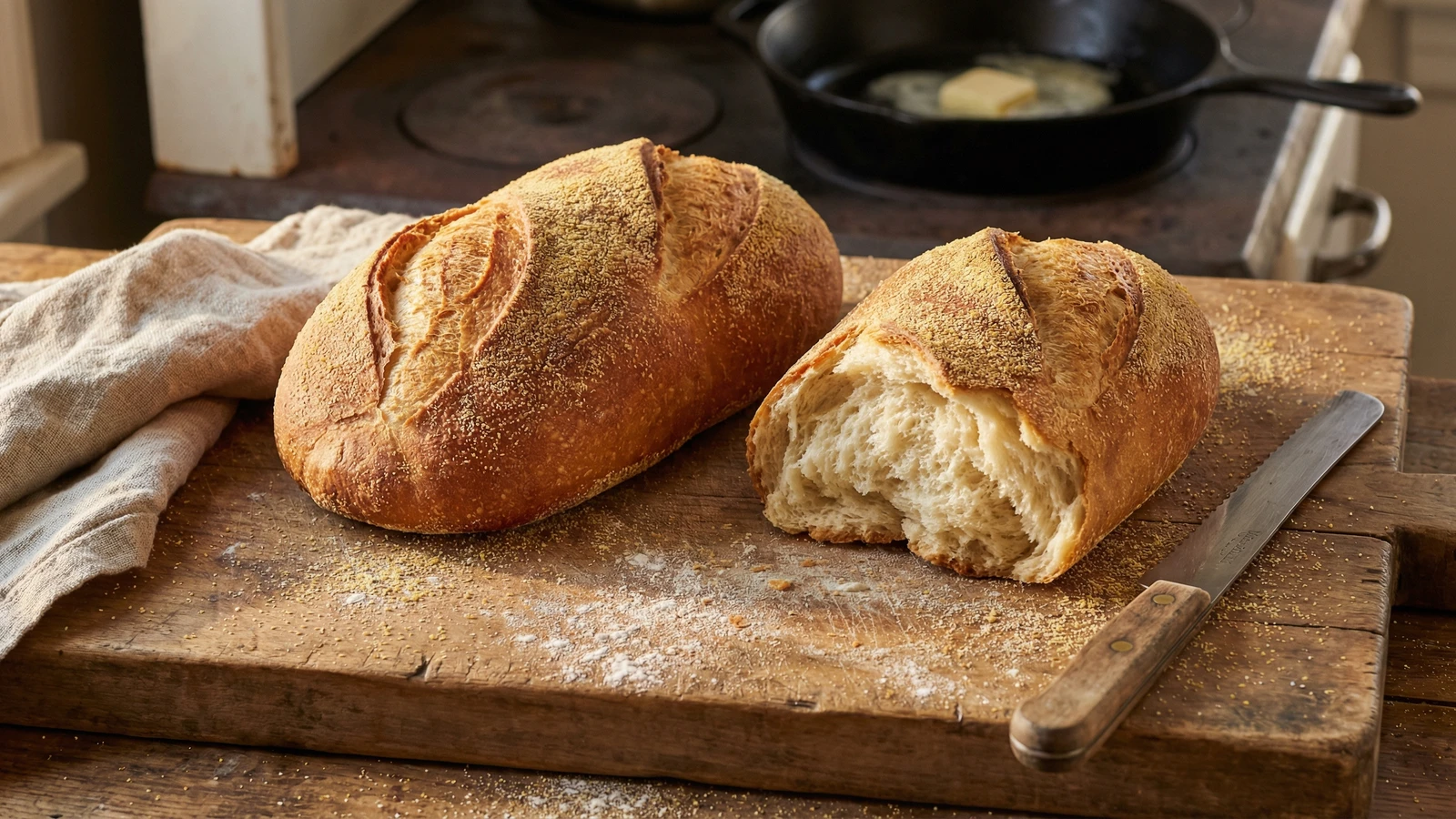
New Orleans Po'Boy Bread
Created by Chef Remy
The bread that makes the sandwich: a golden, crackling crust that shatters under your teeth giving way to a pillowy, cloud-soft interior that soaks up gravy and debris like it was born for the job.
You can pile all the fried shrimp in Louisiana on a sandwich, but if the bread is wrong, you haven't made a po'boy. You've made a disappointment. The bread is everything. That crust has to shatter when you bite into it, sending crumbs down your shirt, announcing to everyone within earshot that you're eating something real. And underneath? Cotton. Pure cotton softness that yields to every bit of filling, absorbs the juices, holds the sandwich together while you eat it over a newspaper.
This bread came to New Orleans with French bakers, then evolved in the humid Louisiana air into something uniquely ours. The secret is steam. That blast of moisture in a hot oven creates the crackling crust while the interior stays impossibly light. At Lagniappe, we bake these loaves fresh twice a day because po'boy bread waits for no one. By tomorrow, that crust has softened, and the magic is gone.
My grandmother Evangeline didn't bake her own po'boy bread (she'd walk to Leidenheimer's on Napoleon Avenue), but she taught me to respect it. She'd thump each loaf at the bakery, listening for the hollow sound that meant the crumb was right. Now I'm passing that knowledge to you. This recipe takes patience, like making a good roux. You can't rush the rise, can't skip the steam, can't cheat the process. But when you pull these loaves from your oven and hear that crackle as they cool, you'll understand why we're so particular about our bread down here.
The technique, the tradition, and the story behind every dish.
Discover Culinary AdvisorIngredients
bread flour
Quantity
4 cups (500g)
plus more for dusting
fine sea salt
Quantity
1 1/2 teaspoons
instant yeast
Quantity
1 teaspoon
granulated sugar
Quantity
1 teaspoon
warm water
Quantity
1 1/2 cups (355ml)
105-110°F
vegetable oil or lard
Quantity
2 tablespoons
plus more for bowl
cornmeal
Quantity
for dusting baking sheet
| Ingredient | Quantity |
|---|---|
| bread flourplus more for dusting | 4 cups (500g) |
| fine sea salt | 1 1/2 teaspoons |
| instant yeast | 1 teaspoon |
| granulated sugar | 1 teaspoon |
| warm water105-110°F | 1 1/2 cups (355ml) |
| vegetable oil or lardplus more for bowl | 2 tablespoons |
| cornmeal | for dusting baking sheet |
Equipment Needed
- •Large mixing bowl
- •Bench scraper or sharp knife
- •Rimmed baking sheet
- •Metal pan for steam (9x13 works well)
- •Sharp knife or lame for scoring
- •Wire cooling rack
Instructions
- 1
Activate the yeast
Pour the warm water into a large mixing bowl. It should feel like a warm bath on your wrist, not hot. Sprinkle the sugar over the water and stir to dissolve, then sprinkle the yeast on top. Let it sit for five minutes until the surface gets foamy and smells like bread. If nothing happens, your yeast is dead and you need to start over with fresh.
Water above 115°F kills yeast. When in doubt, go cooler. The yeast will just take a little longer to wake up. - 2
Build the dough
Add the flour and salt to the yeast mixture. Stir with a wooden spoon until you have a shaggy, rough mass that pulls away from the sides of the bowl. It will look messy. That's fine. Add the oil and work it in with your hands until the dough comes together into a ball. The dough should be slightly tacky but not sticky enough to coat your fingers.
- 3
Knead until smooth
Turn the dough onto a lightly floured surface. Knead for eight to ten minutes, pushing with the heel of your hand, folding the dough over, turning it a quarter turn, and repeating. The dough transforms as you work it: it starts rough and reluctant, then becomes smooth, elastic, and almost satiny. When you poke it, the indentation should slowly spring back. That's the gluten telling you it's ready.
If the dough sticks to your hands, wet them slightly rather than adding more flour. Extra flour makes tough bread. - 4
First rise
Shape the dough into a smooth ball and place it in a lightly oiled bowl, turning once to coat all sides. Cover with a clean kitchen towel or plastic wrap. Set it somewhere warm (about 75-80°F) and let it rise until doubled in size, about one and a half to two hours. The dough is ready when you press two fingers into it and the indentations remain.
In Louisiana humidity, dough rises fast. In dry climates or air conditioning, place the bowl in your oven with just the light on for gentle warmth. - 5
Shape the loaves
Punch down the dough to release the gas, then turn it onto a lightly floured surface. Divide it in half with a bench scraper or sharp knife. Working with one piece at a time, flatten into a rough rectangle. Fold the long sides toward the center like you're folding a letter, then roll tightly from one short end to the other, pinching the seam closed. Roll each loaf back and forth to create a cylinder about 14 inches long, slightly tapered at the ends. That shape is traditional.
- 6
Second rise
Dust a large baking sheet generously with cornmeal. Place the shaped loaves seam-side down, leaving at least four inches between them. Cover loosely with a towel and let rise until nearly doubled, about 45 minutes to one hour. The loaves should feel puffy and light when you gently poke them.
- 7
Prepare for baking
While the loaves rise, position a rack in the center of your oven and place a metal baking pan on the bottom rack. This is your steam generator. Preheat the oven to 425°F for at least 30 minutes. You want that oven screaming hot and ready.
- 8
Score and bake
Using a sharp knife or razor blade held at a 45-degree angle, make three diagonal slashes about half an inch deep along the top of each loaf. Move quickly and decisively. Slide the baking sheet into the oven, then immediately pour one cup of hot water into the pan on the bottom rack. Shut the door fast to trap the steam. That burst of moisture is what creates the shattering crust.
Stand back when you pour the water. The steam explosion is serious business. Use an oven mitt and keep your face away from the opening. - 9
Finish baking
Bake for 10 minutes with the steam, then carefully open the oven and remove the water pan. Continue baking for another 12 to 15 minutes until the loaves are deeply golden brown and sound hollow when you tap the bottom. The crust should look almost lacquered. Pull them from the oven and let them cool on a wire rack for at least 20 minutes before slicing. You'll hear the crust crackling as it cools. That's the sound of success.
Chef Tips
- •Po'boy bread is best eaten within hours of baking. By the next day, the crust softens and you lose that shatter. If you must store it, wrap loosely in paper (never plastic) and refresh in a 375°F oven for five minutes.
- •For an even crispier crust, spray the loaves with water from a mister bottle right before they go in the oven, and again after five minutes of baking.
- •The traditional New Orleans bakeries use lard instead of oil. It gives a slightly richer flavor and helps the crust brown. If you can get good lard, use it.
- •Don't slice the bread until you're ready to build your po'boy. The exposed crumb goes stale faster than the crust protects it.
Advance Preparation
- •The dough can be refrigerated after the first rise for up to 24 hours. This slow cold ferment develops more flavor. Let it come to room temperature for one hour before shaping.
- •Shaped loaves can be frozen before the second rise. Freeze on the baking sheet until solid, then wrap tightly. Thaw overnight in the refrigerator, let rise at room temperature, and bake as directed.
- •Baked loaves can be frozen for up to one month. Thaw at room temperature and refresh in a hot oven for five minutes to restore the crust.
Frequently Asked Questions
Nutrition Information
1 serving (about 100g)
Where cooking meets culture.
Culinary mentorship, cultural storytelling, and the editorial depth that makes cooking meaningful.
Explore Culinary Advisor