Culinary Advisor
A cooking platform built around craft, culture, and the stories behind what we eat.
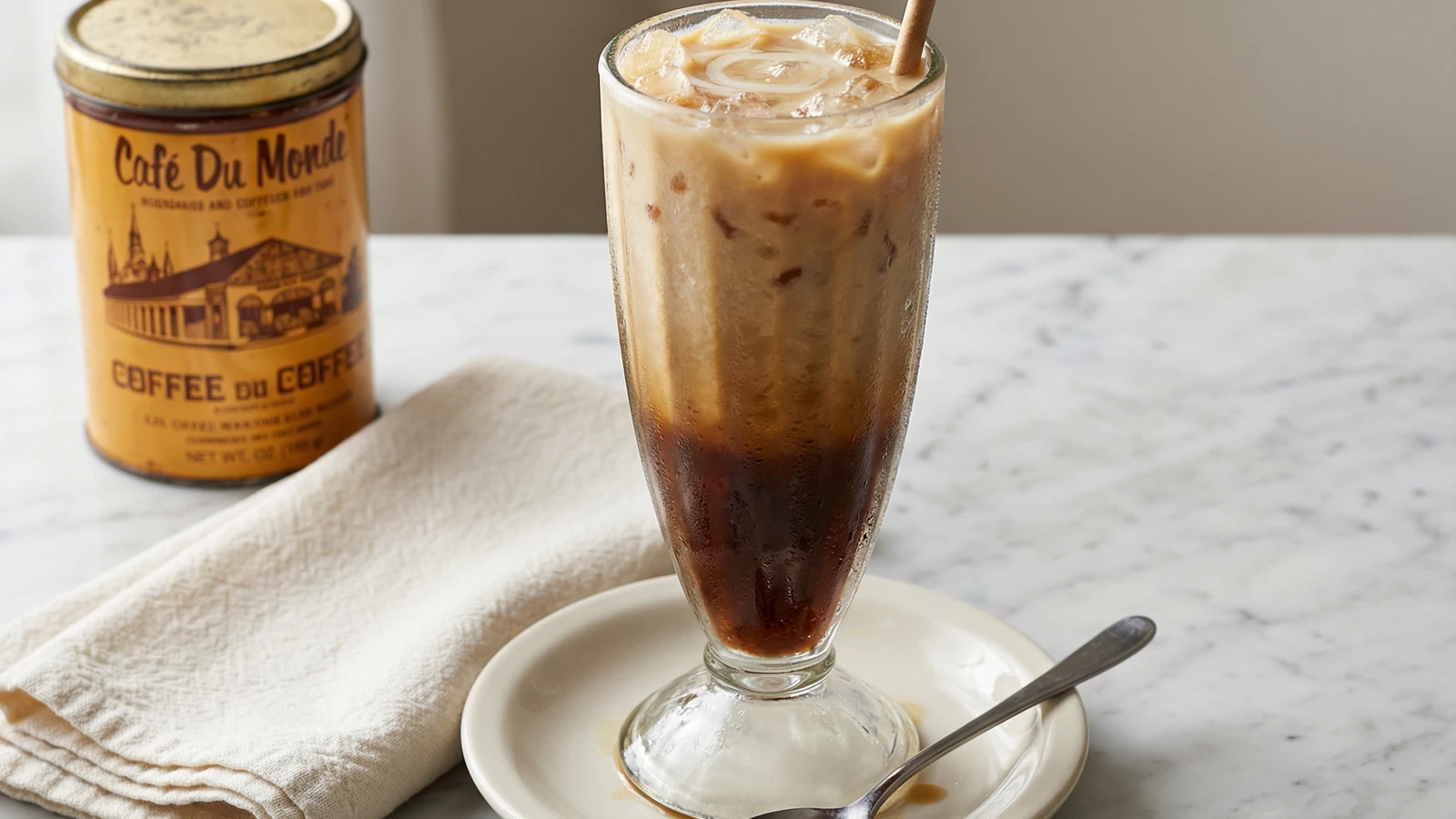
New Orleans Iced Cafe au Lait
Created by
Bold chicory coffee swirled with sweetened condensed milk and poured over a tumbler of crushed ice, this is how New Orleans beats the heat without sacrificing an ounce of flavor.
Every summer morning in New Orleans begins the same way: with coffee strong enough to stand a spoon in and air thick enough to swim through. The locals learned long ago that when the heat climbs past bearable, you don't abandon your coffee ritual. You adapt it. Ice goes in the glass. The coffee goes cold. The tradition stays intact.
Chicory came to New Orleans during the Civil War when coffee shipments couldn't reach the blockaded port. Resourceful Creole cooks stretched their dwindling beans with roasted chicory root, and something unexpected happened. They liked it. The earthy, almost chocolate bitterness of chicory married with coffee's brightness created a flavor profile that outlasted the necessity that invented it. Today, no proper New Orleans coffee is without it.
The sweetened condensed milk is the second stroke of genius. Richer than cream, sweeter than sugar, it creates a velvety body that coats your tongue and softens chicory's edge without erasing it. When you pour this mixture over a glass packed with crushed ice, the cold shocks the flavors awake. What reaches your lips is bracing and smooth, bitter and sweet, robust enough to revive you and cold enough to keep you upright through a Louisiana afternoon.
This is porch-sitting coffee. Front-stoop coffee. The kind you nurse through a conversation with a neighbor while ceiling fans turn overhead and the city sweats through another gorgeous, impossible day.
The technique, the tradition, and the story behind every dish.
Discover Culinary AdvisorIngredients
chicory coffee blend
Quantity
4 tablespoons
ground
water
Quantity
2 cups
just off the boil
sweetened condensed milk
Quantity
1/4 cup
crushed ice
Quantity
2 cups
whole milk or half-and-half (optional)
Quantity
1/4 cup
sweetened condensed milk (optional)
Quantity
to taste
for serving
| Ingredient | Quantity |
|---|---|
| chicory coffee blendground | 4 tablespoons |
| waterjust off the boil | 2 cups |
| sweetened condensed milk | 1/4 cup |
| crushed ice | 2 cups |
| whole milk or half-and-half (optional) | 1/4 cup |
| sweetened condensed milk (optional)for serving | to taste |
Equipment Needed
- •French press or drip coffee maker
- •Ice crusher or heavy rolling pin
- •Tall glasses (12-14 oz capacity)
- •Long-handled spoon for stirring
Instructions
- 1
Brew the coffee strong
Measure your chicory coffee into a French press or drip filter. Use twice the grounds you'd normally use for hot coffee. The ice will dilute the brew, so you need concentrated strength to carry the flavor through. Pour water that's just stopped boiling over the grounds and let it steep for four full minutes if using a French press. The resulting coffee should be dark as Mississippi mud and smell of earth and roasted nuts.
If you can find it, use a New Orleans blend with a high chicory content. The label should list chicory as the second ingredient, not an afterthought. - 2
Cool the coffee rapidly
Pour the hot coffee into a heat-safe pitcher or measuring cup and set it in an ice bath, stirring occasionally. You want the coffee cool, not lukewarm. Pouring hot coffee over ice creates a watery mess. If you're planning ahead, brew the coffee and refrigerate it overnight. Cold coffee straight from the icebox produces the cleanest results.
For the fastest cooling, pour the hot coffee over a handful of ice cubes in a metal bowl, then strain out the melted ice before proceeding. - 3
Prepare the crushed ice
Fill two tall glasses with crushed ice, packing it firmly. Crushed ice matters here. Cubes leave gaps and create pockets of undiluted coffee. Crushed ice surrounds every drop, chilling it instantly and evenly. If you don't have a crusher, wrap cubes in a clean kitchen towel and attack them with a rolling pin or the bottom of a heavy skillet. The violence is part of the fun.
- 4
Combine coffee and condensed milk
Pour the cooled coffee into a small pitcher or measuring cup with a spout. Add the sweetened condensed milk and stir vigorously until fully dissolved. The mixture should turn the color of café au lait, a warm tan that promises richness. Taste it now. The sweetness should be pronounced but not cloying. Adjust with more condensed milk if you prefer it sweeter, or add a splash of whole milk to soften the intensity.
- 5
Pour and serve immediately
Divide the coffee mixture between the prepared glasses, pouring slowly so the liquid filters through the crushed ice. Watch the color gradient form as the coffee meets the cold. Give each glass a quick stir with a long spoon, then serve immediately with a straw. The first sip should hit cold and sweet, followed by chicory's earthy undertow. That's New Orleans in a glass.
Chef Tips
- •Café Du Monde and French Market are the two heritage brands worth seeking out. Both have been roasting chicory coffee in New Orleans for over a century. Order directly if your local store doesn't stock them.
- •Cold brew works beautifully here. Combine the grounds with cold water the night before, let it steep twelve hours in the refrigerator, then strain through cheesecloth. You'll get a smoother, less acidic base that keeps for a week.
- •Sweetened condensed milk varies by brand. Taste yours before measuring. Some run sweeter than others, and you may need to adjust accordingly.
- •For an indulgent variation, add a tablespoon of chocolate syrup to the coffee mixture before pouring. It's not traditional, but neither is air conditioning, and we've all made our peace with that.
Advance Preparation
- •Coffee can be brewed and refrigerated up to 5 days ahead. Store in a sealed container to prevent absorption of refrigerator odors.
- •Cold brew concentrate keeps refrigerated for up to 1 week and produces a smoother result than hot-brewed coffee that's been chilled.
- •Pre-mix the coffee and condensed milk up to 2 days ahead. Store refrigerated and stir well before serving, as the condensed milk may settle.
Frequently Asked Questions
Nutrition Information
1 serving (about 280g)
Where cooking meets culture.
Culinary mentorship, cultural storytelling, and the editorial depth that makes cooking meaningful.
Explore Culinary Advisor