Culinary Advisor
A cooking platform built around craft, culture, and the stories behind what we eat.
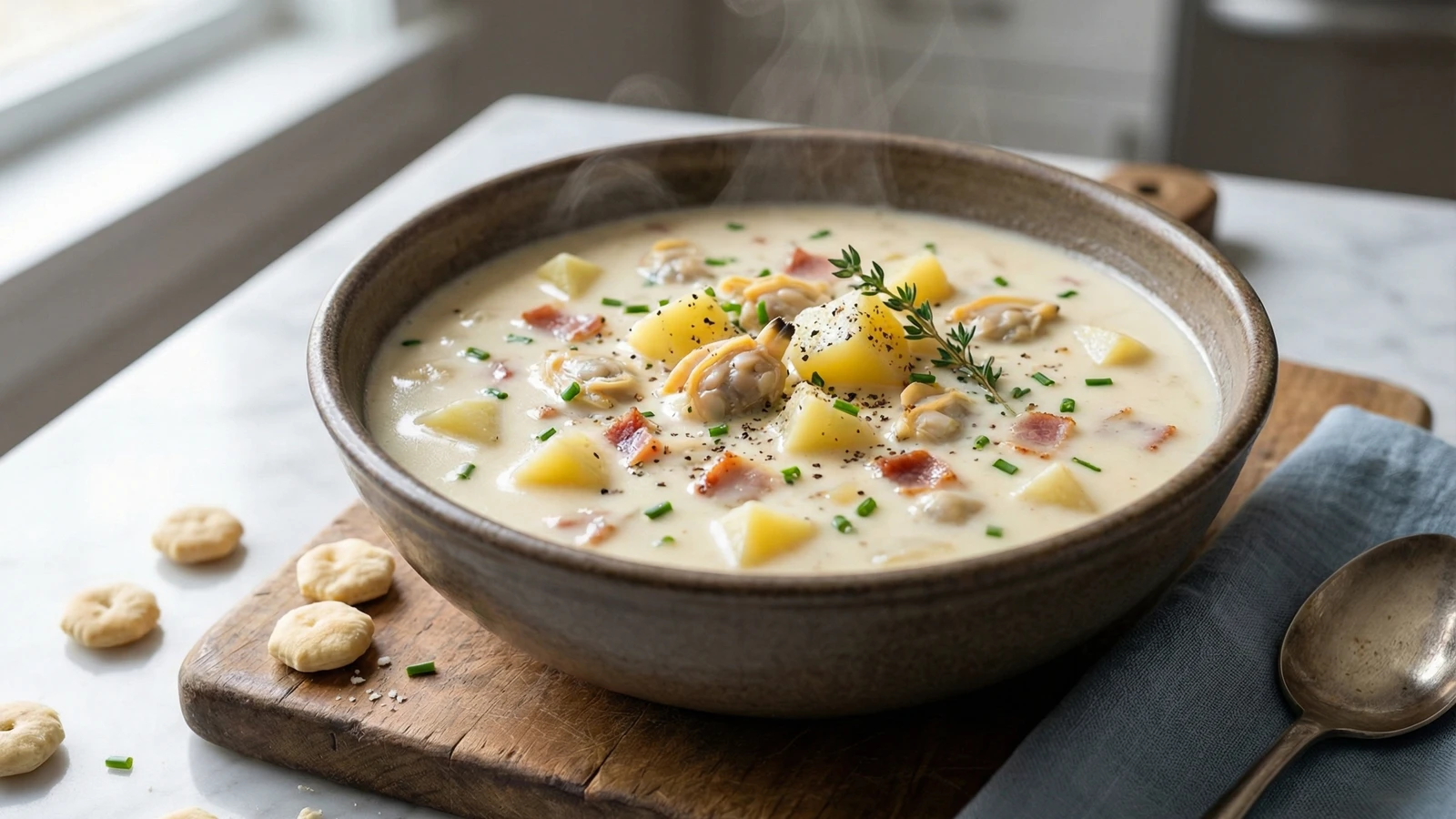
New England Summer Clam Chowder
Created by
Silky, bacon-laced chowder built on fresh littleneck clams and their briny liquor, thickened with tender potatoes and finished with cream. This is the honest chowder of Massachusetts fishing villages, not the wallpaper paste served in tourist traps.
The chowder wars have raged for generations. Manhattan partisans with their tomatoes. Rhode Islanders with their clear broth. But the New England version remains the benchmark against which all others are measured. Cream, potatoes, pork, and clams. Nothing more. Nothing less. This is food that sustained fishermen on the Grand Banks and fed families through long winters. It deserves your respect.
Summer changes everything about this dish. Fresh littleneck clams, pulled from cold Atlantic waters, carry a sweetness and brininess that no canned substitute can match. The clam liquor they release becomes the backbone of your chowder, more valuable than any store-bought stock. You build the soup around that liquid gold, adding cream to enrich rather than mask.
I've eaten chowder in every harbor town from Portland to Provincetown. The best versions share one quality: restraint. They let the clams speak. The cream supports without smothering. The bacon provides smoke and salt without overwhelming. Too many cooks treat chowder as a vehicle for cream and flour. They produce something thick enough to mortar bricks. That's not chowder. That's a mistake.
This recipe honors the coastal tradition. Fresh clams steamed open in white wine, their liquor captured and treasured. Potatoes that break down slightly to thicken the broth naturally. Enough cream to make it luxurious, not enough to make it heavy. On a summer evening, with the windows open and good bread on the table, this is everything American cooking should be.
The technique, the tradition, and the story behind every dish.
Discover Culinary AdvisorIngredients
littleneck clams
Quantity
5 pounds
scrubbed clean
dry white wine
Quantity
1 cup
thick-cut bacon
Quantity
6 ounces
cut into 1/4-inch pieces
unsalted butter
Quantity
4 tablespoons
yellow onions
Quantity
2 medium
diced
celery stalks
Quantity
3
diced
Yukon Gold potatoes
Quantity
2 pounds
peeled and cut into 1/2-inch cubes
bottled clam juice
Quantity
2 cups
bay leaves
Quantity
2
fresh thyme sprigs
Quantity
6
tied with kitchen twine
whole milk
Quantity
2 cups
heavy cream
Quantity
1 cup
white pepper
Quantity
1/2 teaspoon
kosher salt
Quantity
to taste
fresh chives
Quantity
2 tablespoons
minced
oyster crackers (optional)
Quantity
for serving
| Ingredient | Quantity |
|---|---|
| littleneck clamsscrubbed clean | 5 pounds |
| dry white wine | 1 cup |
| thick-cut baconcut into 1/4-inch pieces | 6 ounces |
| unsalted butter | 4 tablespoons |
| yellow onionsdiced | 2 medium |
| celery stalksdiced | 3 |
| Yukon Gold potatoespeeled and cut into 1/2-inch cubes | 2 pounds |
| bottled clam juice | 2 cups |
| bay leaves | 2 |
| fresh thyme sprigstied with kitchen twine | 6 |
| whole milk | 2 cups |
| heavy cream | 1 cup |
| white pepper | 1/2 teaspoon |
| kosher salt | to taste |
| fresh chivesminced | 2 tablespoons |
| oyster crackers (optional) | for serving |
Equipment Needed
- •Large Dutch oven or heavy-bottomed pot (6-8 quart)
- •Fine-mesh sieve
- •Cheesecloth for straining
- •Stiff brush for scrubbing clams
Instructions
- 1
Clean and inspect clams
Place clams in a colander and rinse under cold running water, scrubbing each shell with a stiff brush to remove sand and grit. Discard any clams with cracked shells or those that remain open when tapped sharply against the counter. Live clams close when disturbed. Dead clams stay open and will ruin your chowder with off flavors.
If clams are sandy, soak them in cold salted water (1/4 cup salt per gallon) for 20 minutes. They'll purge grit naturally. Never soak in fresh water, which kills them. - 2
Steam the clams
Pour the white wine into a large pot and bring to a boil over high heat. Add the clams in a single layer (work in batches if necessary), cover tightly, and steam for 5 to 8 minutes, shaking the pot occasionally. Transfer clams to a bowl as they open. Discard any that refuse to open after 10 minutes. Strain the precious clam liquor through a fine-mesh sieve lined with cheesecloth to remove any sand. You should have about 2 cups of liquid. Set this aside like the treasure it is.
The clam liquor contains more flavor than any stock you could buy. Never skip the straining step or you'll serve gritty chowder. - 3
Remove clam meat
Once cool enough to handle, remove the clams from their shells. Chop larger clams roughly into bite-sized pieces; smaller ones can stay whole. Place clam meat in a bowl, cover, and refrigerate. The clams go back in at the very end. Overcooking turns them to rubber.
- 4
Render the bacon
Wipe out the pot and set it over medium heat. Add the bacon pieces and cook slowly, stirring occasionally, until the fat renders and the bacon turns golden and slightly crisp, about 8 to 10 minutes. Listen for the gentle sizzle, not aggressive popping. Low and slow extracts maximum fat without burning. Remove bacon with a slotted spoon and set aside, leaving the rendered fat in the pot.
- 5
Build the aromatic base
Add butter to the bacon fat and let it melt. Add the diced onions and celery, stirring to coat. Cook over medium heat until the vegetables soften and turn translucent, about 6 to 8 minutes. The onions should look glassy and smell sweet, with no browning. This is a white chowder. Color is not your friend here.
White pepper appears in traditional New England recipes because black specks in cream-colored soup offended Yankee sensibilities. Use black pepper if you prefer. The chowder police won't find you. - 6
Add potatoes and liquids
Add the cubed potatoes to the pot and stir to combine with the aromatics. Pour in the reserved clam liquor and the bottled clam juice. Nestle in the bay leaves and the thyme bundle. Bring to a gentle simmer, then reduce heat to maintain small bubbles breaking the surface. Cook uncovered for 15 to 20 minutes, until the potatoes are tender and some have begun to break apart at the edges. This natural breakdown thickens your chowder without flour.
- 7
Add dairy and finish
Pour in the milk and cream. Stir gently and heat until the chowder is steaming hot but not boiling. Boiling cream breaks and curdles. You want tiny bubbles at the edge, nothing more. Season with white pepper. Taste for salt, remembering that the clam liquor and bacon contributed salinity. The chowder should taste of the sea, not the salt shaker.
For a lighter summer version, reverse the dairy ratio: 2 cups cream, 1 cup milk. For richer winter chowder, use all cream. - 8
Add clams and serve
Remove and discard the bay leaves and thyme bundle. Add the reserved clam meat and bacon to the pot. Stir gently and let heat through for 2 to 3 minutes, just until the clams are warmed. Taste once more and adjust seasoning. Ladle into warmed bowls, scatter fresh chives over each serving, and pass oyster crackers at the table. The chowder should be creamy but pourable, not thick like gravy. This is the honest chowder of New England, worthy of its history.
Chef Tips
- •Buy clams the day you plan to cook. Store them in an open container in the refrigerator covered with a damp towel, never submerged in water or sealed in plastic. They need to breathe.
- •Littlenecks are the traditional choice, but cherrystones work if you chop them smaller. Quahogs are too tough for chowder unless you grind them. Never use canned clams in summer when fresh are available.
- •The chowder improves overnight as flavors marry. Refrigerate and reheat gently the next day. Add the clams fresh if making ahead, or they'll toughen during reheating.
- •Serve with a chilled Muscadet or dry Riesling. The wine's minerality complements the briny clams. Beer works too: a crisp pilsner or wheat ale.
- •Double this recipe for a potluck. It holds well in a slow cooker on the warm setting for up to two hours. Stir occasionally and watch that it doesn't simmer.
Advance Preparation
- •Clams can be scrubbed and refrigerated in an open container up to 24 hours ahead.
- •The chowder base (without clams) can be made one day ahead. Refrigerate, then reheat gently before adding warmed clam meat.
- •Complete chowder refrigerates well for 2 days. Reheat slowly over low heat, stirring often, to prevent the cream from breaking.
Frequently Asked Questions
Nutrition Information
1 serving (about 525g)
Where cooking meets culture.
Culinary mentorship, cultural storytelling, and the editorial depth that makes cooking meaningful.
Explore Culinary Advisor