Culinary Advisor
A cooking platform built around craft, culture, and the stories behind what we eat.
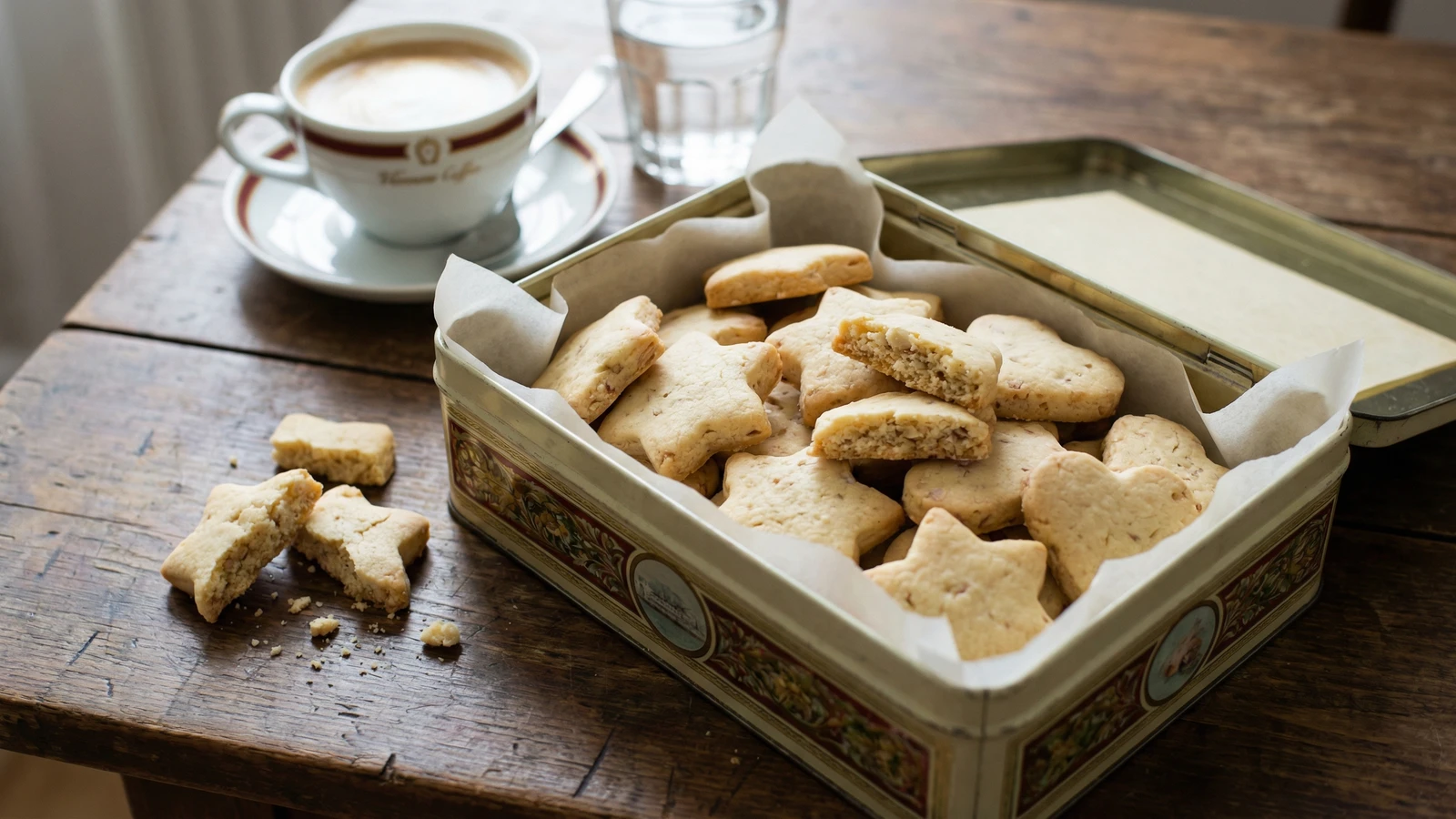
Nervenkekse (Hildegard's Spice Cookies)
Created by Chef Elsa
Buttery spelt cookies from Hildegard von Bingen's medieval spice cupboard, warm with nutmeg, cinnamon, and cloves. Eight hundred years of wisdom in a biscuit tin, and they still work.
Gretel always said that a proper Austrian spice drawer could cure half of what ails you. She wasn't entirely joking. In my grandmother Eva's kitchen in Kent, the cupboard above the stove held tiny tins of Muskatnuss, Zimt, and Nelken: nutmeg, cinnamon, and cloves, the three spices that Hildegard von Bingen prescribed eight centuries ago for nervous exhaustion. Every December, those tins came down and the kitchen filled with the smell of Weihnachtskekse, the Christmas cookies that Austrians bake by the dozens. Nervenkekse were always in the mix.
These are plain, beautiful cookies. Spelt flour gives them a nutty, almost honeyed depth that ordinary wheat can't match, and the spice combination, heavy on the nutmeg, warm with cinnamon, just a whisper of cloves, makes them smell like a Salzburg Advent market the moment they come out of the oven. They're not showy. No icing, no chocolate dip, no fussy decoration. The flavor does all the work. Ground almonds in the dough give them a short, crumbly texture that dissolves on the tongue and carries the spices with it.
The name translates to 'nerve cookies,' and whether you believe in Hildegard's medieval medicine or not, there's something genuinely calming about a warm spiced biscuit with a cup of afternoon coffee. Austrian monasteries kept her spice wisdom alive for centuries, and the recipes filtered into home kitchens across the country. Every Keksdose, every biscuit tin, in Austria holds something that traces back to a monastic kitchen if you follow the thread far enough. These are simple to make, they keep beautifully in a tin for weeks, and they'll make your house smell like December. Good Austrian home cooking doesn't always mean dinner. Sometimes it means a cookie that's been making people feel better since the twelfth century.
Hildegard von Bingen (1098-1179), the Benedictine abbess, mystic, and herbalist, wrote in her medical text 'Physica' that nutmeg opens the senses and brings a good disposition, while cinnamon and cloves strengthen the nerves. Her specific combination of these three spices became known as Nervengewürz, and the cookie recipe built around them has been a staple of monastic and home baking across the German-speaking world for centuries. Austrian Klöster, particularly in Lower Austria and Styria, preserved many of Hildegard's herbal traditions through their own baking customs, folding her Nervengewürz into the vast repertoire of Weihnachtskekse that Austrian families still bake every Advent.
The technique, the tradition, and the story behind every dish.
Discover Culinary AdvisorIngredients
Dinkelmehl (spelt flour)
Quantity
300g
unsalted butter
Quantity
150g
softened
raw cane sugar
Quantity
100g
Vanillezucker
Quantity
1 packet (8g)
ground almonds
Quantity
50g
egg
Quantity
1 large
ground cinnamon (Zimt)
Quantity
2 teaspoons
nutmeg (Muskatnuss)
Quantity
1 teaspoon
freshly grated
ground cloves (Nelken)
Quantity
1/4 teaspoon
fine salt
Quantity
pinch
| Ingredient | Quantity |
|---|---|
| Dinkelmehl (spelt flour) | 300g |
| unsalted buttersoftened | 150g |
| raw cane sugar | 100g |
| Vanillezucker | 1 packet (8g) |
| ground almonds | 50g |
| egg | 1 large |
| ground cinnamon (Zimt) | 2 teaspoons |
| nutmeg (Muskatnuss)freshly grated | 1 teaspoon |
| ground cloves (Nelken) | 1/4 teaspoon |
| fine salt | pinch |
Equipment Needed
- •Hand mixer or stand mixer
- •Rolling pin
- •Round cookie cutter (5cm) or Advent-shaped cutters
- •Nutmeg grater (Muskatreibe)
- •Two baking sheets with parchment paper
- •Wire cooling rack
Instructions
- 1
Cream the butter
Beat the softened butter with the raw cane sugar and Vanillezucker until pale and fluffy, about three minutes with a hand mixer or a good five minutes by hand. You want air in there. That's what gives the finished cookies their light, crumbly snap instead of a dense, hard bite. The mixture should look noticeably lighter in color when it's ready.
Use real Vanillezucker, not vanilla extract. Austrian baking depends on it. You can make your own by burying a split vanilla pod in a jar of caster sugar for a week. - 2
Build the spiced dough
Add the egg to the butter mixture and beat until smooth. In a separate bowl, whisk together the spelt flour, ground almonds, cinnamon, nutmeg, cloves, and salt. The spice ratios here matter. Nutmeg leads. Cinnamon supports. Cloves whisper from the back. If you can smell the cloves as strongly as the nutmeg before the dough is mixed, you've used too much. Add the dry ingredients to the butter mixture in two additions, stirring just until the dough comes together. Spelt has less gluten than wheat, so it forgives a little overworking, but don't push it. Stop when there's no more loose flour.
Grate your nutmeg fresh from the whole seed. Pre-ground nutmeg loses its volatile oils within weeks and you'll end up with dusty, flat cookies instead of the warm, almost intoxicating fragrance Hildegard was writing about. A small Muskatnuss grater costs very little and lasts forever. - 3
Chill the dough
Flatten the dough into a disc about two centimeters thick, wrap it in cling film, and refrigerate for at least one hour. The butter needs to firm up again or the dough will stick to everything and the cookies will spread too much in the oven. Don't skip this. Walk away. Make coffee. Read something. The dough will be ready when you come back.
The dough can chill for up to three days. If it's been in the fridge overnight, let it sit at room temperature for five to ten minutes before rolling. It should feel firm but not rock-hard. - 4
Roll and cut
Preheat your oven to 175°C (350°F). Line two baking sheets with parchment paper. Lightly flour your work surface with spelt flour and roll the dough to about four millimeters thick. Not too thin or they'll overbake in seconds. Not too thick or the centers stay soft and cakey. Cut with a round cutter or whatever Advent shapes you like. Gather the scraps, press them together gently, re-roll once. After the second roll the gluten gets tired and the cookies won't be as tender, so work efficiently.
- 5
Bake the cookies
Place the cookies on the lined baking sheets with a little space between them. They won't spread much but they need air around them to bake evenly. Bake for 10 to 12 minutes, rotating the sheet halfway through. You're looking for a light golden color on the edges while the tops stay pale. Spelt browns faster than wheat flour, so watch them closely from the eight-minute mark. They will feel soft when you touch them in the oven. That's correct. They firm up as they cool.
Your nose will tell you when they're close. When the kitchen smells powerfully of warm nutmeg and toasted almonds, check the oven. That scent arrives about one minute before they're done. - 6
Cool and store
Let the cookies rest on the baking sheet for two minutes, then transfer to a wire rack to cool completely. They'll feel fragile at first. That's the ground almonds and the spelt doing their work. Once cool, they'll hold together with a beautiful short, crumbly texture that breaks cleanly when you bite. Store in a tin, not a plastic container. Here's something Gretel taught me: these cookies improve after a day or two in the tin. The spices mellow and deepen and the texture softens just slightly. By day three, they're at their best. Mahlzeit!
Chef Tips
- •Dinkelmehl, spelt flour, is not a trendy substitute here. It's the original. Hildegard considered spelt the finest of all grains, gentle on the digestion and nourishing to the spirit. If you can only find white spelt flour, it works, but wholegrain spelt gives a deeper, nuttier flavor that pairs better with the warm spices. Look for it at health food shops or Austrian specialty grocers.
- •The cloves are there to be felt, not tasted. A quarter teaspoon for this batch of dough is enough. If you can distinctly taste cloves in the finished cookie, they've overpowered the nutmeg and you've lost the balance Hildegard intended. When in doubt, use less.
- •These are perfect Kaffeehaus cookies. Serve them alongside a Melange or a Brauner in the afternoon. The warm spices and the coffee were made for each other. And don't forget the glass of water.
- •If you want to give these as gifts during Advent, layer them in a tin with sheets of parchment between the layers. Tied with a ribbon and a handwritten note, a tin of Nervenkekse is the kind of present people remember. They keep for three to four weeks stored this way.
Advance Preparation
- •The dough can be made up to three days ahead and refrigerated, or frozen for up to a month. Thaw overnight in the fridge before rolling.
- •Baked Nervenkekse keep in a sealed tin for three to four weeks. They actually taste better after a day or two as the spices settle and deepen.
- •The full batch freezes well after baking. Thaw at room temperature for twenty minutes and they taste freshly baked.
Frequently Asked Questions
Nutrition Information
1 serving (about 13g)
Where cooking meets culture.
Culinary mentorship, cultural storytelling, and the editorial depth that makes cooking meaningful.
Explore Culinary Advisor