Culinary Advisor
A cooking platform built around craft, culture, and the stories behind what we eat.
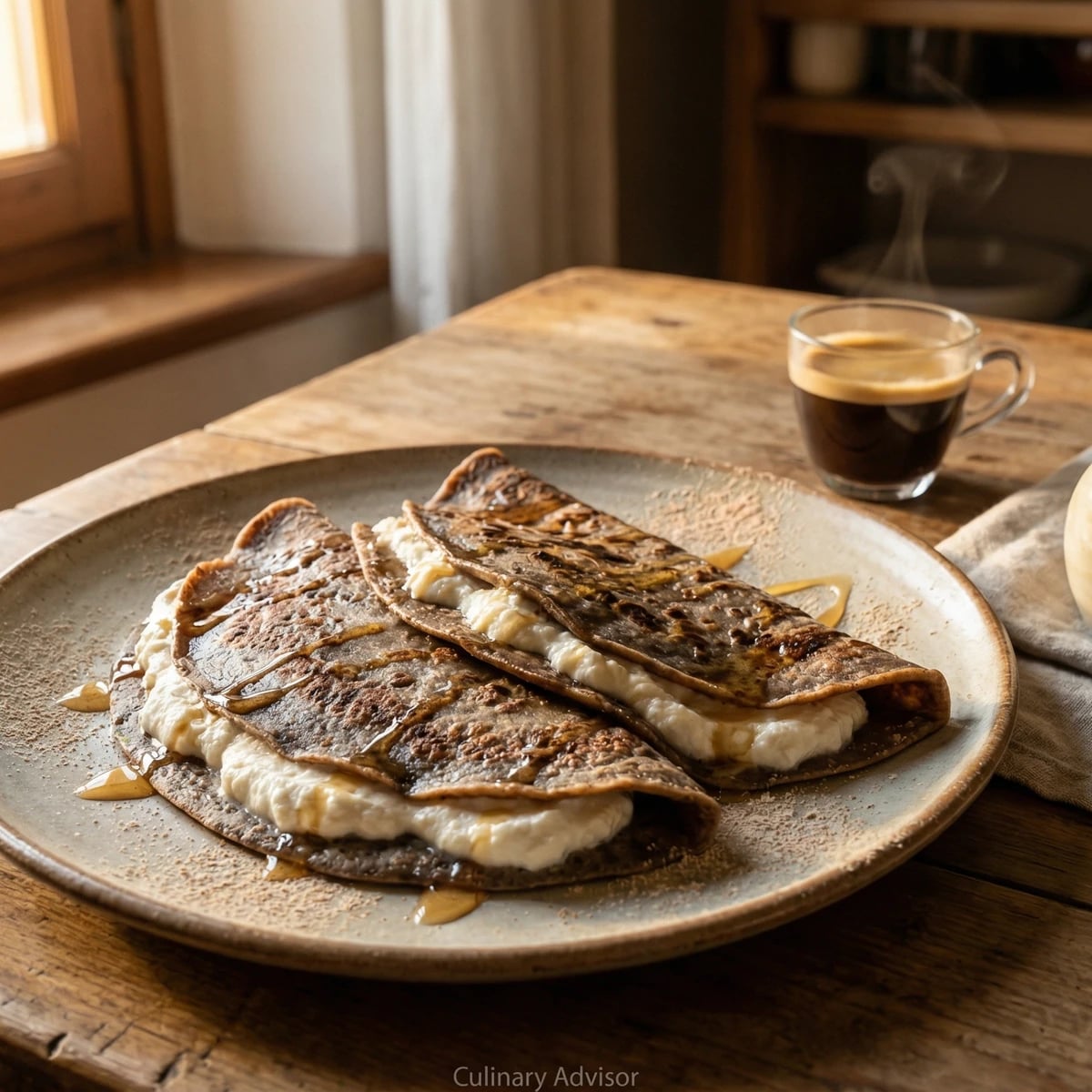
Necci Toscani con Ricotta
Created by Chef Graziella
The ancient chestnut crepes of the Tuscan mountains, where three ingredients and an iron griddle create something that proves poverty often produces genius. The ricotta is not optional.
In the mountains of the Garfagnana, where the chestnut forests have fed families for a thousand years, they make these crepes the same way they always have: chestnut flour, water, salt. Nothing more. The flour itself provides sweetness, earthiness, and a depth of flavor that wheat cannot approach. Americans hear 'crepe' and think of thin, delicate French things rolled around strawberries and cream. Necci are not that.
These are peasant crepes, cooked traditionally between two cast iron paddles called testi, held over an open fire. The paddles would be greased with lardo, and the batter spread thin. You likely do not have testi. A good nonstick pan will work, though you sacrifice some of the smoky char that defines the original. What you must not sacrifice is the quality of the flour.
Chestnut flour should smell like autumn, like the woods, like something alive. If your flour smells stale or dusty, it has oxidized and will taste bitter. Find fresh flour from the current season's harvest, or do not begin. The ricotta must be fresh, preferably from sheep's milk as they make it in Tuscany. Stuff the crepes while they are still warm. Eat them immediately. There is nothing else to say.
Ingredients
chestnut flour (farina di castagne)
Quantity
200 grams
fresh
water
Quantity
300 milliliters
at room temperature
fine sea salt
Quantity
1/4 teaspoon
| Ingredient | Quantity |
|---|---|
| chestnut flour (farina di castagne)fresh | 200 grams |
| waterat room temperature | 300 milliliters |
| fine sea salt | 1/4 teaspoon |