Culinary Advisor
A cooking platform built around craft, culture, and the stories behind what we eat.
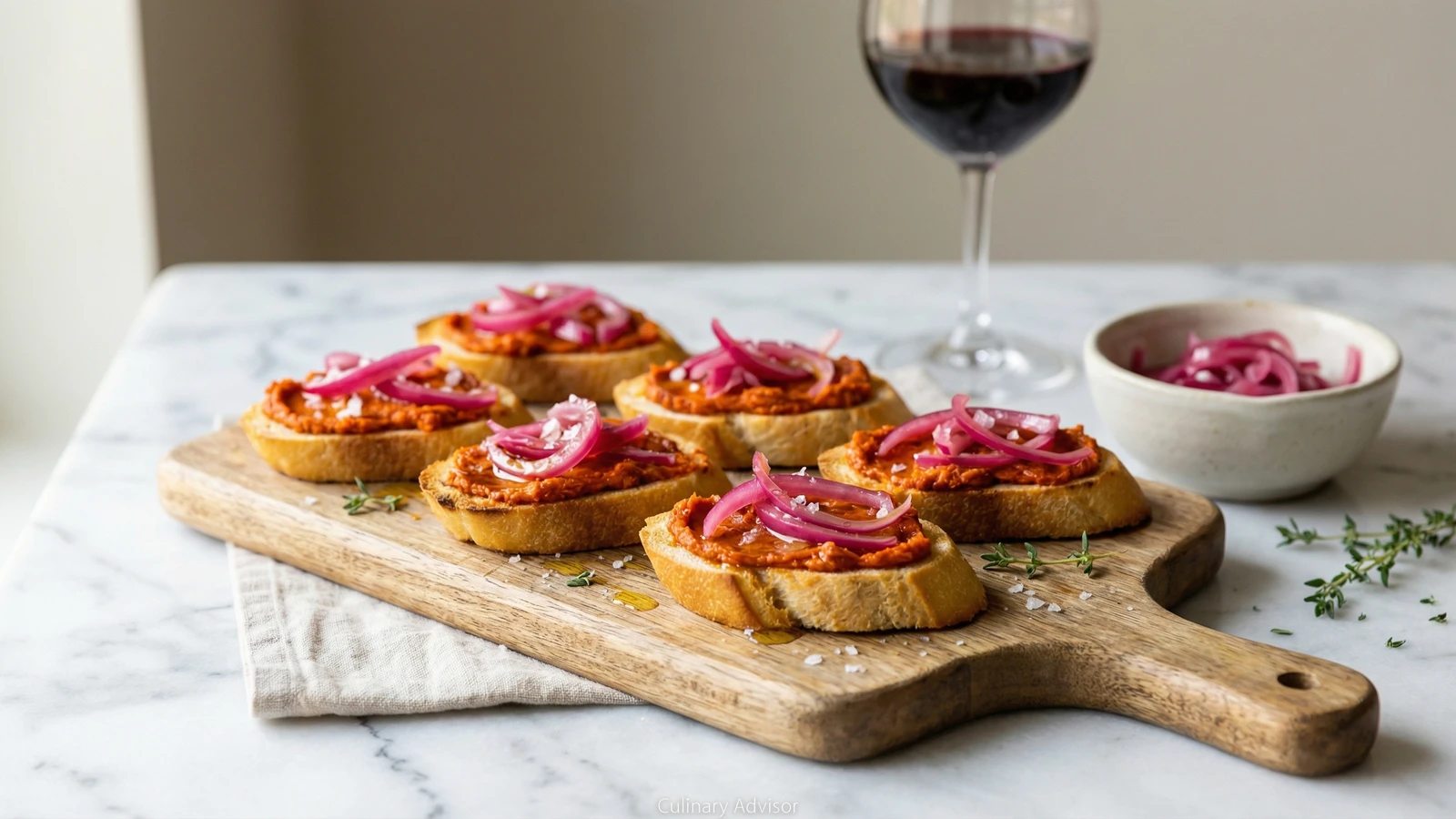
Nduja Crostini with Pickled Onions
Created by
Fiery Calabrian nduja melted onto shatteringly crisp toast, tempered by the sweet-tart punch of quick-pickled red onions. This is the appetizer that disappears first, every time.
Nduja arrived in American kitchens quietly, tucked into the imported foods section beside the better-known salumi. Now it's everywhere, and for good reason. This spreadable pork paste from Calabria delivers heat, fat, and depth in a single swipe. The chili peppers that give it that signature orange-red color aren't decoration. They're the soul of the thing.
The genius of this pairing lies in balance. Nduja is rich, intensely porky, and carries enough heat to make you reach for something cool. Enter the pickled onions: sharp, sweet, and bright enough to reset your palate between bites. The interplay between fat and acid, heat and tang, soft spread and crisp toast creates something greater than its parts.
I've served these at parties where guests who claimed to hate spicy food came back for thirds. The pickled onions do the heavy lifting, taming the heat while amplifying the pleasure. Make more than you think you need. They vanish.
The technique, the tradition, and the story behind every dish.
Discover Culinary AdvisorIngredients
baguette
Quantity
1 (about 14 inches)
sliced 1/3-inch thick on the bias
extra-virgin olive oil
Quantity
3 tablespoons, divided
nduja
Quantity
6 ounces
red onion
Quantity
1 large
halved and thinly sliced
red wine vinegar
Quantity
1 cup
water
Quantity
1/2 cup
granulated sugar
Quantity
3 tablespoons
kosher salt
Quantity
1 1/2 teaspoons
black peppercorns
Quantity
1/2 teaspoon
bay leaf
Quantity
1
flaky sea salt
Quantity
for finishing
fresh parsley or chives (optional)
Quantity
for garnish
| Ingredient | Quantity |
|---|---|
| baguettesliced 1/3-inch thick on the bias | 1 (about 14 inches) |
| extra-virgin olive oil | 3 tablespoons, divided |
| nduja | 6 ounces |
| red onionhalved and thinly sliced | 1 large |
| red wine vinegar | 1 cup |
| water | 1/2 cup |
| granulated sugar | 3 tablespoons |
| kosher salt | 1 1/2 teaspoons |
| black peppercorns | 1/2 teaspoon |
| bay leaf | 1 |
| flaky sea salt | for finishing |
| fresh parsley or chives (optional) | for garnish |
Equipment Needed
- •Rimmed baking sheet
- •Small saucepan
- •Heatproof jar or bowl for pickling
- •Pastry brush
Instructions
- 1
Make the pickling liquid
Combine the red wine vinegar, water, sugar, kosher salt, peppercorns, and bay leaf in a small saucepan. Bring to a simmer over medium heat, stirring until the sugar and salt dissolve completely. The liquid should taste aggressively seasoned; it will mellow once the onions absorb it.
- 2
Pickle the onions
Place the sliced red onions in a heatproof jar or bowl. Pour the hot pickling liquid over them, pressing gently to submerge all the slices. The onions will turn from purple to a vibrant magenta as the acid does its work. Let sit at room temperature for at least 30 minutes, or refrigerate for up to two weeks.
For deeper color and flavor, make these the day before. They improve with time and look stunning after 24 hours. - 3
Toast the crostini
Preheat your oven to 400°F. Arrange the baguette slices in a single layer on a rimmed baking sheet. Brush both sides lightly with two tablespoons of olive oil. Bake until golden and crisp, about 8 to 10 minutes, flipping halfway through. The edges should be deeply golden while the centers remain just slightly chewy. Cool on a wire rack.
Watch these closely after the flip. They go from perfect to burnt in under a minute. - 4
Warm the nduja
Remove the nduja from its casing if necessary and place it in a small bowl. Microwave in 10-second bursts until slightly softened and spreadable, about 20 to 30 seconds total. Alternatively, place the bowl over a pot of barely simmering water and stir until it loosens. You want it soft enough to spread easily but not melted into a puddle.
- 5
Assemble the crostini
Spread a generous teaspoon of warm nduja onto each toast, working it nearly to the edges. The heat from the nduja will melt slightly into the bread's surface, creating pockets of spicy fat. Don't be stingy. A thin layer is a missed opportunity.
- 6
Top and finish
Drain the pickled onions and pile a small tangle of them onto each crostini. Drizzle the remaining tablespoon of olive oil over the platter. Finish with a light sprinkle of flaky sea salt and herbs if using. Serve within 30 minutes while the toast retains its crunch.
Chef Tips
- •Nduja varies wildly in quality. Look for imported Calabrian brands at Italian specialty shops or well-stocked grocers. The ingredient list should be short: pork, Calabrian chili peppers, salt. If you see fillers or artificial colors, keep looking.
- •No nduja available? Combine 4 ounces of soft chorizo with 2 ounces of room-temperature cream cheese and a teaspoon of smoked paprika. It won't be authentic, but it captures the spirit.
- •For a party of 12, double everything. For 20 guests, triple. Figure 3 to 4 pieces per person as part of a spread with other appetizers, or 5 to 6 if this is the star.
- •The leftover pickled onion brine makes an excellent addition to vinaigrettes. Don't pour it down the drain.
- •A bold Nero d'Avola or a crisp Vermentino pairs beautifully. The wine needs enough character to stand up to the nduja's heat.
Advance Preparation
- •Pickled onions can be made up to 2 weeks ahead. Store in their liquid, refrigerated, and drain just before using.
- •Crostini can be toasted up to 2 days ahead. Store in an airtight container at room temperature. Recrisp in a 350°F oven for 3 minutes if needed.
- •Nduja keeps refrigerated for months unopened, or 2 weeks once opened. Bring to room temperature and warm slightly before spreading.
- •Final assembly should happen no more than 30 minutes before serving to preserve the toast's texture.
Frequently Asked Questions
Nutrition Information
1 serving (about 145g)
Where cooking meets culture.
Culinary mentorship, cultural storytelling, and the editorial depth that makes cooking meaningful.
Explore Culinary Advisor