Culinary Advisor
A cooking platform built around craft, culture, and the stories behind what we eat.
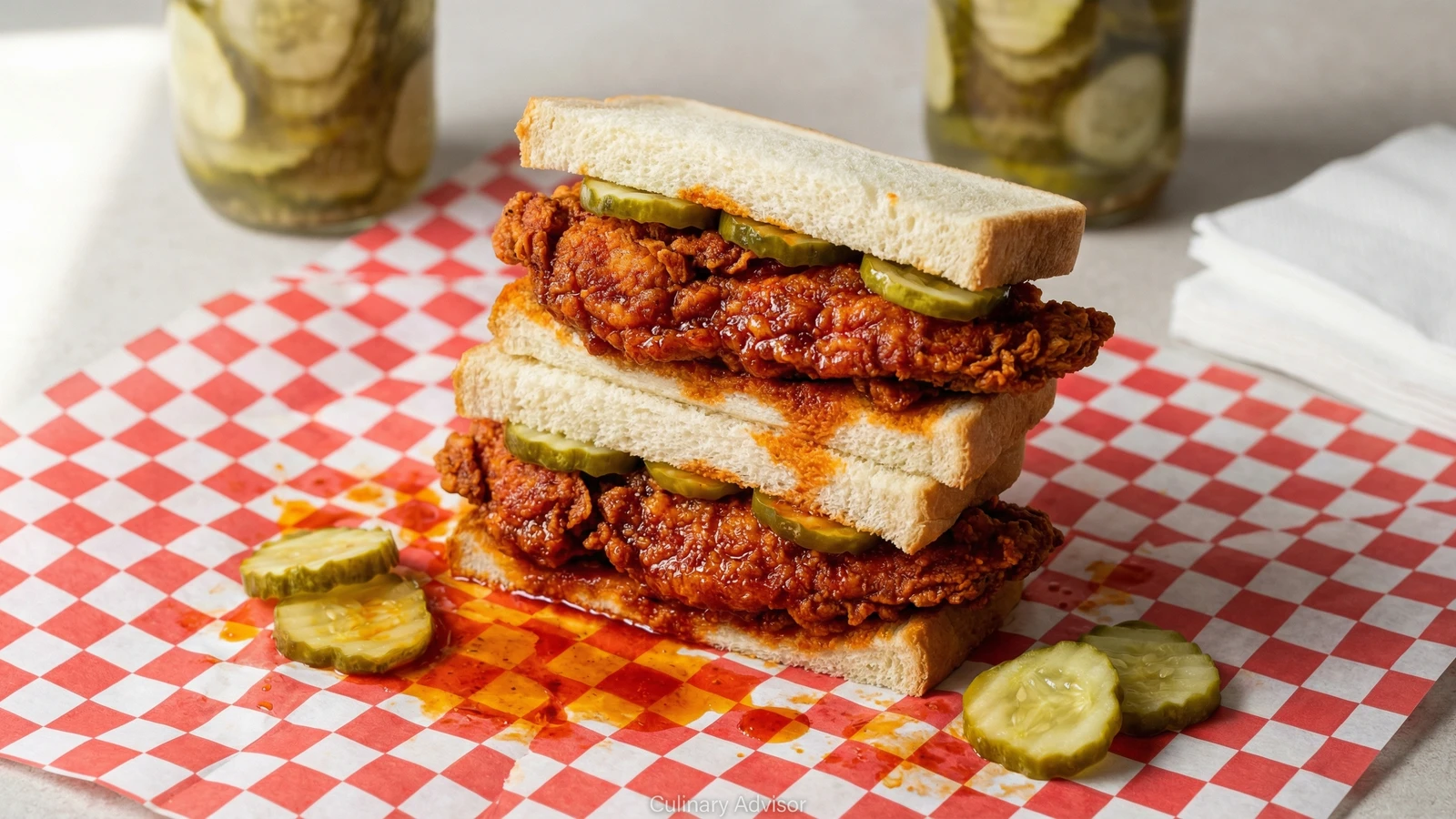
Nashville Hot Chicken Sandwich
Created by
Crispy buttermilk-fried chicken thighs painted with incendiary cayenne oil, piled on soft white bread with cool dill pickles—a sandwich born from spite that became Tennessee's most famous export.
Nashville hot chicken was invented as an act of revenge. The story goes that Thornton Prince came home late one too many times in the 1930s, and his girlfriend decided to punish him by coating his morning fried chicken in enough cayenne to make a grown man weep. He loved it. She accidentally created a dynasty. Prince's Hot Chicken Shack still operates today, and the sandwich has conquered the nation.
The genius lives in two places: the buttermilk brine that tenderizes and flavors the meat, and the cayenne paste applied immediately after frying while the crust is still hot enough to absorb the spiced oil. This is not buffalo sauce. This is not Sriracha drizzled for effect. This is a coating that becomes one with the crust, turning each piece into a glistening monument to controlled fury.
The traditional presentation matters. White bread, specifically. Not brioche, not a pretzel bun, not some artisanal creation. Plain, soft, cheap white bread that absorbs the dripping oil and provides cooling contrast to the heat. Dill pickles are mandatory. They cut through the richness and give your tongue moments of relief between bites. This is how they serve it in Nashville. This is how you'll serve it at home.
The technique, the tradition, and the story behind every dish.
Discover Culinary AdvisorIngredients
boneless, skinless chicken thighs
Quantity
4 (about 6 ounces each)
buttermilk
Quantity
2 cups
hot sauce
Quantity
1 tablespoon
kosher salt
Quantity
2 teaspoons, divided
black pepper
Quantity
1 teaspoon
freshly ground
garlic powder
Quantity
1 teaspoon
paprika
Quantity
1 teaspoon
all-purpose flour
Quantity
2 cups
cornstarch
Quantity
1 tablespoon
cayenne pepper (for dredge)
Quantity
1 teaspoon
vegetable or peanut oil
Quantity
about 3 cups
for frying
cayenne pepper (for hot oil)
Quantity
3 tablespoons
dark brown sugar
Quantity
1 tablespoon
garlic powder (for hot oil)
Quantity
1/2 teaspoon
smoked paprika
Quantity
1/2 teaspoon
kosher salt (for hot oil)
Quantity
1/4 teaspoon
soft white sandwich bread
Quantity
8 slices
dill pickle slices
Quantity
about 16 slices
unsalted butter
Quantity
2 tablespoons
softened
| Ingredient | Quantity |
|---|---|
| boneless, skinless chicken thighs | 4 (about 6 ounces each) |
| buttermilk | 2 cups |
| hot sauce | 1 tablespoon |
| kosher salt | 2 teaspoons, divided |
| black pepperfreshly ground | 1 teaspoon |
| garlic powder | 1 teaspoon |
| paprika | 1 teaspoon |
| all-purpose flour | 2 cups |
| cornstarch | 1 tablespoon |
| cayenne pepper (for dredge) | 1 teaspoon |
| vegetable or peanut oilfor frying | about 3 cups |
| cayenne pepper (for hot oil) | 3 tablespoons |
| dark brown sugar | 1 tablespoon |
| garlic powder (for hot oil) | 1/2 teaspoon |
| smoked paprika | 1/2 teaspoon |
| kosher salt (for hot oil) | 1/4 teaspoon |
| soft white sandwich bread | 8 slices |
| dill pickle slices | about 16 slices |
| unsalted buttersoftened | 2 tablespoons |
Equipment Needed
- •12-inch cast iron skillet or Dutch oven
- •Instant-read thermometer
- •Wire cooling rack
- •Rimmed sheet pan
- •Heat-safe bowl for cayenne paste
- •Pastry brush or spoon for painting
Instructions
- 1
Brine the chicken
Whisk together buttermilk, hot sauce, one teaspoon salt, black pepper, garlic powder, and paprika in a large bowl. The mixture should look speckled and smell faintly tangy. Add chicken thighs, turning to coat completely. Cover with plastic wrap and refrigerate for at least twelve hours, or up to twenty-four. The buttermilk's lactic acid will tenderize the meat and carry flavor deep into the flesh.
Don't skip the overnight brine. A two-hour soak produces acceptable chicken. Twelve hours produces the real thing. - 2
Prepare the dredge
Combine flour, cornstarch, remaining teaspoon of salt, and one teaspoon cayenne in a shallow dish. Whisk until the mixture looks uniform with no pockets of concentrated spice. The cornstarch creates extra crispness that survives the cayenne oil assault.
- 3
Mix the hot oil spices
In a heat-safe bowl, stir together three tablespoons cayenne, brown sugar, half teaspoon garlic powder, smoked paprika, and quarter teaspoon salt. This is your fire paste. The brown sugar adds depth and promotes caramelization without making the chicken sweet. Set near your frying station.
Adjust cayenne to your tolerance. Three tablespoons is traditional Nashville medium-hot. Start with two for mild, go to four for those who chase pain. - 4
Heat the oil
Pour oil into a large cast iron skillet or Dutch oven to a depth of one and a half inches. Set over medium-high heat and bring to 325 degrees Fahrenheit. Use a thermometer. Guessing oil temperature is how home cooks produce soggy fried chicken. The oil should shimmer but not smoke.
- 5
Dredge the chicken
Remove chicken from buttermilk, letting excess drip off for a few seconds. Press each thigh firmly into the flour mixture, then flip and press again. Lift and shake gently to remove loose flour. The coating should look thick and shaggy, with visible crevices that will fry into extra-crispy ridges.
- 6
Fry until golden
Carefully lower two thighs into the hot oil. The temperature will drop. Adjust heat to maintain 300 to 325 degrees. Fry for six to seven minutes per side, until the crust is deep golden brown and the internal temperature reaches 165 degrees. The chicken will sound like steady rain in the pan, not violent sputtering.
Resist the urge to crowd the pan. Frying in batches keeps oil temperature steady and produces crispier results. - 7
Make the hot oil
When the first batch finishes frying, carefully ladle four tablespoons of the hot frying oil into your spice bowl. Whisk immediately. The mixture will bubble and bloom, releasing an aroma that clears sinuses. It should form a loose, brick-red paste. Work quickly because timing matters here.
- 8
Paint the chicken
Transfer fried chicken to a wire rack set over a sheet pan. While the crust is still scorching hot, brush or spoon the cayenne oil generously over each thigh, coating every surface. The hot crust absorbs the paste, becoming one with it. This is the essential Nashville technique. Repeat with remaining chicken.
Paint the chicken within thirty seconds of leaving the oil. A cooling crust won't absorb the paste properly, and you'll end up with a slippery coating instead of integrated heat. - 9
Toast the bread
Spread softened butter on one side of each bread slice. Toast in a dry skillet over medium heat until golden, about one minute per side. The butter creates a slight moisture barrier that keeps the bread from becoming immediately soggy. It also tastes better.
- 10
Assemble the sandwich
Place one slice of bread toasted-side up on your work surface. Layer four pickle slices across the bread. Set a hot chicken thigh on the pickles. Top with four more pickle slices and the second bread slice, toasted-side down. The pickles go on both sides in Nashville. This is correct. Serve immediately with extra napkins.
Chef Tips
- •Chicken thighs are traditional and superior here. They stay moist through the aggressive cooking and can handle the bold flavors. Breasts dry out too easily.
- •The ratio of filling to bread matters. One thigh per sandwich is correct. Two makes the sandwich unwieldy and throws off the balance between meat, heat, and bread.
- •For transporting to tailgates or picnics, keep chicken and bread separate. Wrap hot chicken in foil to retain warmth, pack bread and pickles in a separate container. Assemble on site.
- •Make sandwiches ahead for a crowd by keeping painted chicken warm in a 200-degree oven for up to thirty minutes. Quality declines after that. Toast bread just before serving.
- •The white bread is non-negotiable. It serves a purpose beyond tradition. The soft, absorbent texture mops up the cayenne oil and provides textural contrast. Fancy bread fights the chicken instead of supporting it.
- •Save the frying oil. Strain it through cheesecloth once cooled and store refrigerated for up to a month. It now carries flavor and will make your next batch even better.
Advance Preparation
- •Chicken can brine in buttermilk for up to 24 hours. Longer develops deeper flavor and more tender meat.
- •Cayenne spice mixture can be prepared days ahead and stored in an airtight container. Mix with hot oil just before using.
- •Pickles can be sliced and refrigerated in their brine up to a week ahead.
- •Fried chicken is best served immediately but can hold in a 200°F oven for 30 minutes. Beyond that, the crust softens unacceptably.
Frequently Asked Questions
Nutrition Information
1 serving (about 420g)
Where cooking meets culture.
Culinary mentorship, cultural storytelling, and the editorial depth that makes cooking meaningful.
Explore Culinary Advisor