Culinary Advisor
A cooking platform built around craft, culture, and the stories behind what we eat.
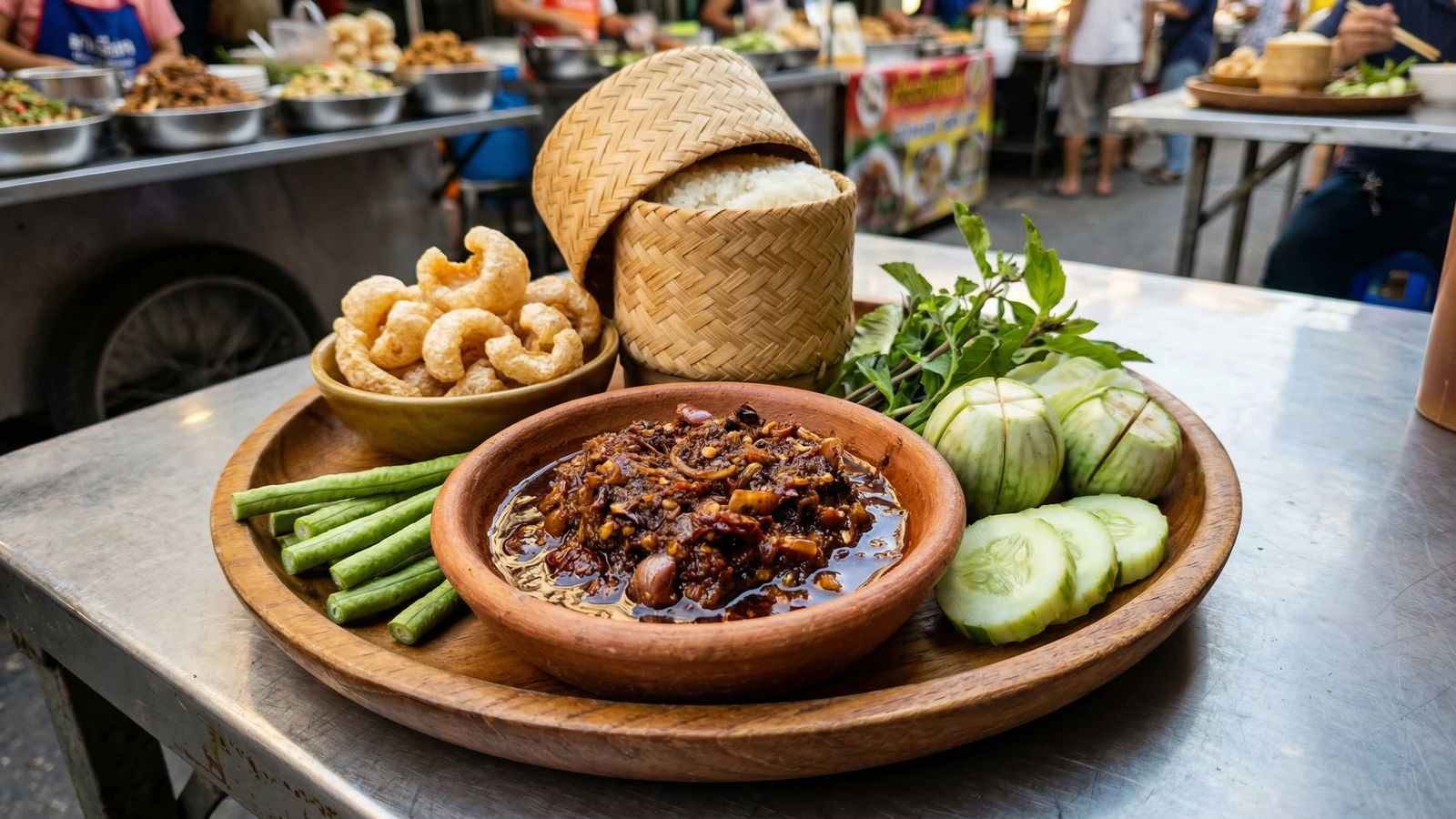
Water Bug Chili Relish (Nam Prik Maeng Da)
Created by
A Northern Thai nam prik built on the strangest, most captivating aroma in all of Thai cuisine: the floral essence of the giant water bug, pounded into a chili relish that stops conversation and starts obsession.
This is the nam prik that separates tourists from cooks. The moment you say "water bug," people flinch. Good. Flinching means you haven't learned yet. Sit down. Let's talk about maeng da na.
The giant water bug (Lethocerus indicus) is a freshwater insect the size of your thumb. The male carries scent glands in its thorax that produce an aroma unlike anything else in the natural world: floral, like overripe pear, with a perfume-like sweetness that borders on surreal. That aroma is the entire point of this dish. Not the chili. Not the garlic. The bug. Everything else in the mortar exists to frame that scent. Strip it out and you have a generic nam prik. Leave it in and you have something that has been on the Lanna table for centuries.
Ajarn always said: the kreung tam tells you what a dish is. When you pound this paste, the garlic and chilies break down first, releasing their sharp, volatile oils. Then you add the maeng da, and the mortar fills with something completely different. Fruity. Floral. Almost sweet. That's the moment. That's where this nam prik announces itself. No blender can replicate that layered release. The krok controls the order of aromatics because you control the pressure. Pound the hard ingredients first. Introduce the delicate ones after. The mortar transforms; a blade destroys.
This is Lanna food. Not Central Thai. Not Isan. The khantoke table in Chiang Mai and Chiang Rai is where this relish lives, in a small bowl alongside sticky rice, kab moo, and raw vegetables. It's cool-season food, the months when fresh water bugs are harvested from rice paddies and reservoirs across the North. If your grandmother in Lamphun made nam prik maeng da, she caught the bugs herself or bought them still alive at the morning market. That's the connection I don't want broken. This isn't a novelty ingredient. This is a governing ingredient with hundreds of years of tradition behind it.
Maeng da na (แมงดานา, Lethocerus indicus) has been consumed across mainland Southeast Asia for centuries, with the earliest Thai culinary references placing it firmly in the Lanna kingdom's food traditions of the upper North. The male bug's thoracic pheromone glands produce an ester compound (trans-2-hexenyl butyrate) responsible for its signature floral, pear-like aroma, a scent so prized that synthetic maeng da extract (nam maeng da) is now widely produced and sold in Thai markets for year-round use. In Lanna culture, fresh water bugs were harvested from flooded rice paddies during the cool season, making nam prik maeng da a seasonal relish tied to the agricultural calendar.
The technique, the tradition, and the story behind every dish.
Discover Culinary AdvisorIngredients
giant water bugs (maeng da na)
Quantity
4-6 whole, or 1 teaspoon maeng da extract (nam maeng da)
wings and hard shell removed if using whole bugs
dried red chilies (prik haeng)
Quantity
8-10
soaked in warm water for 10 minutes, drained
garlic
Quantity
6 cloves
unpeeled, for roasting
shallots (hom daeng)
Quantity
4
unpeeled, for roasting
fish sauce (nam pla)
Quantity
2 tablespoons
lime juice (nam manao)
Quantity
1 tablespoon
palm sugar (nam tan pip) (optional)
Quantity
1 teaspoon
salt
Quantity
pinch
| Ingredient | Quantity |
|---|---|
| giant water bugs (maeng da na)wings and hard shell removed if using whole bugs | 4-6 whole, or 1 teaspoon maeng da extract (nam maeng da) |
| dried red chilies (prik haeng)soaked in warm water for 10 minutes, drained | 8-10 |
| garlicunpeeled, for roasting | 6 cloves |
| shallots (hom daeng)unpeeled, for roasting | 4 |
| fish sauce (nam pla) | 2 tablespoons |
| lime juice (nam manao) | 1 tablespoon |
| palm sugar (nam tan pip) (optional) | 1 teaspoon |
| salt | pinch |
Equipment Needed
- •Heavy granite mortar and pestle (krok hin), at least 7 inches diameter
- •Charcoal grill or gas flame for roasting
- •Tongs for turning garlic and shallots
Instructions
- 1
Roast the aromatics
Set a dry skillet or grill grate over charcoal or a gas flame. Place the unpeeled garlic cloves and shallots directly on the heat. Roast them, turning occasionally, until the skins are blackened in patches and the flesh inside is soft and translucent. The garlic takes about 5 minutes. The shallots take longer, closer to 8. You want them collapsed and sweet. The char isn't just color. It's smoky bitterness that anchors the floral notes of the maeng da. Peel when cool enough to handle.
Charcoal gives the truest Lanna flavor. If you're using a gas flame, hold the garlic and shallots with tongs directly over the burner. A broiler works as a last resort, but you lose the smoke. - 2
Prepare the water bugs
If using whole maeng da na: pull off the wings and the hard outer shell. The body underneath is soft. Inside the thorax of the male bug, you'll find the scent glands, two small sacs near the head. These are the treasure. Leave them intact. The entire body goes into the mortar. If you're using maeng da extract (nam maeng da), set it aside. It goes in at the end, not during pounding. The extract is volatile. Heat and prolonged pounding destroy it.
The male bugs carry the scent glands. Females are edible but lack the floral aroma. At a Thai market, vendors know the difference. Ask for tua phu (ตัวผู้, male). If buying extract, look for the glass bottles with the bug illustration at any Northern Thai market. Synthetic extract is standard and perfectly acceptable. Ajarn never had a problem with it. - 3
Pound the kreung tam
Start with a pinch of salt in the mortar. It acts as an abrasive. Add the drained soaked chilies and pound them to a rough paste. They should be broken down but not smooth. Add the roasted garlic and shallots. Pound again until everything melds into a coarse, fragrant mass, flecked with chili skin and bits of charred shallot. The texture should be uneven. This is a rustic Lanna paste, not a refined Central Thai curry paste. If using whole maeng da, add the prepared bug bodies now and pound them in. The scent glands will rupture and release that unmistakable floral, pear-like perfume into the paste. Your mortar will smell like nothing else. That's how you know it's working.
Krok ก่อน, krok ก่อน. The mortar is the only tool. A blender shreds the chili skins into an even slurry that tastes flat. The mortar leaves texture, and texture is where you taste the individual ingredients inside the whole. - 4
Season and balance
Add the fish sauce and stir it into the paste with the pestle. Add the lime juice. If using maeng da extract instead of whole bugs, stir it in now, gently. Don't pound after adding the extract. It's fragile. Taste. The balance should read: salty and savory from the nam pla, a bright lift from the lime, the roasted depth of charred garlic and shallot, the slow heat of the dried chilies, and over all of it, that haunting floral aroma from the maeng da. If the paste is too aggressive, a small pinch of palm sugar softens the edges. Don't overdo it. This isn't a sweet relish. The sugar is a whisper, not a voice.
Fish sauce for salt. Lime for sour. Chili for heat. The maeng da provides a fifth element that doesn't fit neatly into the four pillars: aroma. In Lanna cuisine, scent is its own principle. This nam prik is proof. - 5
Serve on the khantoke
Scrape the nam prik into a small bowl. Place it on a khantoke tray (or any shared platter) alongside a basket of sticky rice (khao niew), kab moo (pork rinds), raw long beans cut into 3-inch pieces, sliced round Thai eggplant (makhuea pro), cucumber slices, blanched morning glory (pak bung), and steamed pak wan (sweet leaf) if available. The relish is eaten by pinching off a piece of sticky rice, pressing it flat, scooping a small amount of nam prik onto it, and eating it with a piece of vegetable or a shard of pork rind. That's a bite. The combination is the design.
Chef Tips
- •Maeng da na is not a novelty. It's a governing ingredient in Lanna cuisine with centuries of tradition. The floral compound in the male's scent glands (an ester called trans-2-hexenyl butyrate) is chemically similar to compounds found in pear and apple skin. That's why people describe the aroma as 'fruity' or 'like perfume.' It's not weird. It's biochemistry. The Lanna people understood this flavor long before anyone named the molecule.
- •Synthetic maeng da extract (nam maeng da, น้ำแมงดา) is sold in small glass bottles at every market in Northern Thailand. It's the standard shortcut and produces a result close to the real thing. If whole bugs aren't available, the extract is your best path. Use it sparingly. A teaspoon is enough. More than that and the floral note overwhelms everything else in the mortar.
- •This nam prik sits on the khantoke alongside other relishes, curries, and a shared basket of sticky rice. It's not a main course. It's one voice in a conversation of flavors. The traditional Lanna meal is designed around contrast: one nam prik might be fiery, another smoky, a third rich with tua nao. Nam prik maeng da brings the floral, perfumed note that no other relish can.
- •Sticky rice (khao niew) is the only starch. Not jasmine rice. In the North and Isan, sticky rice is eaten with the hands, used as both utensil and vehicle. The glutinous texture grips the nam prik and carries it to your mouth with the vegetables. Jasmine rice would slide right off. The pairing is structural, not just cultural.
- •Kab moo (pork rinds) are not optional. The airy crunch of fried pork skin against the intense, pungent paste is one of the great textural contrasts in Thai food. Buy them fresh from a market if you can. The pre-packaged kind works, but fresh kab moo shatters differently.
Advance Preparation
- •The garlic and shallots can be roasted up to a few hours ahead and left at room temperature. Their smoky sweetness concentrates as they cool.
- •The finished nam prik is best eaten within an hour of pounding. The maeng da aroma fades over time, especially if using extract. Pound it, serve it, eat it. Freshness is the principle.
Frequently Asked Questions
Nutrition Information
1 serving (about 55g)
Where cooking meets culture.
Culinary mentorship, cultural storytelling, and the editorial depth that makes cooking meaningful.
Explore Culinary Advisor