Culinary Advisor
A cooking platform built around craft, culture, and the stories behind what we eat.
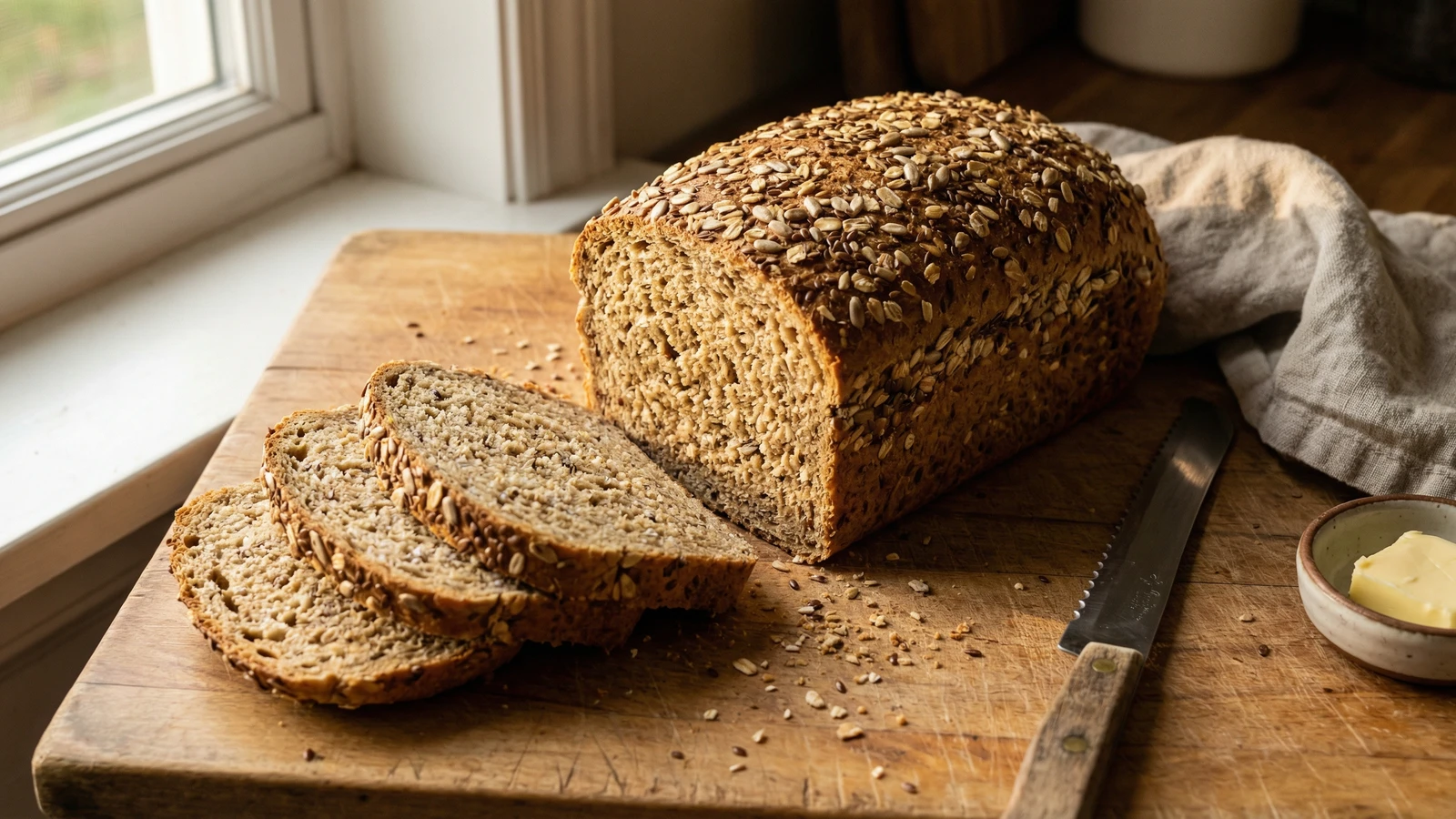
Multigrain Seeded Loaf
Created by Chef Ally
A hearty, seed-studded loaf built on stone-ground flours and whole grains, with the kind of honest chew and nutty depth that reminds you what bread is supposed to be.
This is bread with substance. Oats and flax, sunflower and sesame seeds, whole wheat flour that still smells of the field. Every slice has texture you can feel and flavor that builds as you chew. This is what bread was before we forgot.
I learned to bake bread out of necessity, not training. You mix flour and water, you give it time, and something alive emerges. The seeds and grains here do the heavy lifting. They bring their own character: nutty, earthy, slightly sweet. Your job is to get out of the way.
Seek out stone-ground flour from a mill you trust. The difference is immediate. Industrial flour has been stripped and bleached until nothing remains but starch. Good flour retains the germ, the bran, the life of the wheat. It costs a bit more and it matters completely.
Bread rewards patience. The dough needs time to develop, the seeds need time to soften, and the finished loaf needs time to cool before you slice it. Rush any of these and you will know it. But do them right, and you will have bread worth eating for days, bread that makes everything you put on it taste better.
The technique, the tradition, and the story behind every dish.
Discover Culinary AdvisorIngredients
bread flour
Quantity
2 cups (250g)
preferably stone-ground
whole wheat flour
Quantity
1 cup (120g)
stone-ground
rolled oats
Quantity
1/2 cup (45g), plus more for topping
raw sunflower seeds
Quantity
1/4 cup (35g)
flax seeds
Quantity
2 tablespoons (20g)
sesame seeds
Quantity
2 tablespoons (18g)
fine sea salt
Quantity
2 teaspoons (8g)
instant yeast
Quantity
1 1/2 teaspoons (5g)
honey or mild molasses
Quantity
2 tablespoons (30ml)
unsalted butter
Quantity
2 tablespoons (28g)
softened
warm water
Quantity
1 1/4 cups (300ml)
100-110°F
egg white
Quantity
1
lightly beaten, for wash
| Ingredient | Quantity |
|---|---|
| bread flourpreferably stone-ground | 2 cups (250g) |
| whole wheat flourstone-ground | 1 cup (120g) |
| rolled oats | 1/2 cup (45g), plus more for topping |
| raw sunflower seeds | 1/4 cup (35g) |
| flax seeds | 2 tablespoons (20g) |
| sesame seeds | 2 tablespoons (18g) |
| fine sea salt | 2 teaspoons (8g) |
| instant yeast | 1 1/2 teaspoons (5g) |
| honey or mild molasses | 2 tablespoons (30ml) |
| unsalted buttersoftened | 2 tablespoons (28g) |
| warm water100-110°F | 1 1/4 cups (300ml) |
| egg whitelightly beaten, for wash | 1 |
Equipment Needed
- •9x5-inch loaf pan
- •Wire cooling rack
- •Kitchen scale (recommended for accuracy)
- •Instant-read thermometer (optional)
Instructions
- 1
Combine the dry ingredients
In a large bowl, whisk together both flours, the oats, sunflower seeds, flax seeds, sesame seeds, salt, and yeast. Run your hands through the mixture. Smell it. Good flour smells slightly sweet, almost grassy. The seeds should look alive, not dusty or faded. This is your foundation.
Stone-ground flour retains more of the wheat germ and bran, giving your bread deeper flavor and better nutrition. It is worth seeking out. - 2
Add the wet ingredients
Dissolve the honey in the warm water. The water should feel like a warm bath, comfortable on your wrist. Add the honey water and softened butter to the dry ingredients. Stir with a wooden spoon until a shaggy dough forms. It will look rough and unfinished. That is exactly right.
- 3
Knead until smooth
Turn the dough onto a clean surface. Knead for eight to ten minutes, pushing the heel of your hand into the dough, folding it over, turning it a quarter turn, and repeating. The dough will transform from sticky and rough to smooth and elastic. You will feel the change in your hands before you see it. When you poke it, it should spring back slowly.
Resist adding extra flour. Whole grain doughs are meant to be slightly tacky. Too much flour makes dense, dry bread. - 4
First rise
Place the dough in a lightly oiled bowl, turning once to coat. Cover with a clean kitchen towel or plastic wrap. Let it rise in a warm spot until doubled in size, about one and a half to two hours. The dough is ready when you press two fingers into it and the indentation fills in slowly. Patience here. The grains need time to absorb and soften.
- 5
Shape the loaf
Gently deflate the dough and turn it onto a lightly floured surface. Pat it into a rough rectangle about nine inches wide. Starting from the short side, roll the dough tightly into a cylinder, pinching the seam and tucking the ends under. The surface should be taut but not torn. Place seam-side down in a greased 9x5-inch loaf pan.
- 6
Second rise
Cover loosely and let rise until the dough crowns about one inch above the rim of the pan, forty-five minutes to one hour. The surface will feel pillowy when you press it gently. While it rises, preheat your oven to 375°F.
- 7
Top and bake
Brush the top of the loaf with beaten egg white. Scatter a generous handful of oats over the surface, pressing gently so they adhere. Bake until the crust is deep golden brown and the loaf sounds hollow when you tap the bottom, forty to forty-five minutes. The internal temperature should reach 200°F if you are uncertain.
If the top browns too quickly, tent loosely with foil for the last fifteen minutes. - 8
Cool completely
Remove the loaf from the pan immediately and let it cool on a wire rack for at least one hour before slicing. This is the hardest part, but cutting into warm bread compresses the crumb and ruins the texture you worked so hard to build. Listen to it crackle as it cools. That is the sound of patience rewarded.
Chef Tips
- •Source your seeds from a store with good turnover. Flax and sunflower seeds go rancid when they sit. Smell before you buy. They should smell like nothing or faintly nutty, never bitter or oily.
- •If you cannot find stone-ground bread flour, a quality all-purpose flour will work. Add one extra tablespoon of whole wheat to compensate.
- •This bread toasts beautifully. The seeds become fragrant and crisp, the crumb stays tender. It is worth making extra just for morning toast with good butter.
- •Store the cooled loaf cut-side down on a wooden board, covered with a clean towel. It keeps three to four days this way. After that, slice and freeze for toast.
Advance Preparation
- •The dough can be mixed, kneaded, and refrigerated overnight after the first rise. The cold slows fermentation and develops deeper flavor. Let it come to room temperature before shaping, about one hour.
- •Baked loaves freeze well for up to two months. Wrap tightly in plastic, then foil. Thaw at room temperature and refresh briefly in a 350°F oven.
- •Slice the loaf before freezing if you want to toast individual slices directly from the freezer.
Frequently Asked Questions
Nutrition Information
1 serving (about 65g)
Where cooking meets culture.
Culinary mentorship, cultural storytelling, and the editorial depth that makes cooking meaningful.
Explore Culinary Advisor